![Magyarbusz [Info]](/mbi/header-logo.png)
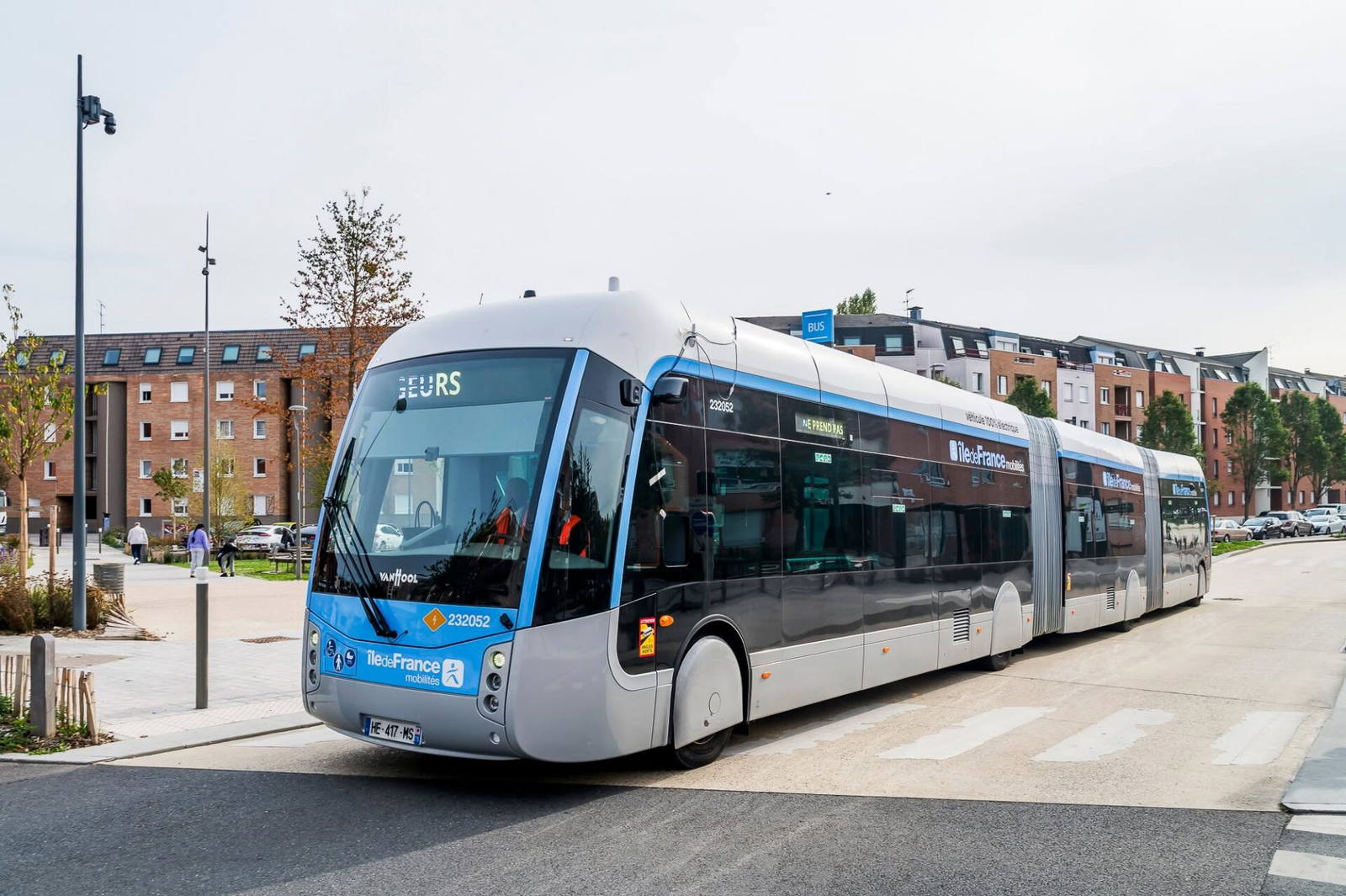
Major bi-articulated electric bus procurement taking shape in Paris
 Ludányi József
Île-de-France Mobilités is preparing the acquisition of another batch of high-capacity electric buses: the Paris region’s transport authority is examining the options for procuring 24-metre, bi-articulated, fully electric buses, along with the associated fast-charging systems. The vehicles are intended to serve three high-traffic bus corridors operating partly or entirely on segregated infrastructure: Bus Bords de Marne, T Zen 5 and TVM. For the time being, this is not yet an actual public procurement procedure; Île-de-France Mobilités wants to map which manufacturers have vehicles that meet its requirements, what technical solutions are available, and under what technical, operational and economic conditions a procurement could later be launched.
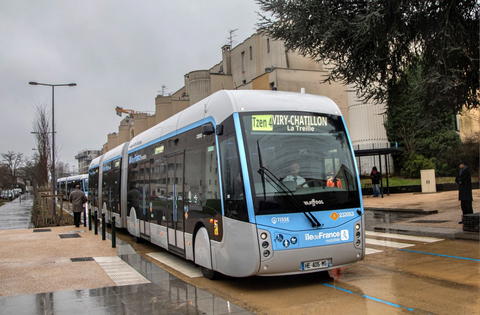
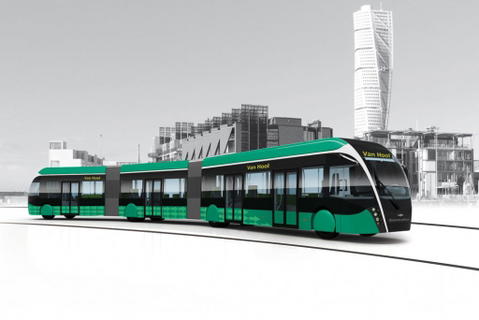
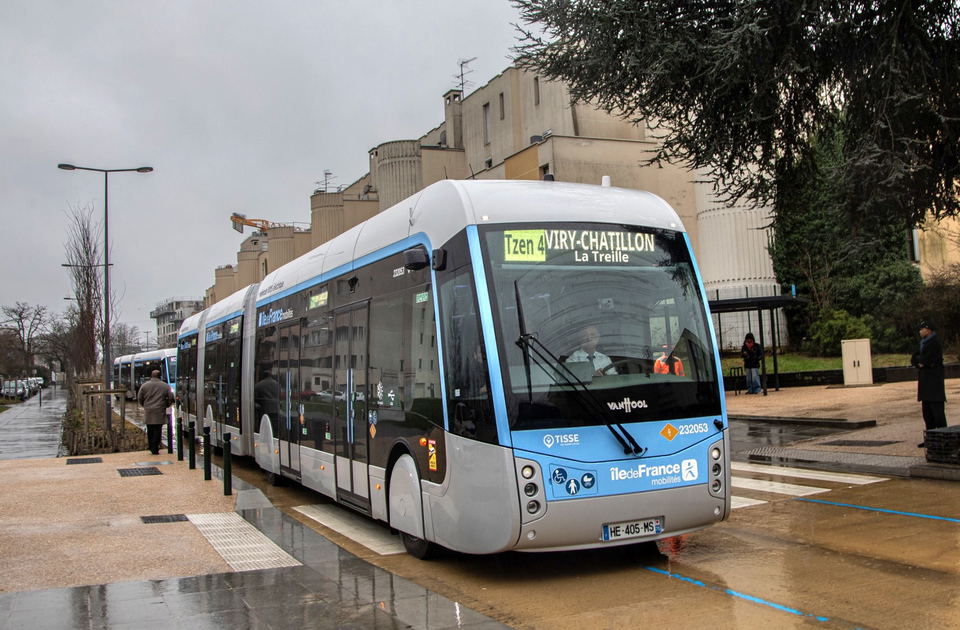
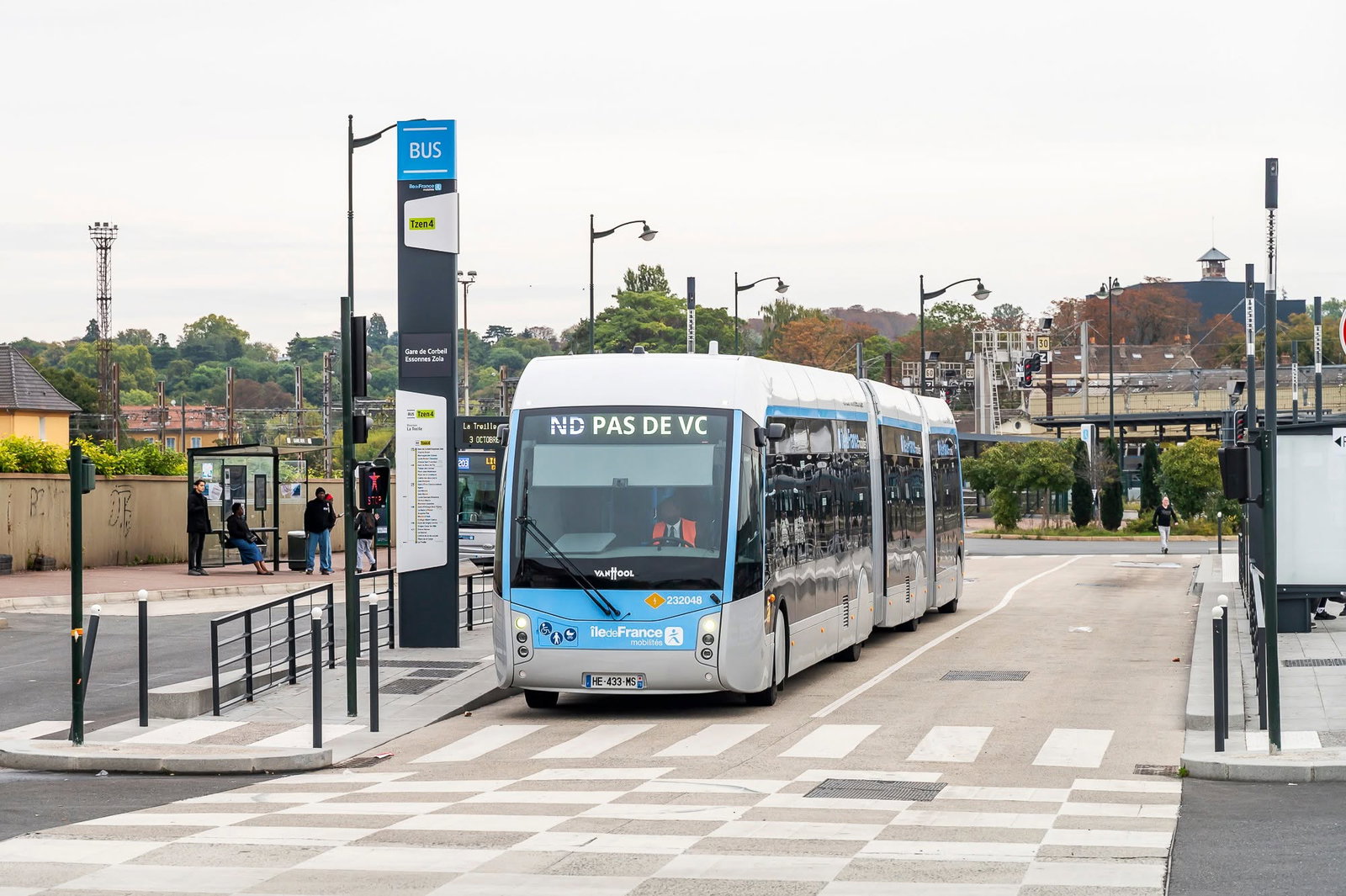
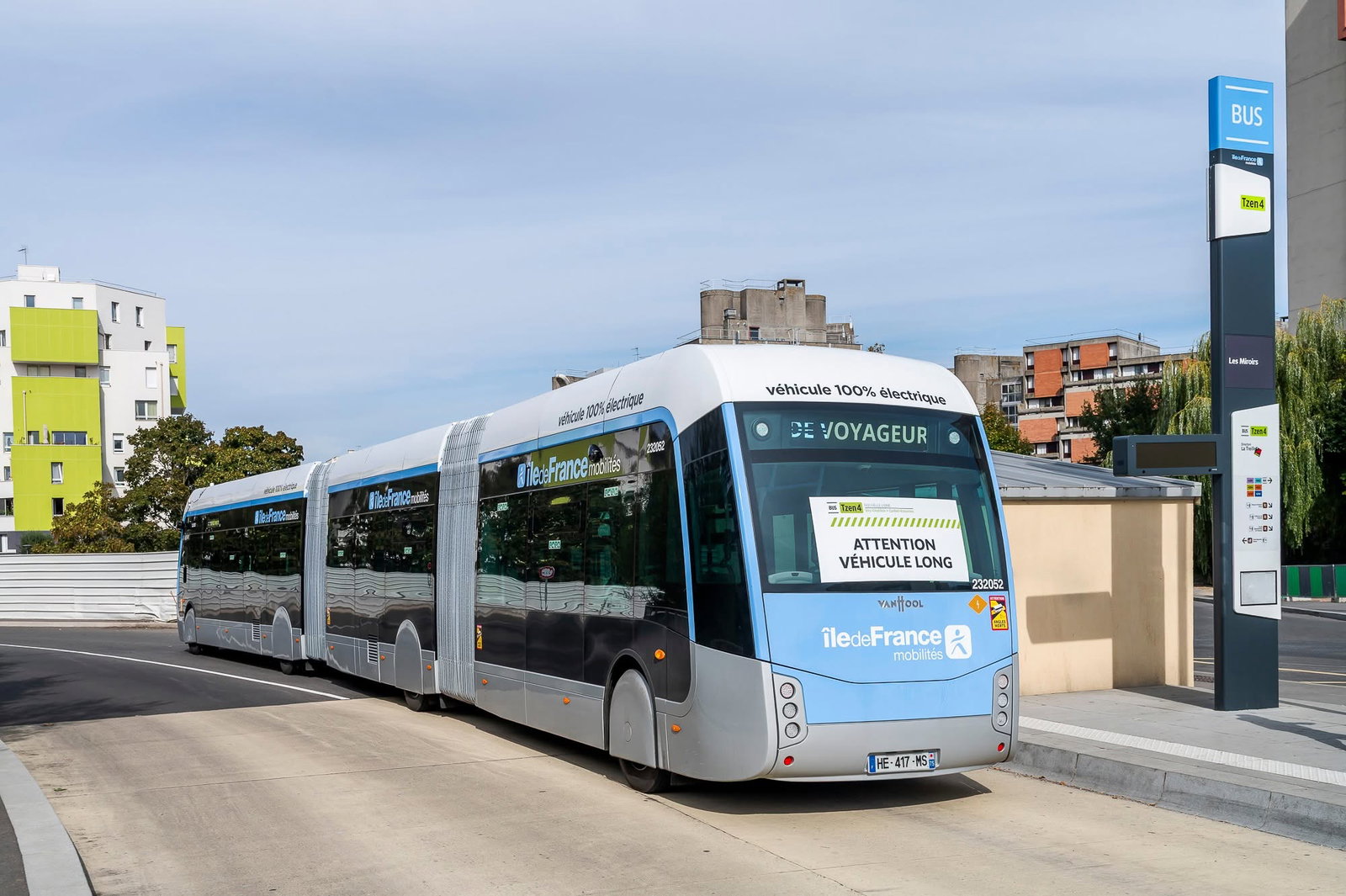
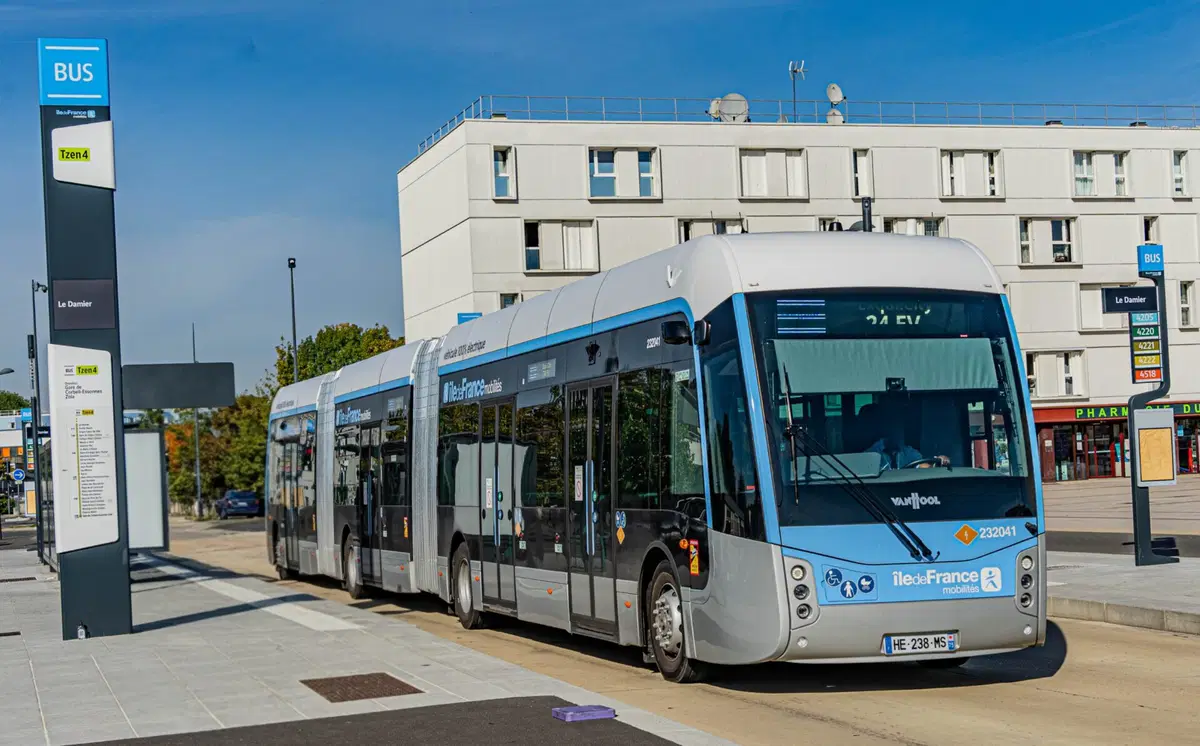
The current initiative can also be regarded as a continuation of a vehicle procurement programme that had previously been launched but was interrupted by Van Hool’s bankruptcy. Île-de-France Mobilités had earlier signed a framework agreement with the Belgian manufacturer for the supply of up to 56 24-metre, bi-articulated electric buses, of which 30 vehicles were ordered for the T Zen 4 line. Under the original plans, the remaining part of the framework would have been called off to cover the vehicle requirements of further high-traffic lines, including T Zen 5, but Van Hool’s bankruptcy in 2024 upended those plans. Since VDL, which acquired part of the company’s bus business, did not take over Van Hool’s city bus activities or the related earlier orders, the production and completion of the T Zen 4 vehicles also became uncertain.
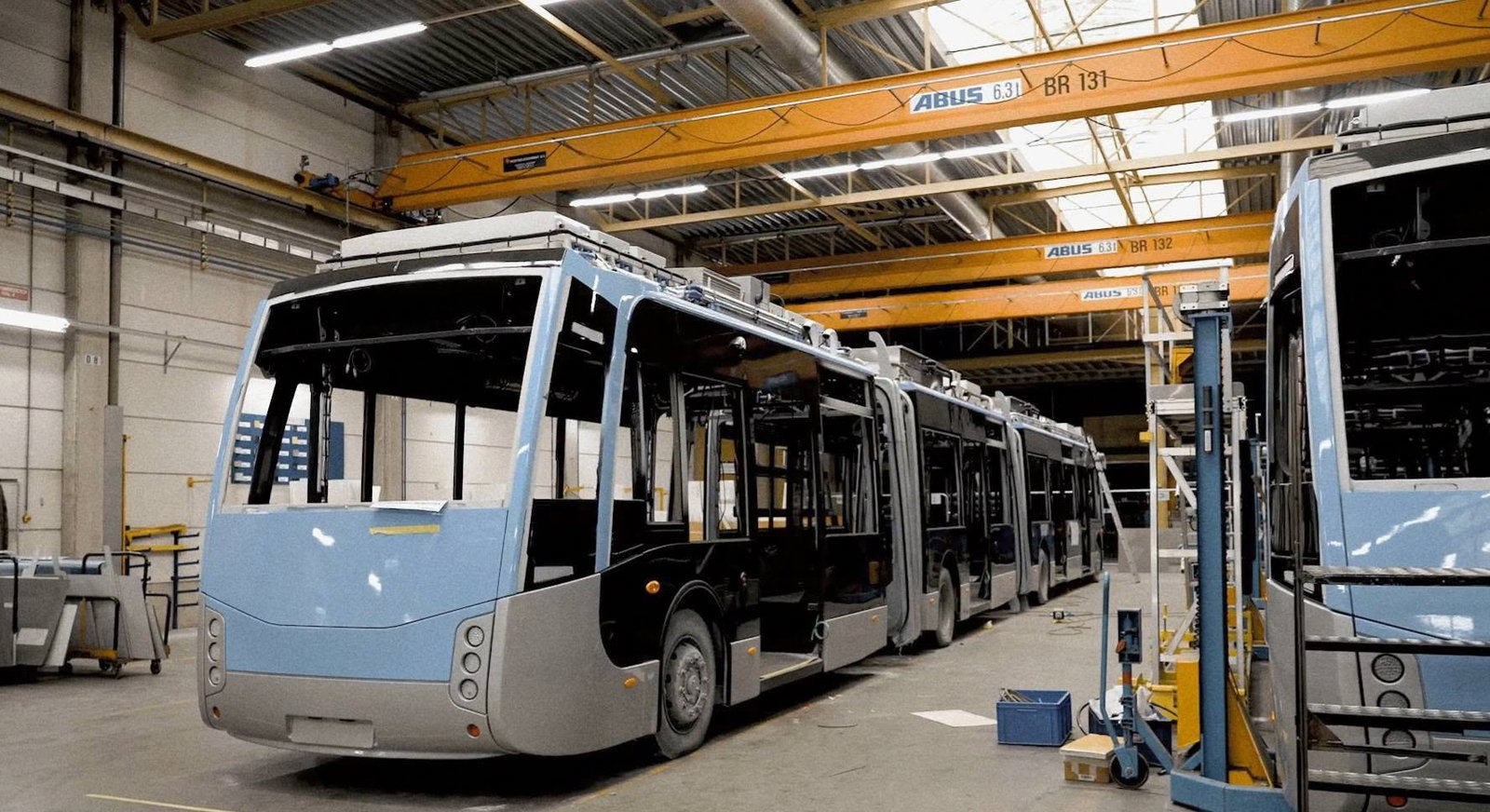
By the time Van Hool went bankrupt, only five of the 30 buses on order had been delivered, while the remaining 25 vehicles were left at an advanced stage of completion at the manufacturer’s Koningshooikt plant. While several other Van Hool customers were unable to save buses left half-finished on the production lines, Île-de-France Mobilités ultimately reached an agreement with the trustees handling the liquidation on the transfer of ownership of the vehicles and the continuation of production. In the absence of manufacturer support, final assembly was taken on by Switzerland’s Hess, which completed the vehicles in a hall leased on the site of the former Van Hool plant, partly with the involvement of former Van Hool employees. The original technology partners, Alstom and Kiepe Electric, continued to participate in the installation of the driveline and electrical equipment. As a result, the full 30-strong fleet could eventually be completed and is now in service on the T Zen 4 line between Viry-Châtillon and Corbeil-Essonnes.
Demand for 24-metre electric buses, however, did not disappear with Van Hool’s exit; on the contrary, it has continued to grow in recent years. Île-de-France Mobilités is currently considering three high-traffic bus corridors where the use of vehicles with greater capacity than conventional 18-metre articulated buses may be justified. Of these, Bus Bords de Marne and T Zen 5 are newly built BRT lines, while TVM, or Trans-Val-de-Marne, has been one of the Paris conurbation’s key bus links on segregated right-of-way for more than three decades.
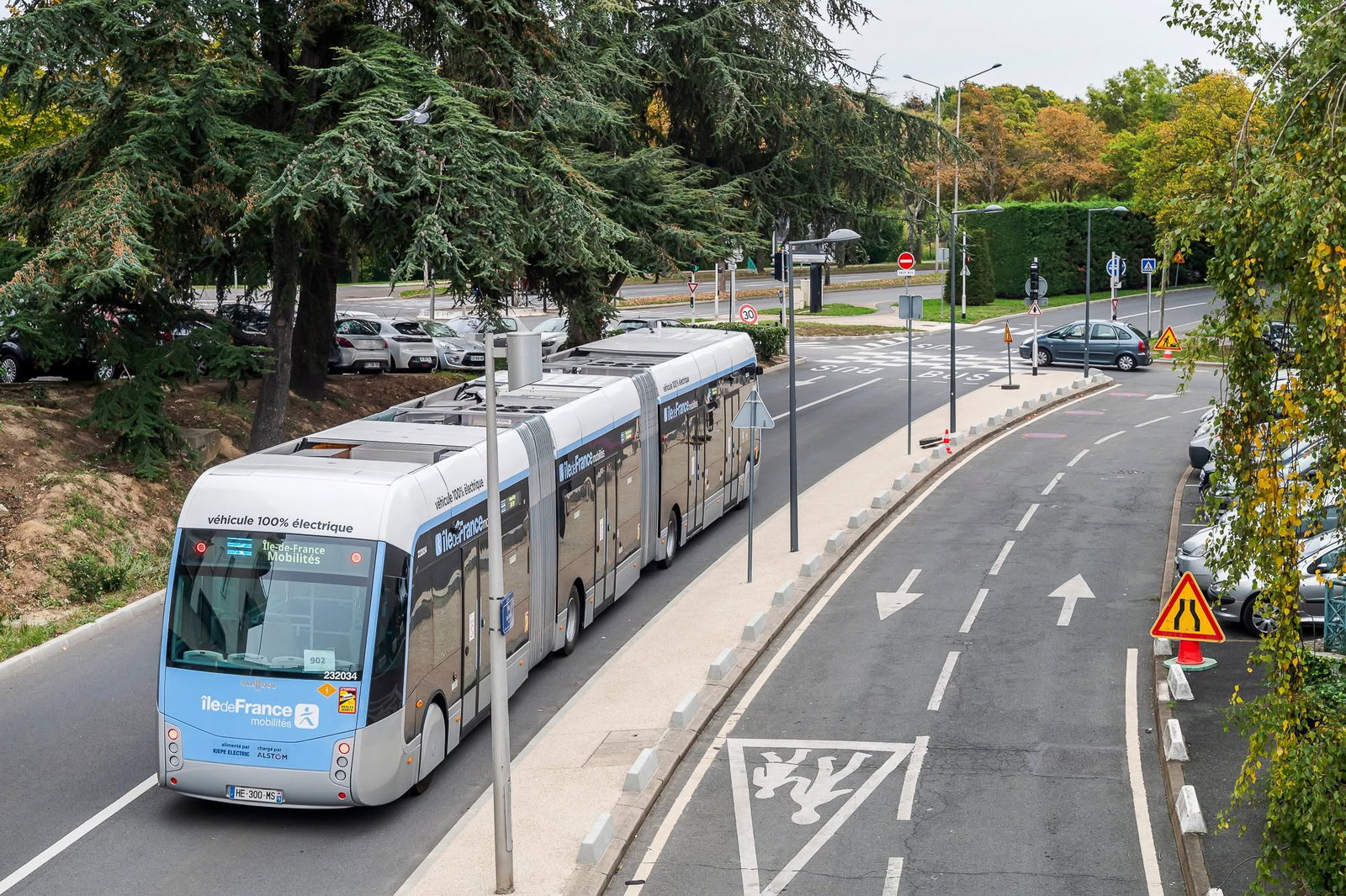
Of the three routes, Bus Bords de Marne (BBM) is the newest project. The roughly 8.5-kilometre line, to be built east of Paris between Val de Fontenay and Chelles–Gournay railway station, will have 17 stops, with a segregated busway ensuring the movement of vehicles along the vast majority of the route. Daily ridership is estimated at around 33,000 passengers, and a four-minute headway is planned during peak periods. The line is already being designed for 24-metre, bi-articulated electric buses with capacity for approximately 145 passengers; opening is currently planned for 2030.
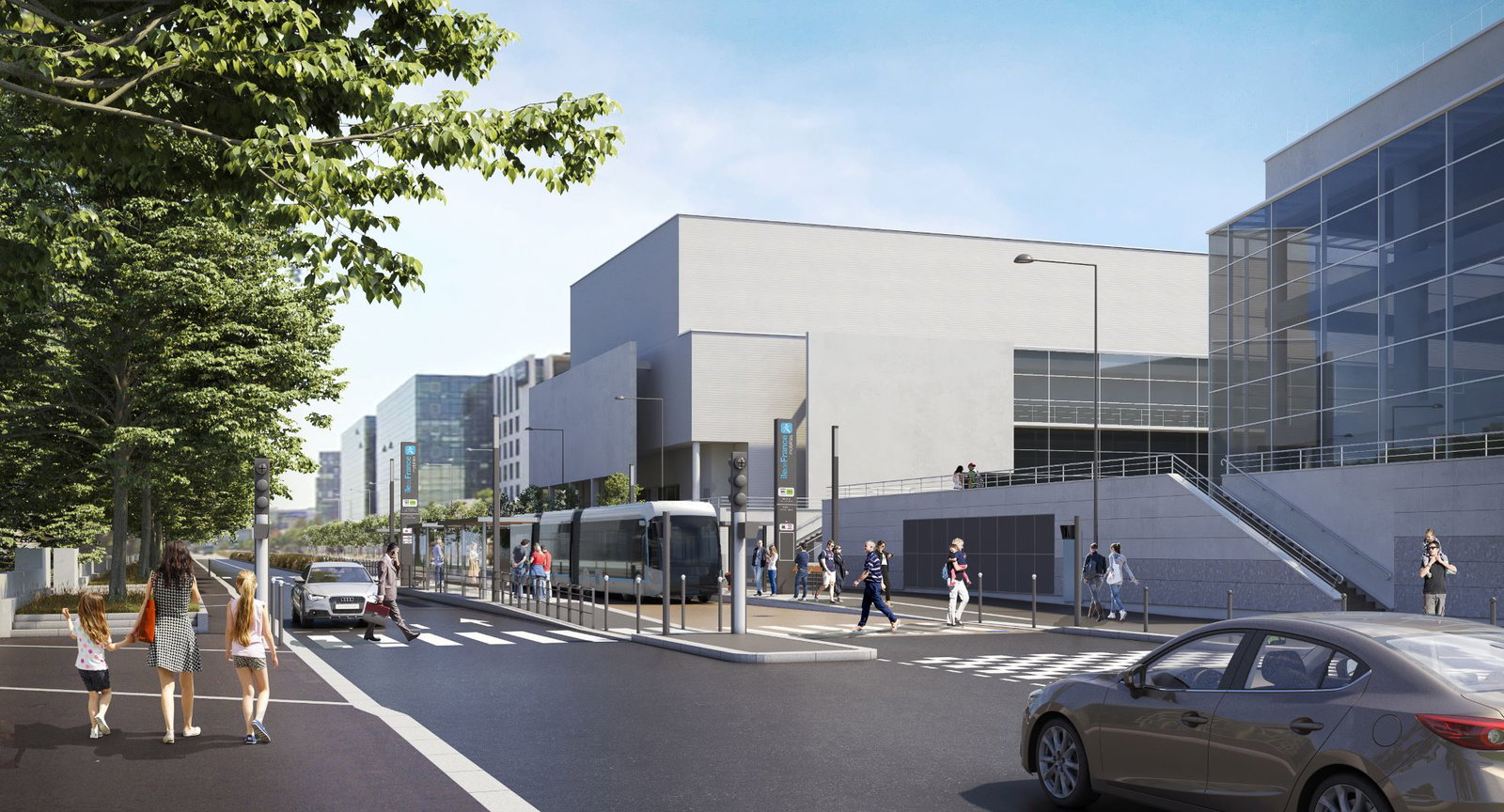
In the case of T Zen 5, plans to use bi-articulated vehicles go back further. The approximately 9.5-kilometre BRT line, with 19 stops, will connect Paris’s 13th arrondissement with Choisy-le-Roi via Ivry-sur-Seine and Vitry-sur-Seine, and is expected to carry around 37,000 passengers per day, with five-minute peak headways and a journey time of about 33 minutes. The line’s vehicle requirement was originally intended to be covered in part by further call-offs under the framework agreement with Van Hool for the supply of up to 56 bi-articulated electric buses, but the Belgian manufacturer’s bankruptcy meant this could no longer happen.
The situation is different with TVM, or Trans-Val-de-Marne, which is not a future BRT project but a high-traffic bus corridor that has been in operation since 1993. The line, which today runs between Saint-Maur–Créteil and Antony–La Croix de Berny, provides an important east–west link in the southern part of the Paris conurbation, largely on segregated infrastructure. TVM is currently operated with a fleet of around 50 articulated, biomethane-powered buses, but due to the heavy passenger volumes Île-de-France Mobilités had already been examining options for further increasing capacity. Under the current plans, one way of doing so could be the introduction of 24-metre, bi-articulated electric vehicles.
Île-de-France Mobilités is now examining the vehicle requirements of the three lines under a joint programme, although for the time being this is not yet a public procurement procedure, but rather the professional and market preparation for one. The consultation launched in summer 2026 is specifically focused on 24-metre, 100% electric bi-articulated buses and the associated fast-charging systems. At this stage, however, the expected number of vehicles and the estimated value of the procurement have not yet been determined.
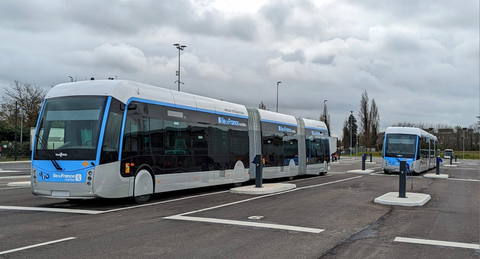
One of the key aims of the consultation is to establish which manufacturers would be capable of and interested in participating in a future tender in today’s rather limited 24-metre electric bus market. The question has become particularly relevant following Van Hool’s exit, as only two manufacturers currently offer 24-metre, bi-articulated electric buses on the European market: Hess and Solaris. Île-de-France Mobilités is therefore also examining what vehicles and technical solutions potential suppliers could offer, and what cost, technological and organisational constraints would need to be taken into account in a later procurement. In addition, it intends to assess in detail how the vehicles could be integrated into the urban infrastructure, as well as the aspects related to operation and maintenance.
The market consultation is not limited to written data submissions. Manufacturers and suppliers indicating their interest will receive a questionnaire and documentation outlining the background to the projects, and will then be able to take part in technical discussions. The companies will also have the opportunity to present actual vehicles and charging systems, as well as to carry out on-site trials. Participants may themselves propose locations for testing demonstration vehicles.
On the basis of the results of the consultation, Île-de-France Mobilités will decide whether to launch the actual procurement procedure for the manufacture and supply of 24-metre bi-articulated electric buses and their fast-charging systems. In other words, the current process does not yet represent a concrete vehicle order, but it is clearly intended to provide the technical and market basis for a future procurement covering the vehicle needs of the three high-traffic corridors. Although no specific number of vehicles has yet been defined at this stage, the size and expected traffic of the three corridors concerned suggest that a significant volume may be involved. This is especially true given that operating TVM alone requires a substantial fleet, while BBM and T Zen 5 feature in the programme as two new, high-capacity BRT lines. The scale of the future procurement could therefore even exceed the previous Van Hool framework of up to 56 vehicles, although its exact volume is not yet known.