![Magyarbusz [Info]](/mbi/header-logo.png)
90 kWh on board: Gdynia’s new Trollinos with high-capacity batteries enter service
 Ludányi József
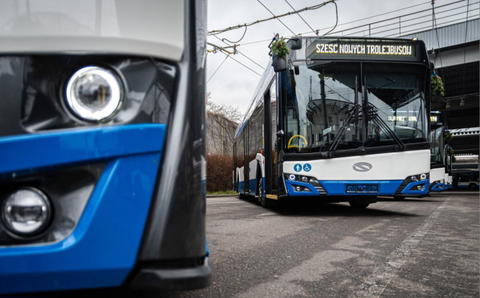
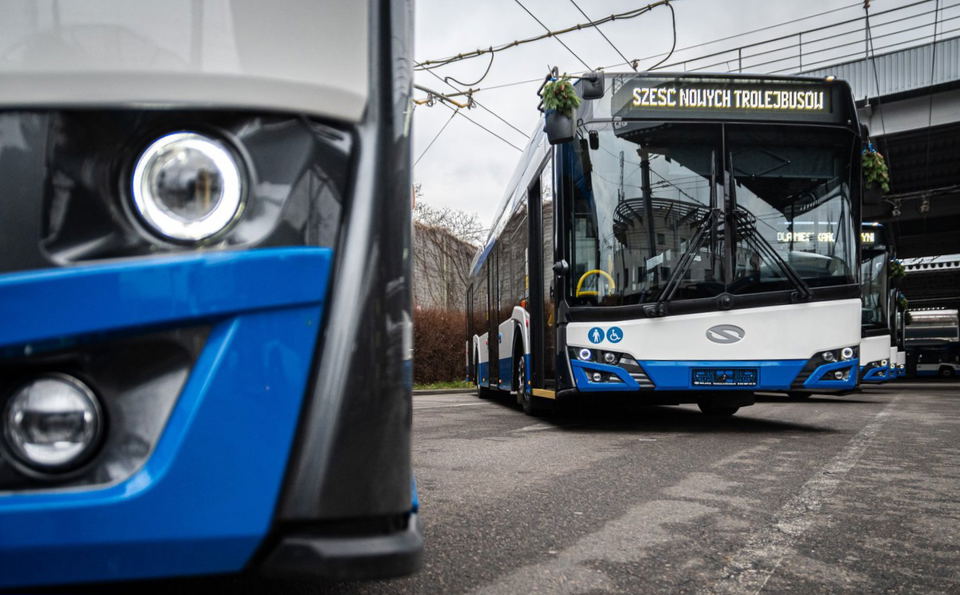
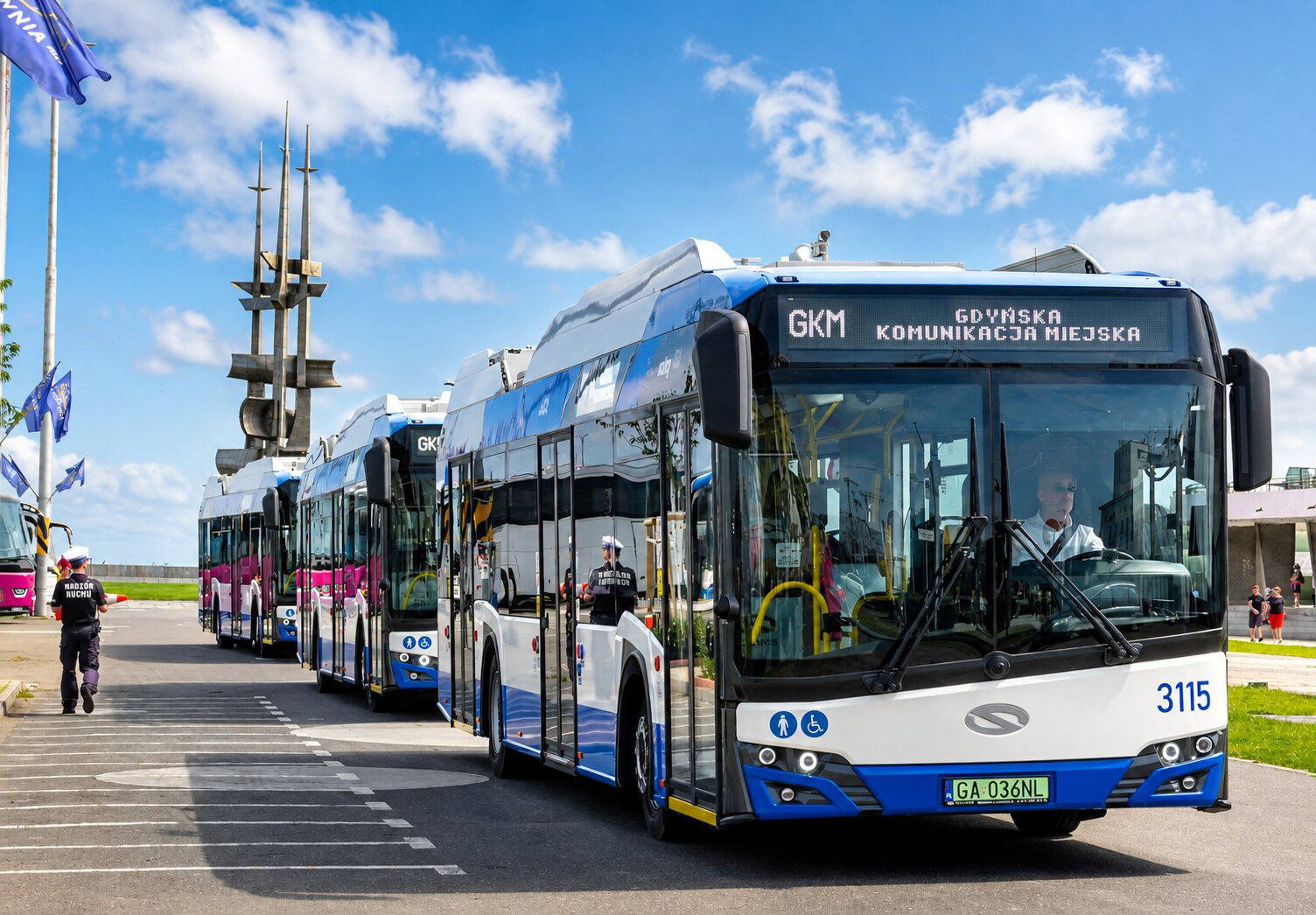
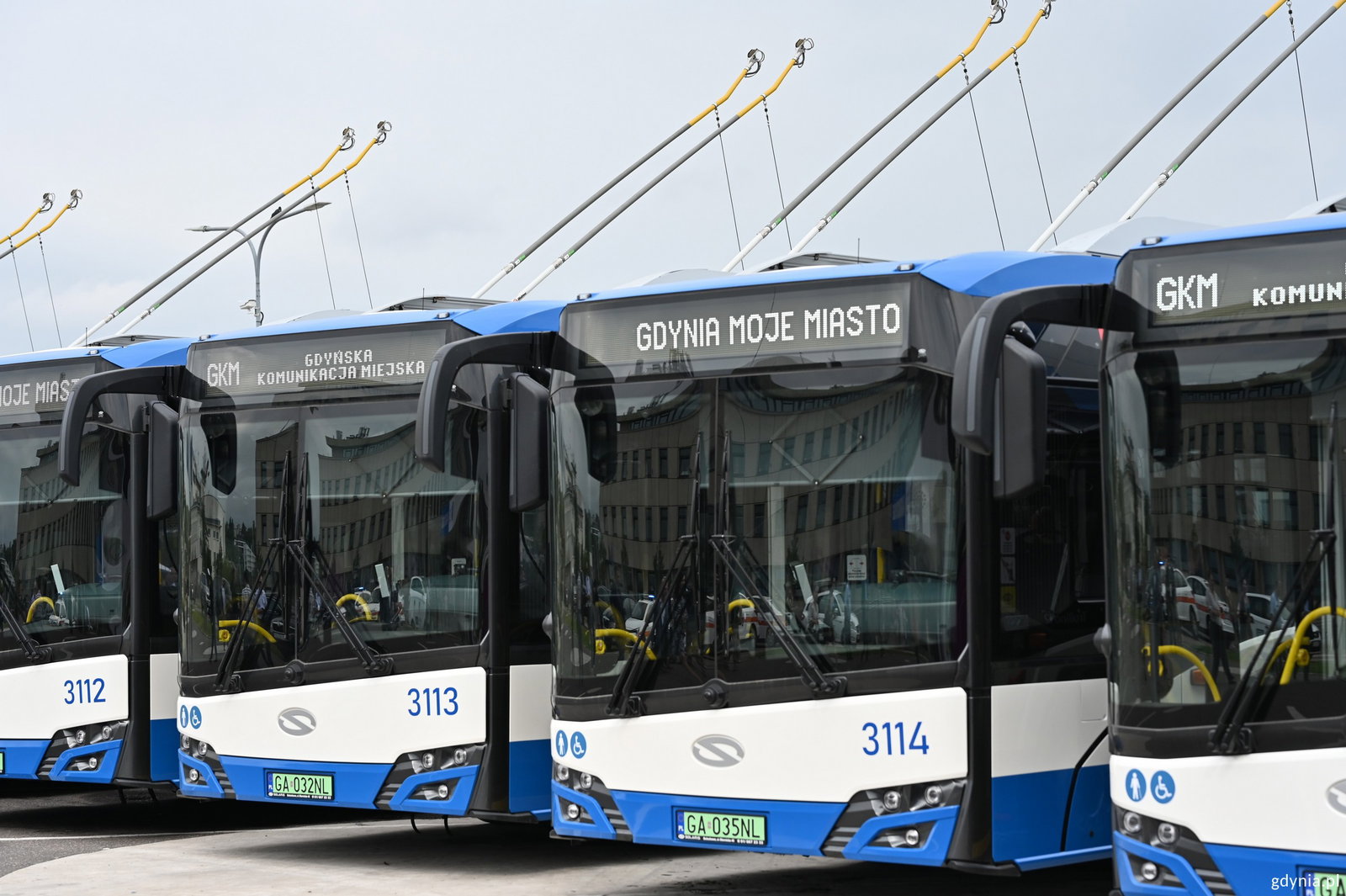
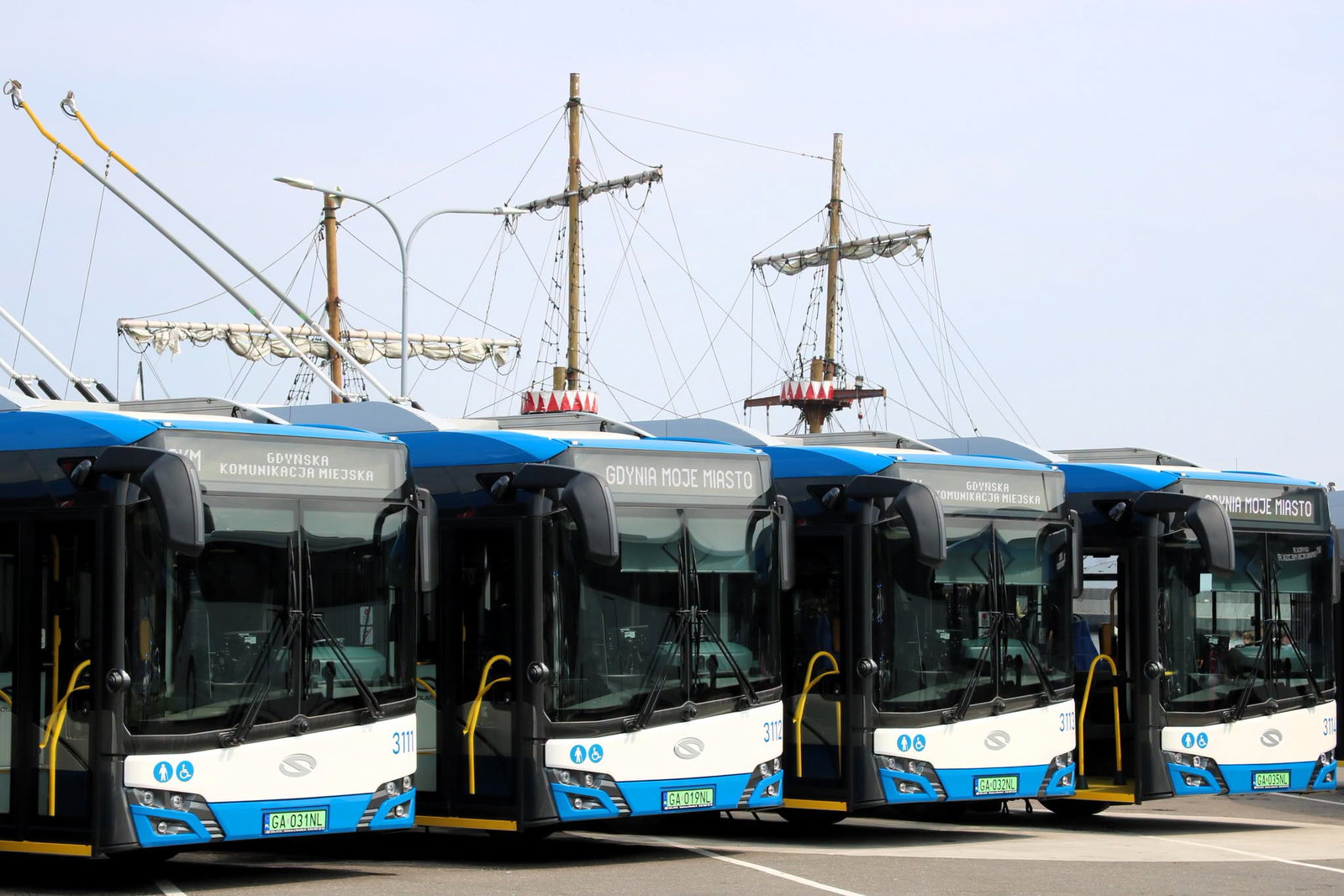
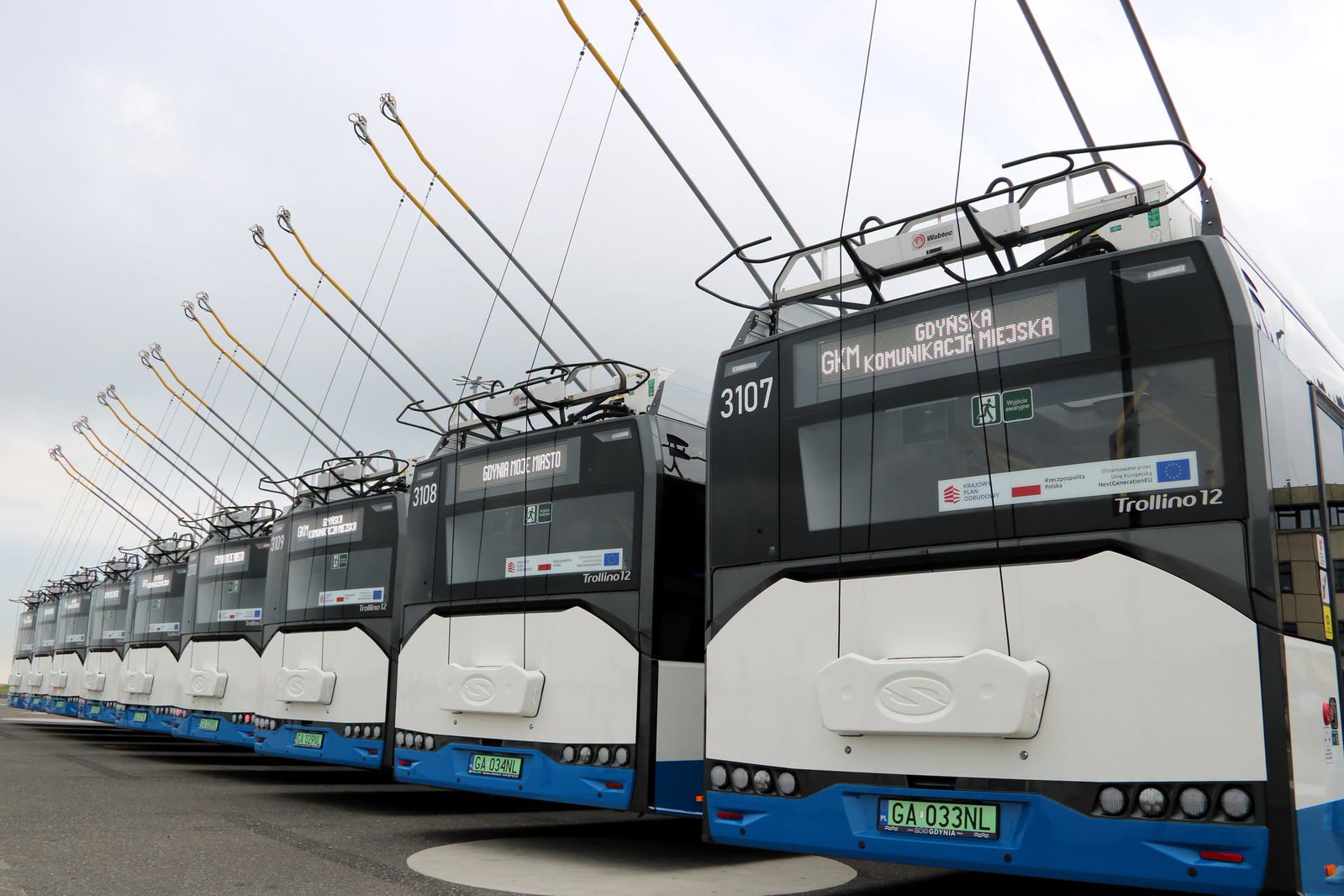
Gdynia’s trolleybus fleet has been expanded with nine new Solaris Trollino 12M trolleybuses offering extensive off-wire capability. The Polish port city officially took delivery of the vehicles on 6 August, one of their most important features being the 90 kWh LTO battery pack: thanks to this, the Trollinos can cover up to 50 kilometres without overhead wires. The substantial energy storage capacity is not merely an operational safety reserve, but also makes it possible to extend the trolleybus network in practice without building new overhead wiring: from September, some of the new vehicles will already be operating on an extended route, covering a section of more than 9 kilometres in battery mode.
Among Poland’s existing networks, Gdynia plays a particularly important role: with a system of around 90 kilometres in route length, it currently operates the country’s most extensive trolleybus network. The Gdynia trolleybus operation runs a fleet of roughly one hundred vehicles, almost exclusively Solaris-built, but fitted with various Cegelec, Škoda and Medcom traction systems. Another notable feature of the fleet structure is that, alongside Tychy, Gdynia is one of only two Polish cities where the Solaris Trollino 12 Electric type, defined by the manufacturer as a “super trolleybus” or a dynamically charged electric bus, has appeared in regular operation.
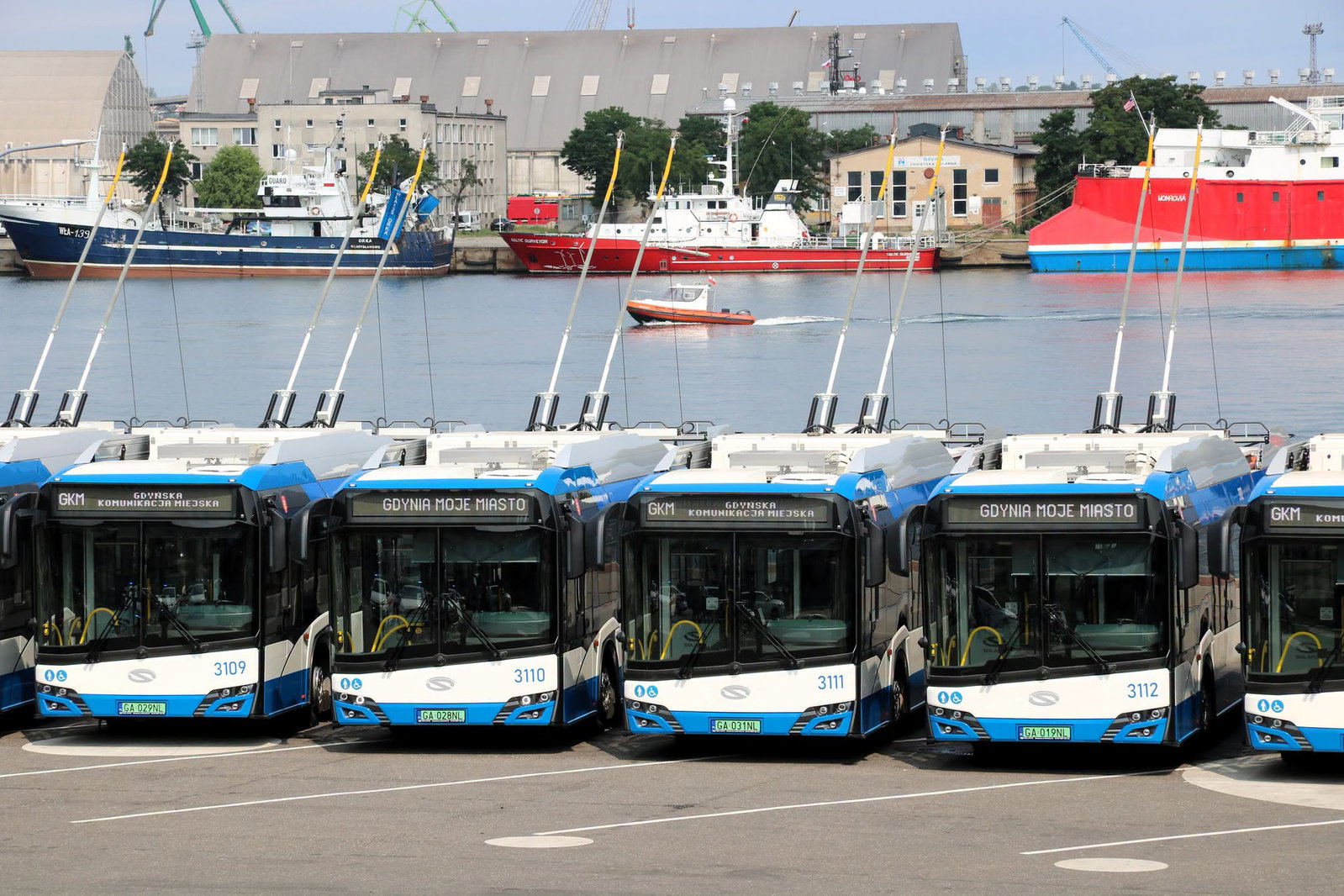
Before the latest handover, the most recent new trolleybuses arrived in Gdynia last December, when six Trollino 12s equipped with Medcom traction systems and 58 kWh LTO battery packs entered service. The nine vehicles now delivered have a significantly larger, 90 kWh energy storage system, meaning their battery capacity matches that of the previously procured so-called “super trolleybuses”. An important difference, however, is that the new vehicles are conventional trolleybuses in terms of their design, rather than vehicles based on Solaris’s battery-electric Urbino electric platform and subsequently adapted for trolleybus operation.
According to Gdynia’s public transport operator, the 90 kWh battery capacity is justified primarily by the characteristics of the local network and the operating practices developed in recent years. Several routes in the city see trolleybuses cover longer sections without overhead wires, and in practice it can also happen that on certain sections they do not immediately reconnect to the overhead line even where wires are present. This is because the infrastructure required for automatic reconnection while moving or at stops is not available everywhere, while the geometry of the overhead line and the characteristics of the given road section do not always allow it to be installed. As a result, the actual length of a battery-operated section can in practice be greater than would be suggested by the length of the unwired part of the route alone.
Winter operation is another argument in favour of a larger energy reserve. At low ambient temperatures, consumption in battery mode can rise to around 2.5–2.6 kWh/km due to the energy required for passenger-compartment heating, battery thermal management and other auxiliary systems. On a route where the vehicle has to travel more than 5 kilometres on battery power in each direction, for example, a complete round trip already means 10–11 kilometres of off-wire running. In unfavourable winter conditions, this may amount to energy consumption of around 25–30 kWh, to which an adequate reserve must also be added in the interests of operational reliability. A usable battery capacity of as much as 50–60 kWh may therefore be required for a single round trip.
Sizing must also take into account that, even with the use of IMC, or in-motion charging, a full battery recharge cannot be guaranteed on every round trip. The output of on-board charging equipment is typically between 80 and 150 kW, but the charging power that can actually be used is influenced by the load capacity of the overhead network, thermal and electrical limits, the vehicle’s instantaneous energy demand, and traffic conditions alike. Congestion, a diversion or another traffic disruption can also reduce the distance travelled under the overhead wires, and therefore the time available for recharging the battery.
The 90 kWh capacity is therefore not solely intended to achieve the greatest possible off-wire range, but also provides an appropriate reserve for winter operation, traffic disruptions, diversions and possible outages on the overhead line network. The larger battery also allows the vehicles to be deployed much more flexibly, and gives Gdynia the option of extending its existing trolleybus routes without installing new overhead wiring.
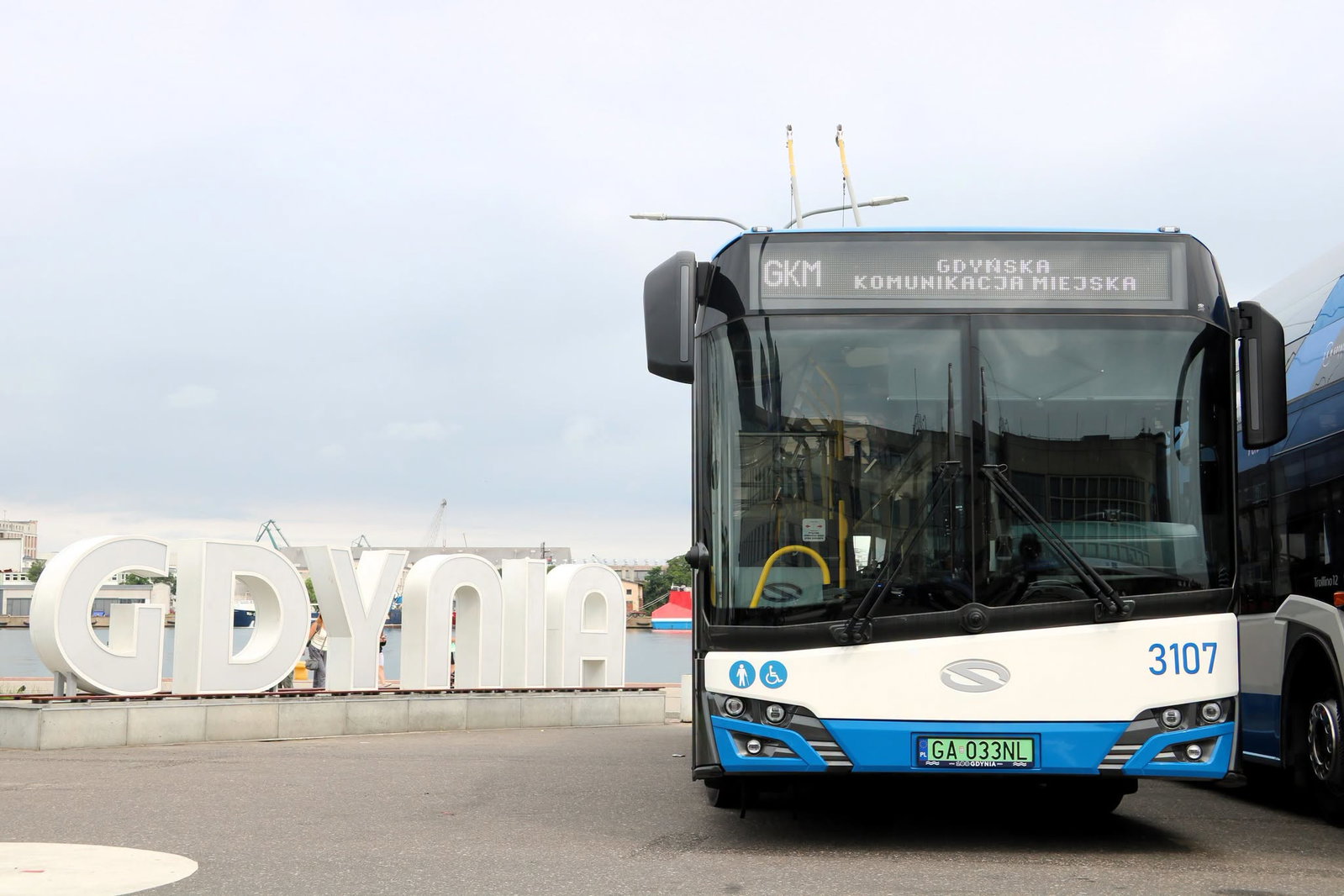
The Trollino 12s now entering service will also help partially renew the fleet: the nine new vehicles are replacing trolleybuses being gradually withdrawn, the oldest of which are now more than twenty years old. The new vehicles are air-conditioned and have 28 seats and 47 standing places in the passenger compartment, giving each a total capacity of 75 passengers. The vehicles are also fully accessible for passengers with reduced mobility, and are equipped with a modern passenger information system, USB sockets for charging mobile devices, and a camera system monitoring both the passenger compartment and the surroundings of the trolleybuses.
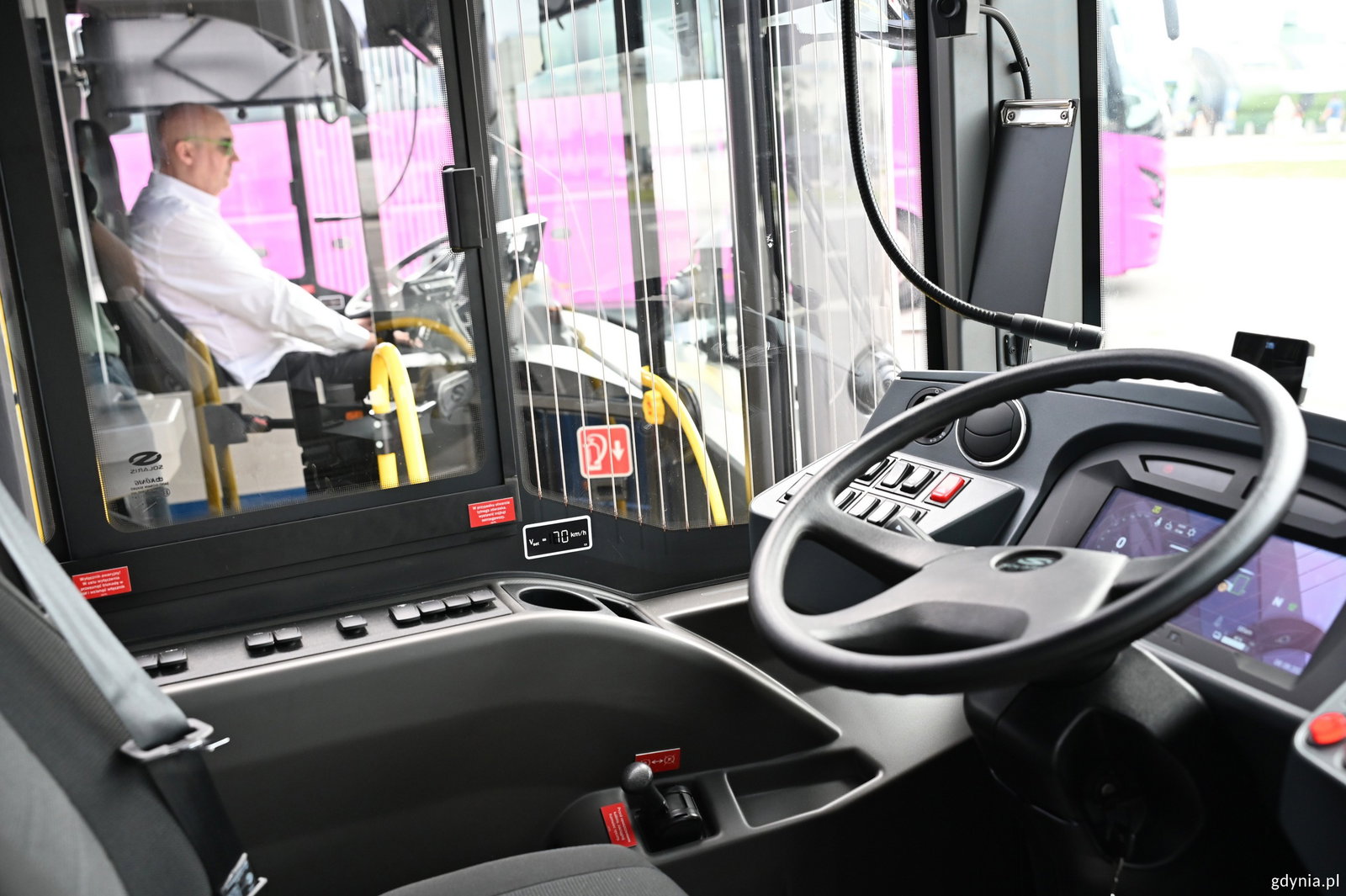
Traction is provided by an EMIT STDa 280-6B-7 traction motor with a rated output of 175 kW, while the energy required for off-wire operation is supplied by a battery pack delivered by Poland’s Impact and built from LTO, or lithium-titanate, cells. According to the local transport operator, the Trollinos can cover up to 50 kilometres without overhead wires in favourable conditions. In these vehicles, battery traction is therefore no longer simply an auxiliary mode for briefly replacing the overhead supply or dealing with emergency situations, but can also be used in regular route operation as a fully fledged second energy source.
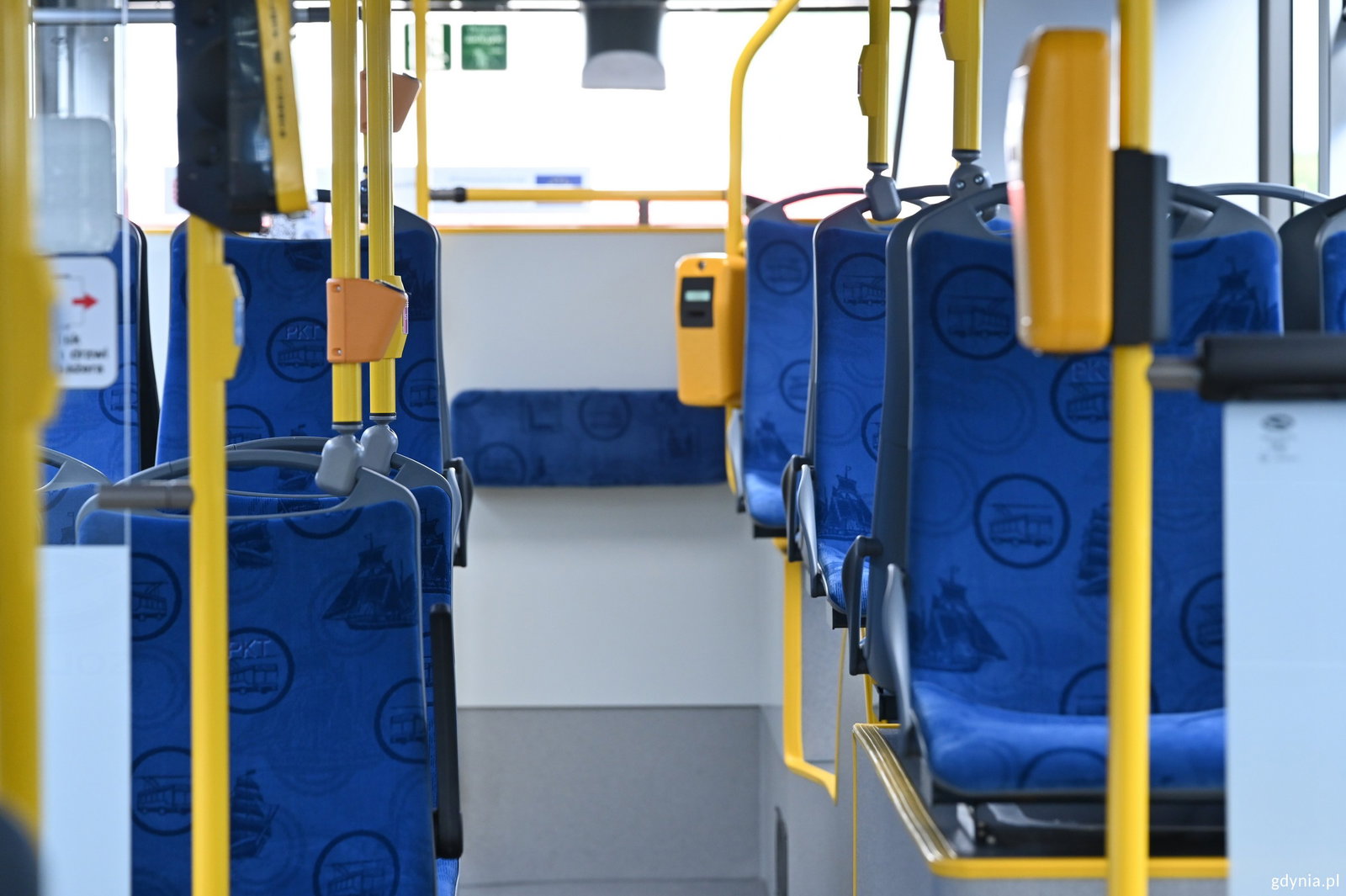
Gdynia will make use of this capability as early as 1 September, as trolleybus route 28 will be significantly extended, with services running between Pustki Cisowskie and the hospital in Redłowo. The new Trollinos will cover the section from the 3 Maja stop on 10 Lutego Street to the hospital and back, totalling more than 9 kilometres, in battery mode, meaning no new overhead wiring will be needed on this part of the route for the extension.