![Magyarbusz [Info]](/mbi/header-logo.png)
Prague’s new trolleybus network continues to grow: passenger trial operation starts on two new routes at once
 Ludányi József
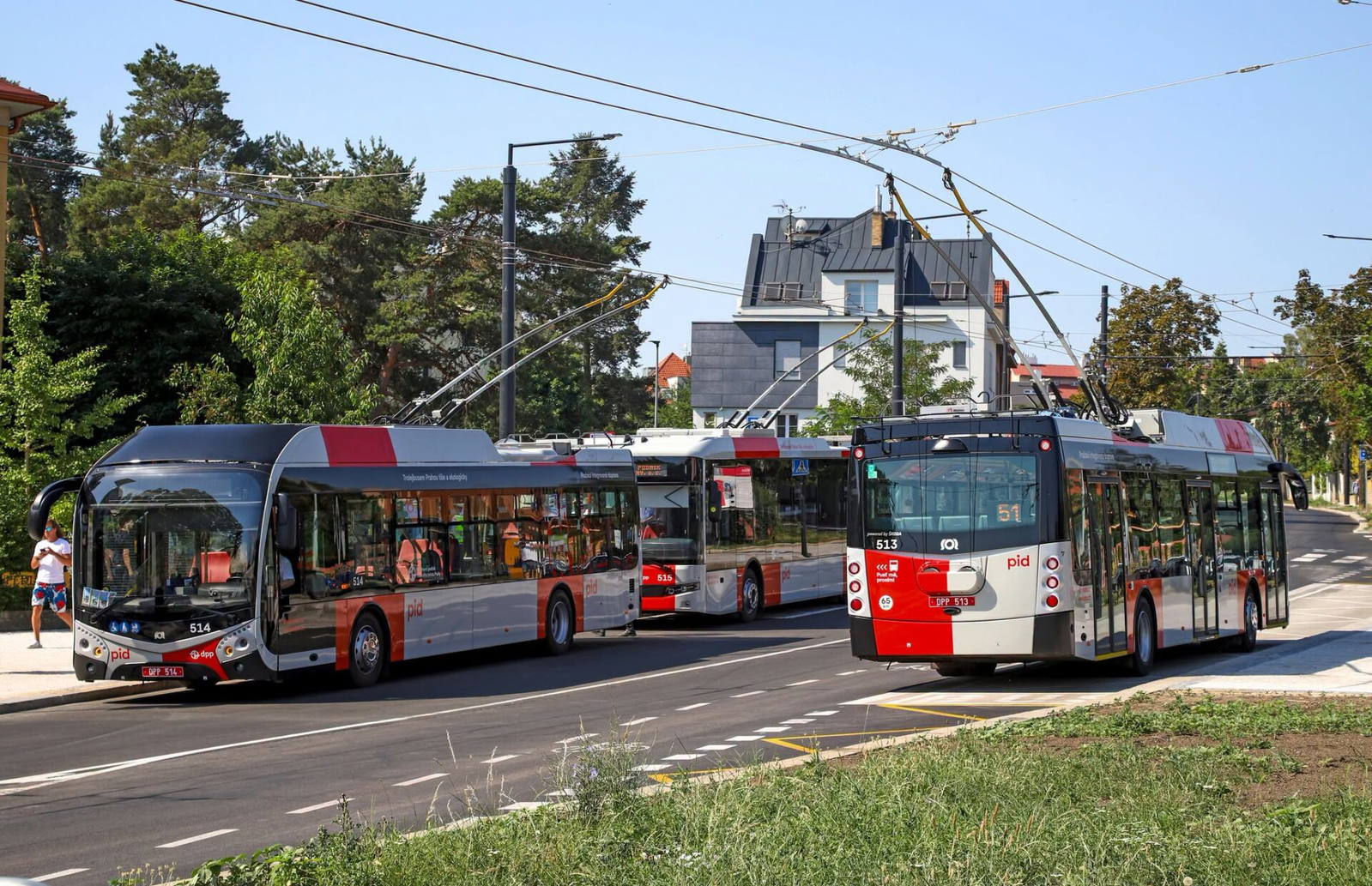
Barely three months after the launch of trolleybus route 52, the rebuilding of Prague’s trolleybus network has reached another important milestone: on 26 June, passenger trial operation began simultaneously on two new off-wire-capable trolleybus routes, 51 and 53. The Czech capital now has five modern trolleybus routes with partial battery operation, while the current projects in fact represent only the first stage of a longer-term electrification strategy under which high-capacity bus routes with significant gradients will gradually be converted to off-wire-capable trolleybus operation in the coming years.
The two projects now handed over serve transport policy, technical and urban-historical purposes at the same time. Route 51 brings trolleybuses back to the district where Prague’s first trolleybus line opened in 1936, while route 53 reaches the Strahov plateau again after almost 54 years; trolleybus operation there ended in October 1972. The two projects therefore not only create new infrastructure, but also symbolically link the city’s past with its current electrification programme.

The technical scope of the investment is also noteworthy. As part of the two projects, DPP installed overhead wiring over a total route length of more than 15 kilometres, built two new traction substations, laid nearly 40 kilometres of underground feeder cable, and erected 451 overhead line poles, the vast majority of which also serve as supports for public lighting. The total cost of the two investments reached CZK 616.5 million, with funding provided by the European Union under the Czech National Recovery Plan. Construction had to be carried out to an extremely tight schedule, as the funding conditions required all new trolleybus infrastructure in Prague to be completed by the end of June 2026.

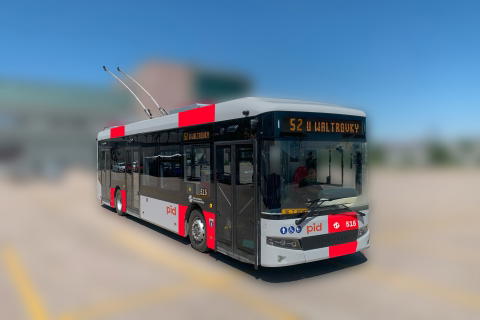
Full-scale operation, however, will still have to wait a few more months. The 30 Bozankaya SNG 12T off-wire-capable trolleybuses ordered by DPP last year to serve the three new trolleybus routes have already been completed, and all vehicles are in Prague, waiting at the Řepy and Klíčov depots. However, the transport operator has not yet officially accepted any of them into its fleet. Although homologation of the type was completed in mid-April, meaning the vehicles are technically ready for entry into service with the necessary approvals in place, the acceptance procedure is still dragging on. Twenty vehicles are currently undergoing acceptance, seven of them at an advanced stage, but the correction of identified faults and deficiencies is still under way. The repairs are being slowed, among other things, by long delivery times for spare parts from Ankara, and DPP was also not fully satisfied with the translation of the vehicles’ operating documentation.

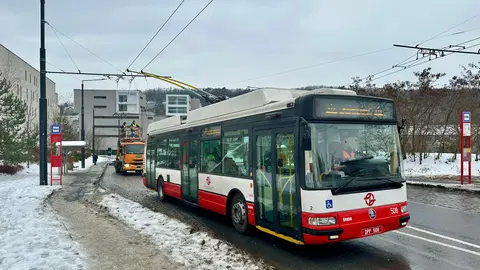
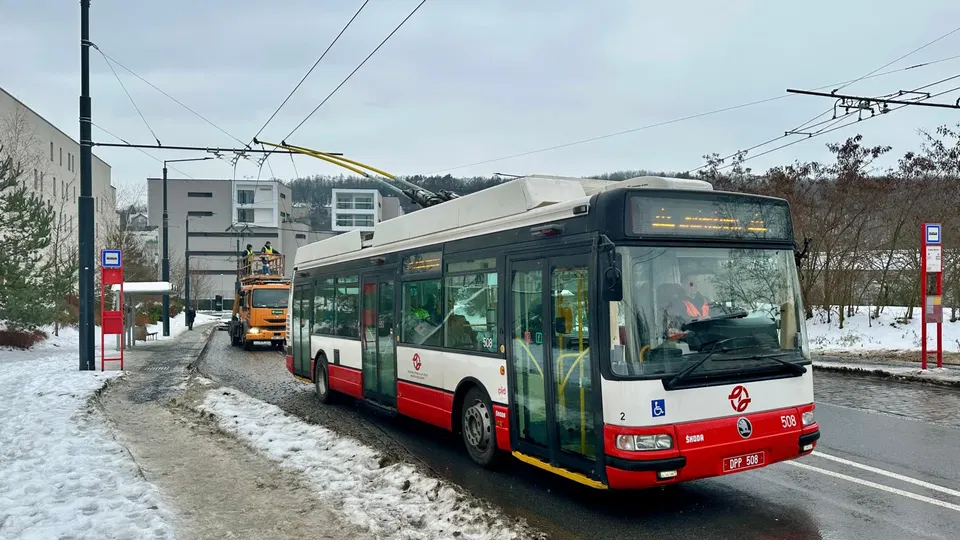
As a result, on routes 51 and 53 – as on route 52, launched in April – passengers can currently encounter a trolleybus on only one short duty per day on each line, while the overwhelming majority of scheduled services continue to be operated by buses. On the three new routes, trolleybus duties are currently being covered mainly by DPP’s fleet of just four SOR TNS 12 vehicles. The transport operator received these vehicles from SOR as part of contractual penalties following problems related to the delayed delivery of the articulated TNS trolleybuses; they had originally been built for the Zlín transport company.

The infrastructure for route 51 has been designed so that trolleybuses use the overhead wires only on sections where this is justified from an energy perspective. Vehicles departing from Hradčanská run in battery mode as far as the Zelená stop, then connect to the overhead line while moving; the wiring provides traction power and battery charging as far as Bořislavka. In the return direction, they run on battery power from the Bořislavka terminus to the Sušická stop, then reconnect to the overhead line, lower their current collectors on the move in Zelená street, and again reach the Hradčanská terminus in battery mode.

As part of the investment, overhead wiring was built over a route length of 7,790 metres, together with the new U Matěje traction substation and around 20 kilometres of underground feeder cable. The overhead sections at the Bořislavka terminus and the Na Pískách loop will also be suitable in future for charging electric buses equipped with two-pole current collectors.
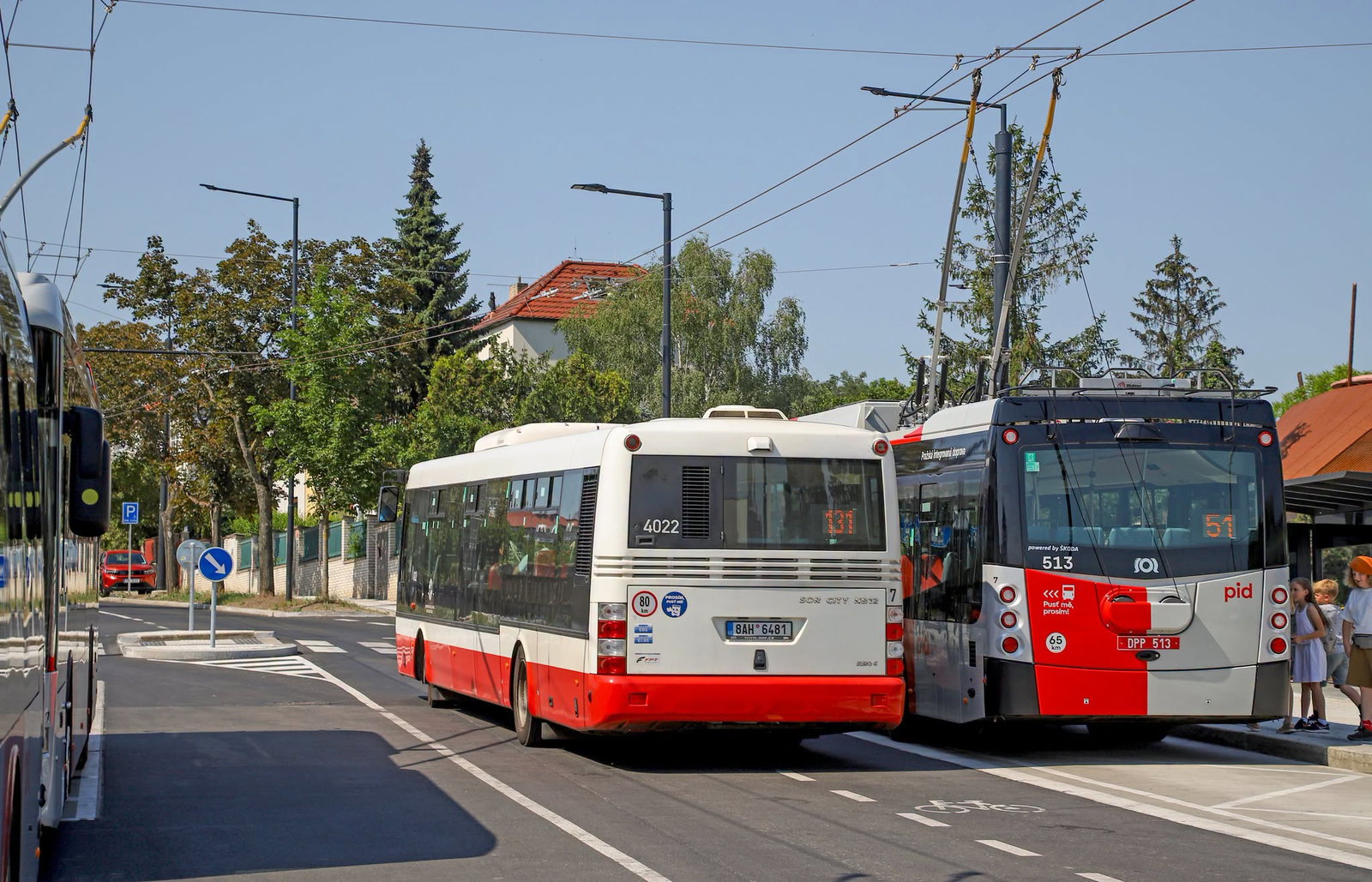
A special feature of the project is that DPP also took heritage operation into account. A separate overhead connection was built towards Na Pískách, enabling the historic trolleybuses of the nearby Střešovice Public Transport Museum to operate special services. To this end, the power supply system was designed so that it can also operate at 600 volts if required, which is why the new Bozankaya SNG 12T trolleybuses have been fitted with a dedicated switch for changing between 600- and 750-volt operation.
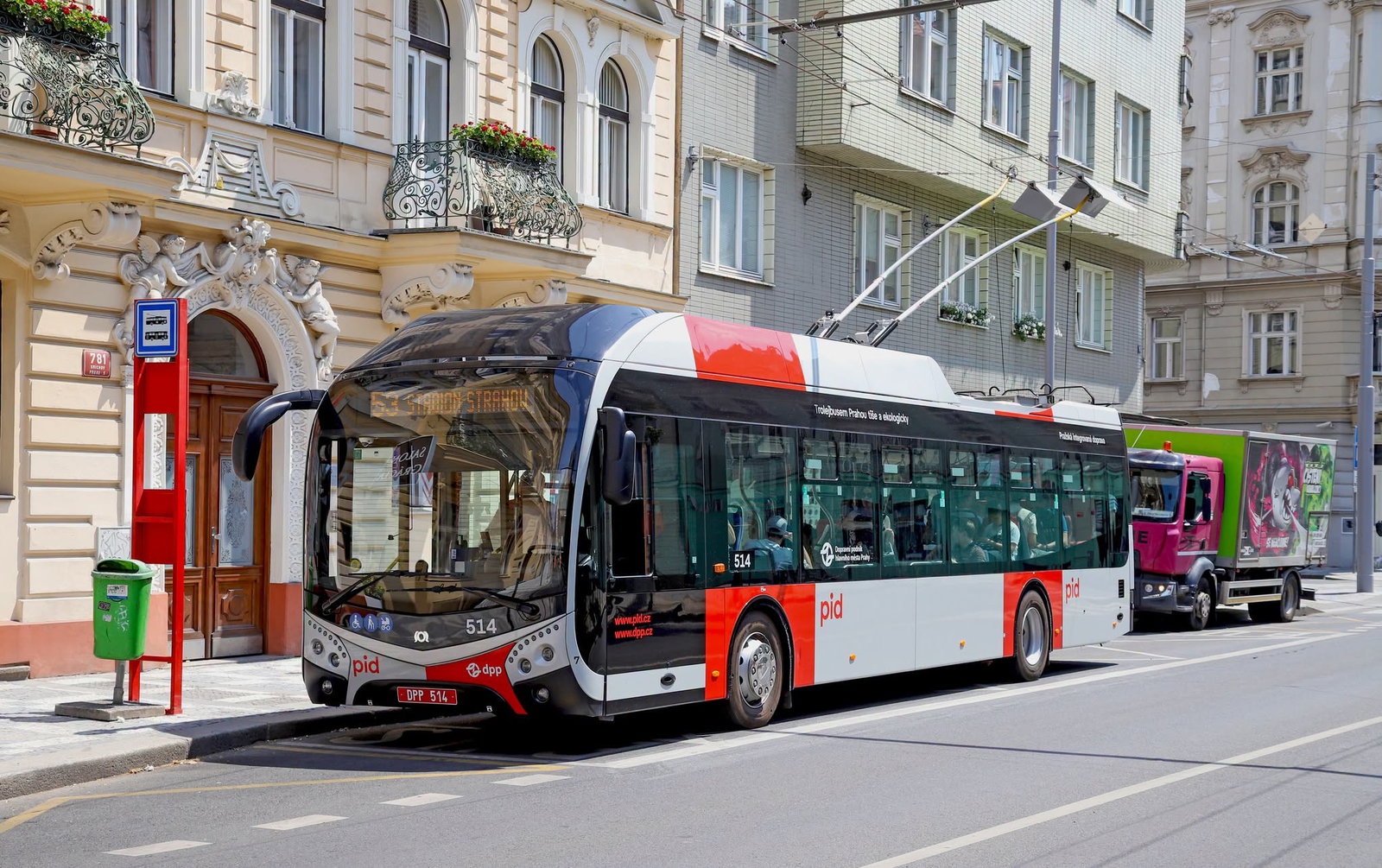
The other new route, 53, runs between Karlovo náměstí and Stadion Strahov, and primarily serves to electrify the steep gradient between Smíchov and Strahov. For this reason, the overhead line accompanies the vehicles along almost the entire climb, while on the inner-city sections with lower energy demand they operate in battery mode.
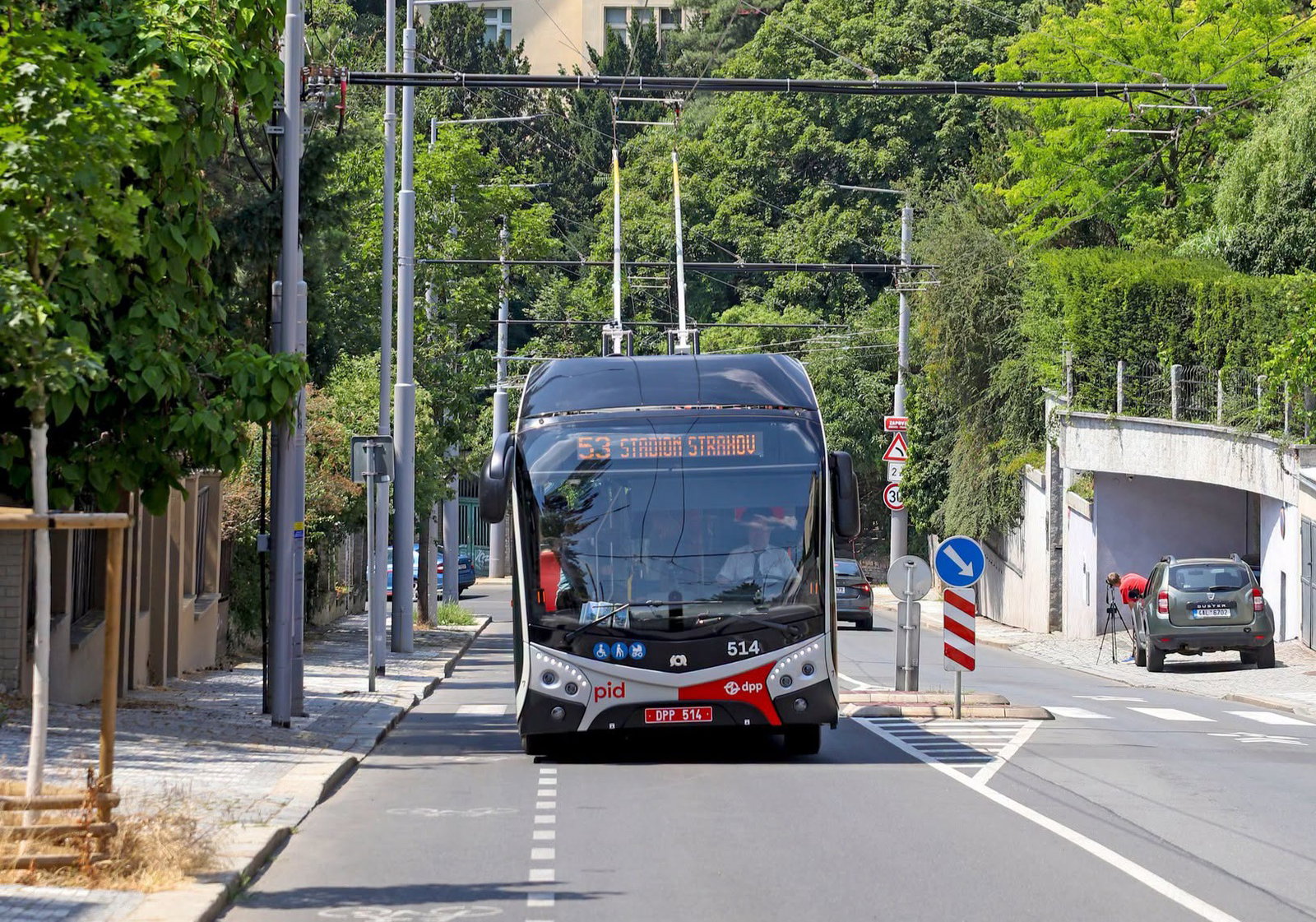
Departing from Karlovo náměstí, the trolleybuses connect to the overhead line near Arbesovo náměstí, with the wiring providing traction power all the way to Strahov. At the terminus, the overhead line currently ends at the new Strahov substation; its extension will be implemented together with the planned Malovanka–Strahov tram line and the new interchange hub.

On the return journey, the vehicles reconnect to the overhead line at the U Palaty stop, then lower their current collectors on the move near Dienzenhoferovy sady and reach the Karlovo náměstí terminus on battery power. A short overhead charging section has also been installed here to top up the trolleybuses’ batteries; in the longer term, it could also serve as preparation for possible electric buses with two-pole charging on route 148.
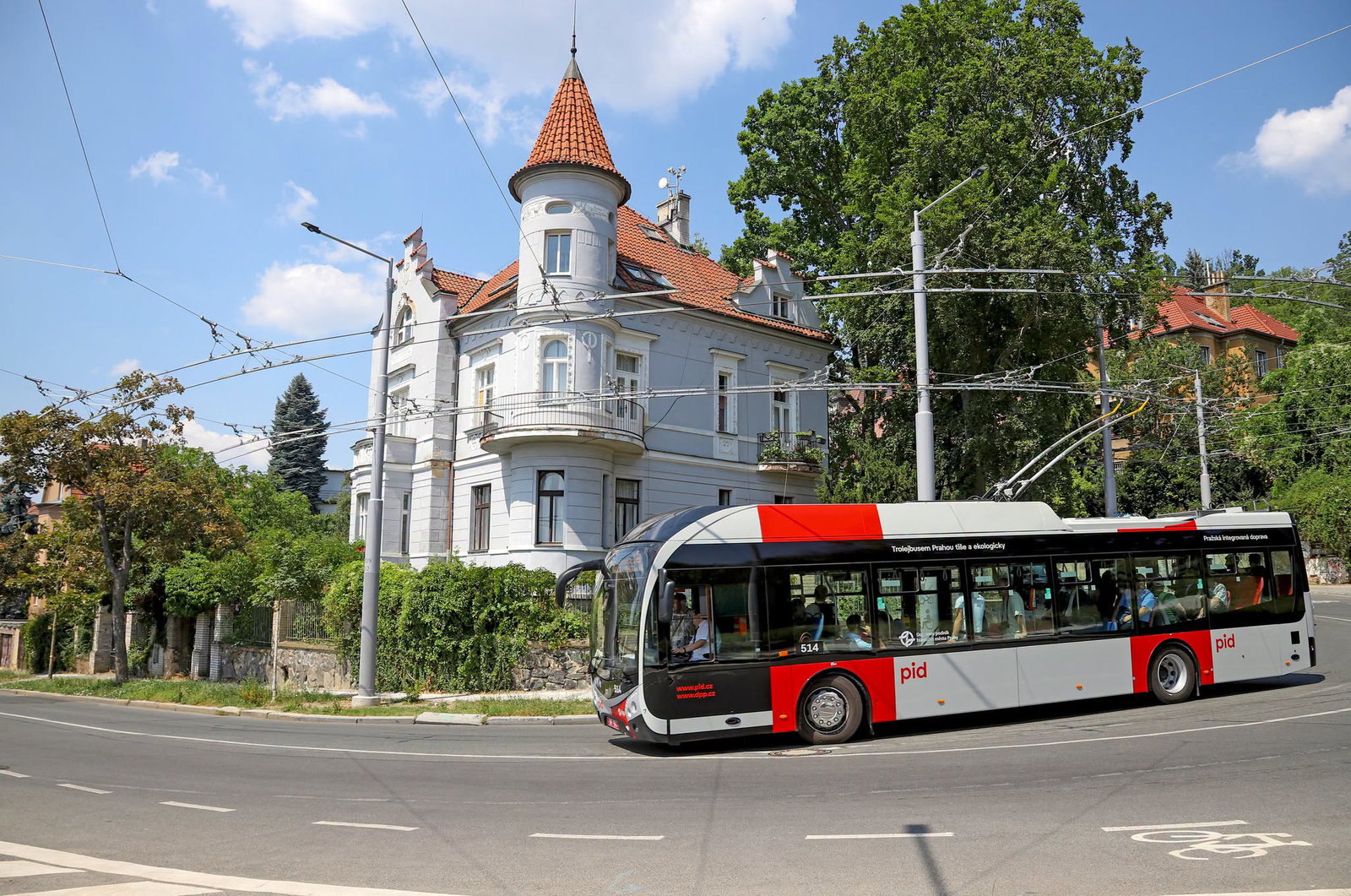
As part of the project, overhead wiring was built over a route length of 7,522.5 metres, together with around 20 kilometres of underground feeder cable. Power supply for the line is provided by the new Strahov substation and the modernised Hřebenka substation, the latter once again feeding trolleybuses after more than five decades. The system was dimensioned from the outset to be able to supply the future trolleybus route 56, which will replace the current bus route 191.
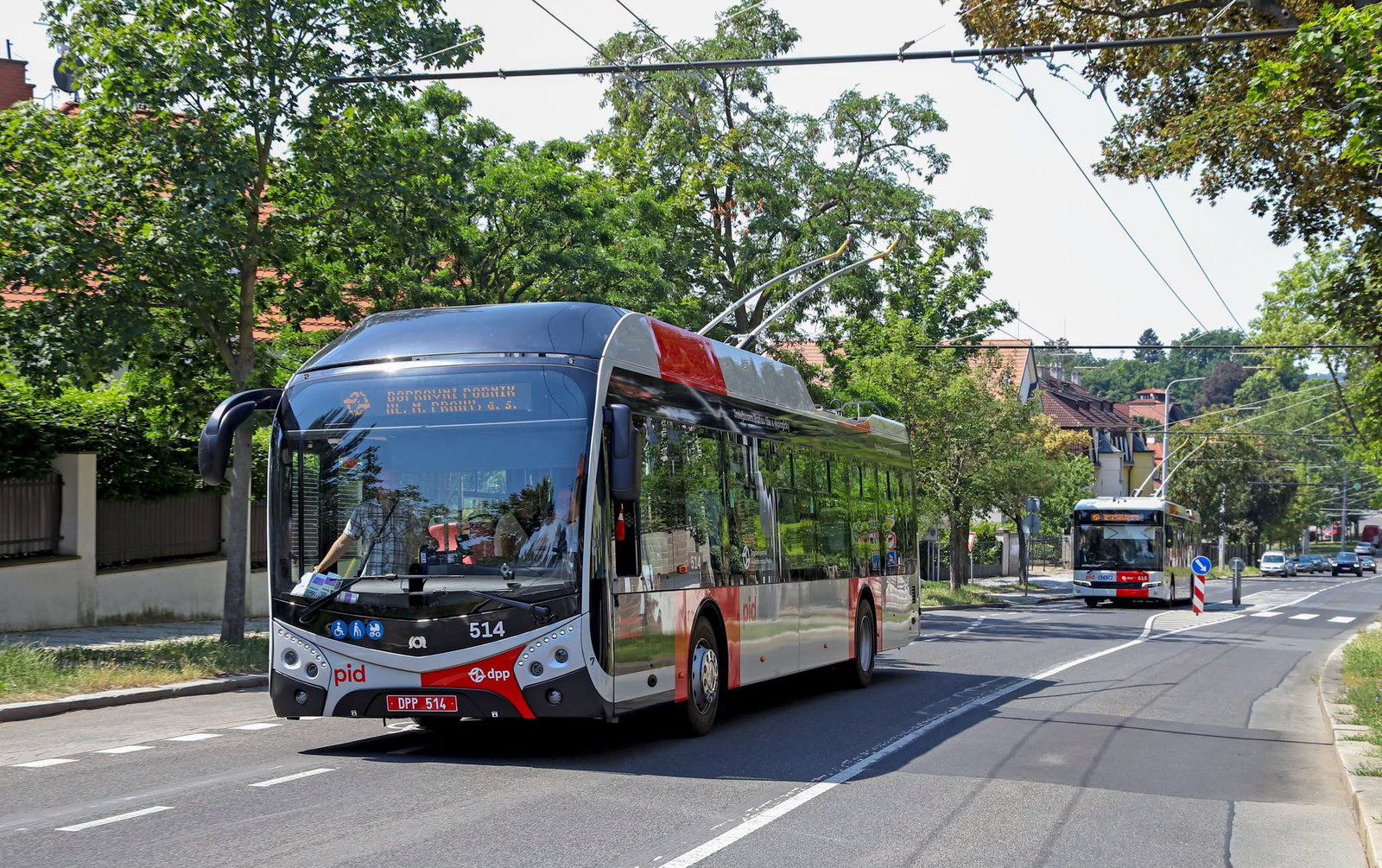
The newly opened routes 51 and 53 are not standalone investments, but parts of a comprehensive electrification programme adopted in 2020. Prague’s city leadership then decided on the gradual conversion of former bus routes 131, 137, 176 and 191 to trolleybus operation. The first result of the programme was the commissioning of route 52 this spring, now followed by routes 51 and 53, while the conversion of the current bus route 191 – creating the future trolleybus route 56 – will form the next development phase. The choice of the four routes is no coincidence: all of them operate on the left bank of the Vltava, allowing them to use a common depot, power supply infrastructure and, in several places, shared overhead line sections. In addition, all the routes include significant gradients, where off-wire-capable trolleybuses with in-motion charging offer a particularly efficient solution compared with purely battery-electric buses.