![Magyarbusz [Info]](/mbi/header-logo.png)
Yutong aims to break into Europe with another diesel coach
 Ludányi József
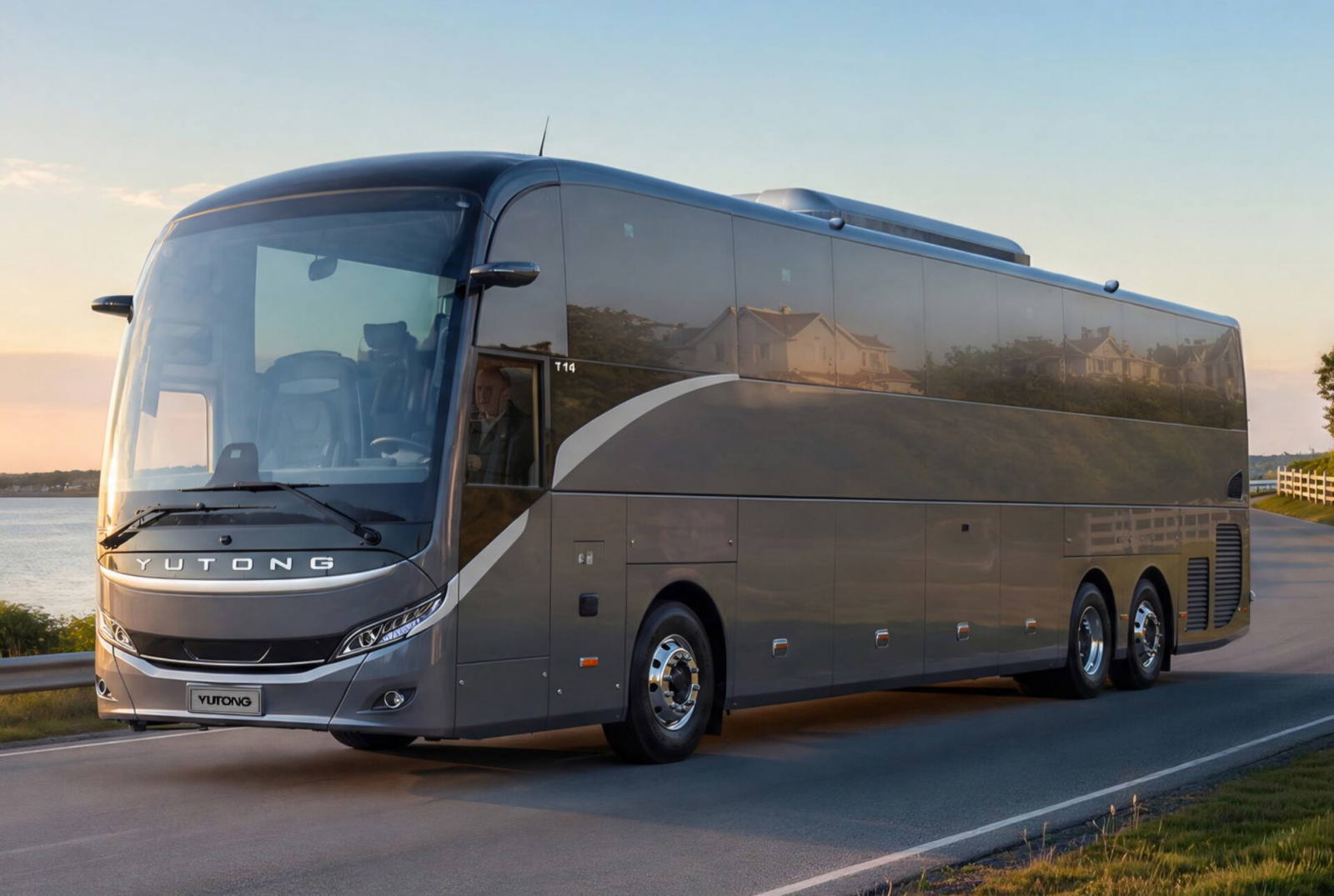
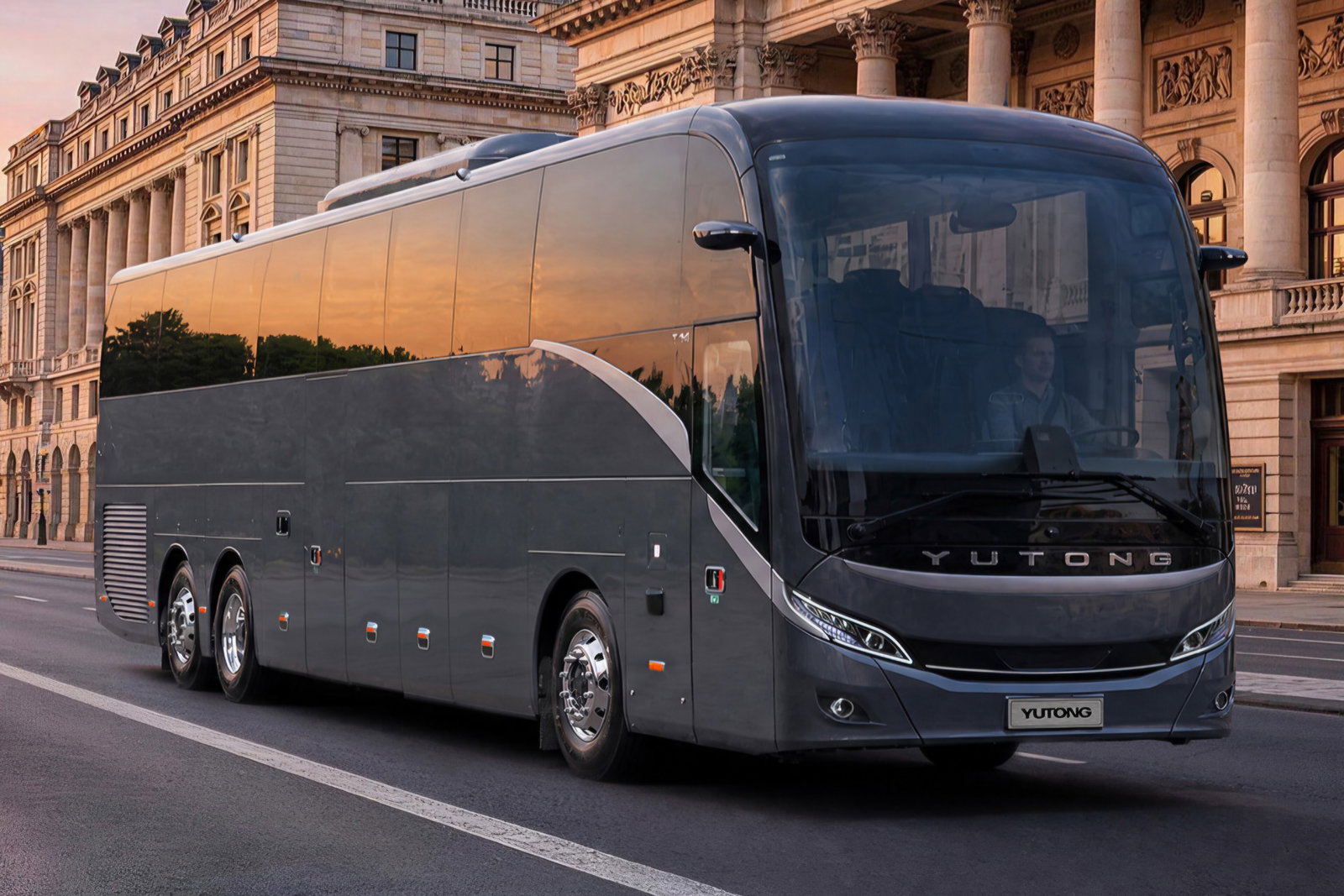
Yutong is adding another model to its diesel-powered coach range intended for continental Europe: after the 12-metre T12 unveiled in the spring, the Chinese manufacturer has now taken the wraps off the left-hand-drive version of the larger, 14-metre T14. The model itself is not unfamiliar in Europe, as Yutong had already launched the fully electric version of the T14 under the name T14E; this new variant, however, arrives not with electric drive, but with a conventional diesel powertrain. The reason lies primarily in its intended field of use: the electrification of long-distance coach transport is progressing far more slowly than in the urban segment, while for operators, diesel operation is still difficult to replace thanks to its long range, rapid refuelling and widely available infrastructure. Yutong is therefore aligning itself with current demand in this market, and is seeking to gain further share in the coach segment — which continues to struggle with supply constraints — with a driveline tailored specifically to European requirements and widely used across the continent.
From this perspective, Yutong’s timing is far from accidental. Supply remains tight on the European coach market, while demand, which fell back during the coronavirus pandemic, has recovered strongly in recent years. Manufacturing capacities, however, are still unable to keep pace at the same rate: while several former players have disappeared or withdrawn from producing complete buses and coaches in Europe, the capacities of the remaining manufacturers are in many cases booked up for an extended period. All this has resulted in long delivery times and order backlogs, meaning there is still room for new market entrants capable of entering the segment with the right product, substantial production capacity and shorter lead times. As the world’s largest bus manufacturer, Yutong possesses precisely these attributes, so the European introduction of the T14 after the T12 is a logical step in taking advantage of the current market situation.
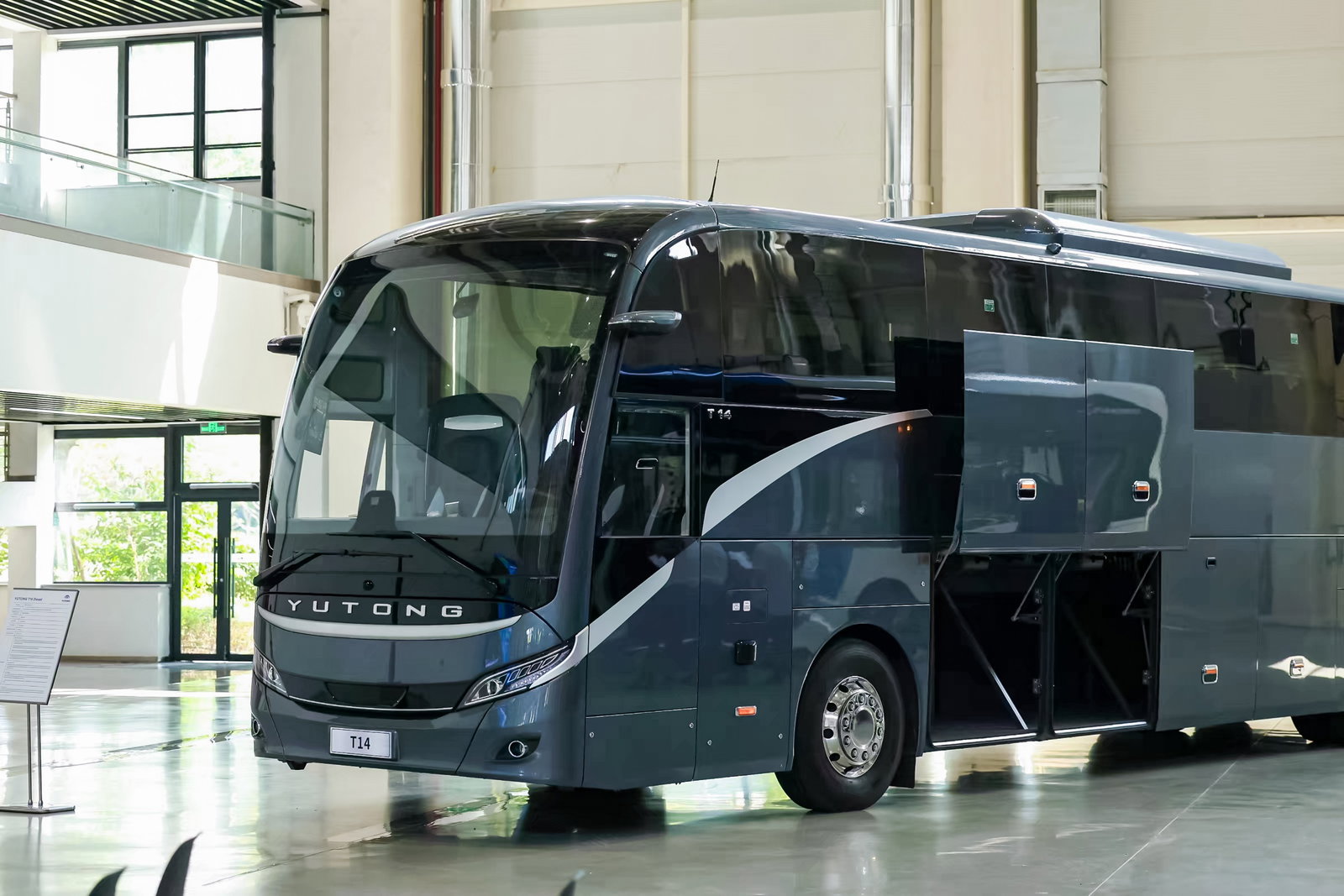
To find out exactly what European operators can expect from the new T14, we also asked Yutong itself, and will therefore take a closer look at the model supplemented by information from the manufacturer. By way of introduction, however, we can already say from our own experience that its Chinese origin in itself hardly gives cause for reservations: based on our experience with the 15-metre, fully electric T15E that we previously tested, Yutong now represents a level of design, material use and assembly quality that can readily be compared with products of a similar category from European manufacturers.
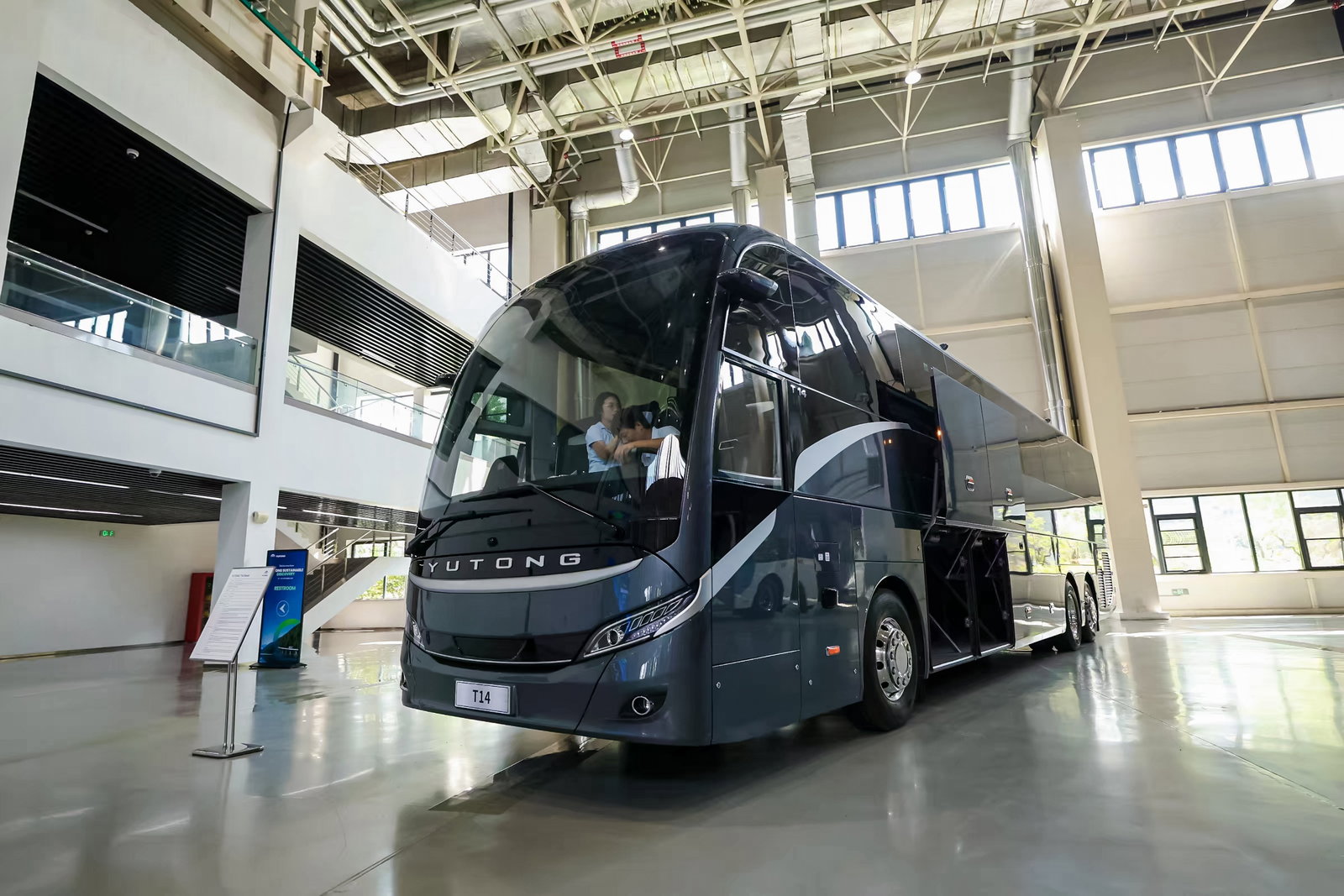
This also clearly illustrates the transformation the leading edge of China’s bus industry has undergone in recent years. In the case of major manufacturers such as Yutong, BYD or Higer, the quality prejudices that a decade ago almost automatically accompanied the arrival of Chinese vehicles in Europe have now largely disappeared. At the same time, it is important not to generalise this to the entire Chinese bus industry, as there are still significant differences between the leading brands just listed and the countless smaller, second- and third-tier manufacturers in terms of product quality, development background and the after-sales services available in Europe.
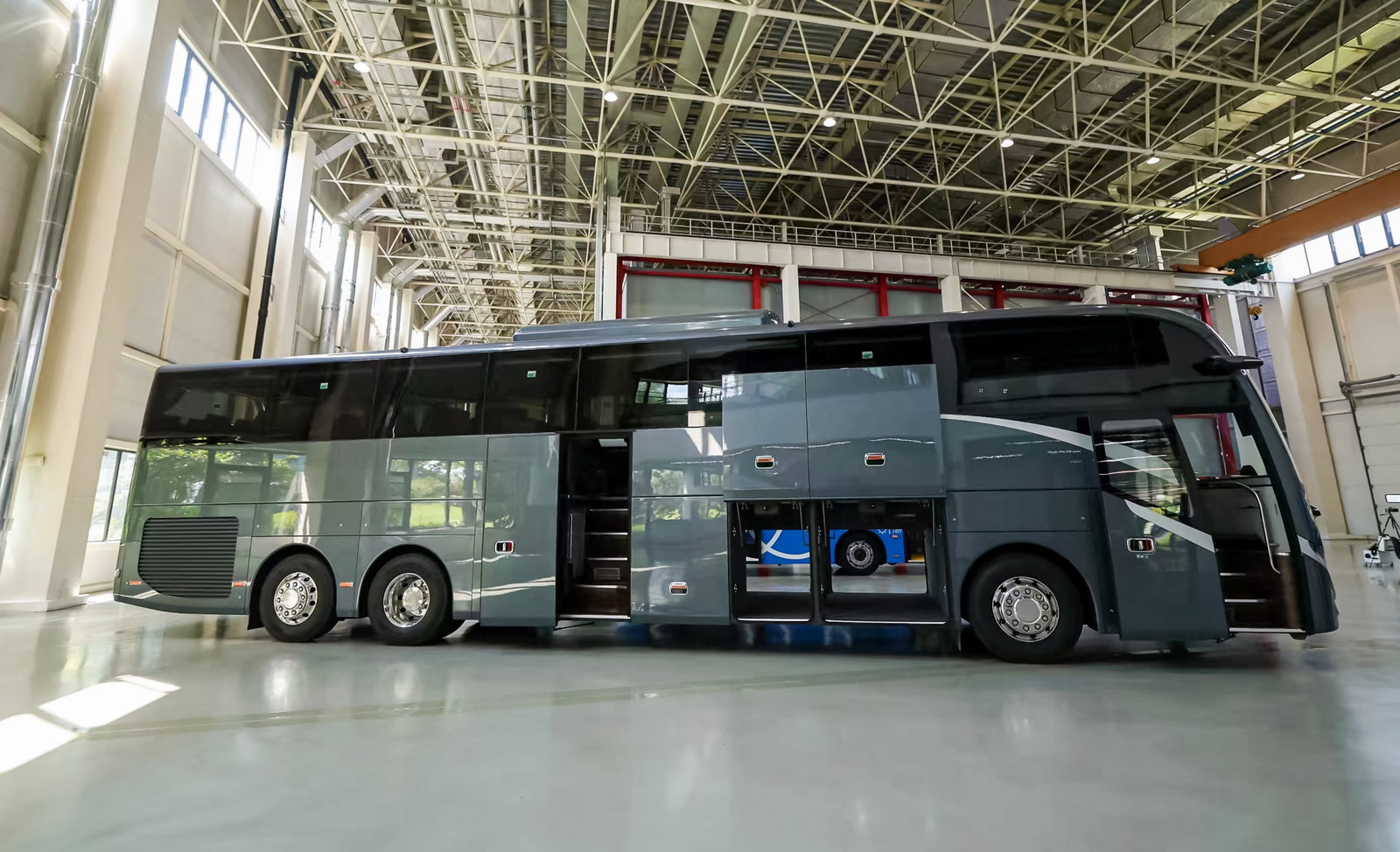
The T series, regarded as Yutong’s flagship product for the European market, has been optimised specifically for long-distance and tourism duties, and its development was based on the operating requirements of the Old Continent, something also reflected in its Spanish design. Yutong also does not rely on an external chassis manufacturer: the T14 is a self-developed, integral construction, while its powertrain and several important subassemblies are based on solutions from well-known European suppliers.
The bus’s frame structure is made using ultra-high-strength steel with a yield strength of 700 MPa. Put simply, this means that the steel used can withstand around 700 newtons of mechanical load per square millimetre before permanent deformation begins. By comparison, conventional unalloyed structural steels typically have a yield strength of around 235–355 MPa (in practice, at least the latter is used for bus frame structures, while major manufacturers often use steels with much higher strength at critical points), meaning that the material used for the T14’s frame offers significantly greater load-bearing capacity in this respect.
In bus design, this has a dual significance: the higher strength makes it possible to design certain frame elements with thinner walls or lower weight without sacrificing the necessary load-bearing capacity, while providing greater reserves at structural points exposed to high loads. The aim is therefore simultaneously to keep kerb weight under control, ensure adequate body rigidity and provide a long service life. Yutong has designed the T14’s main load-bearing frame structure for a planned service life of 20 years or two million kilometres.
Durability is also supported by the cathodic dip-coating corrosion protection process (KTL) applied to the entire body, which forms an even anti-corrosion coating even in the cavities and hard-to-reach parts of the steel structure. According to Yutong, the frame structure treated by cataphoresis has also passed a salt-spray corrosion test lasting more than 1,000 hours; on this basis, the manufacturer expects corrosion resistance of 15–20 years for the main load-bearing structure. This is a particularly important consideration for a coach, where high annual mileage and a long planned operating life mean that body durability directly affects the vehicle’s total life-cycle cost.
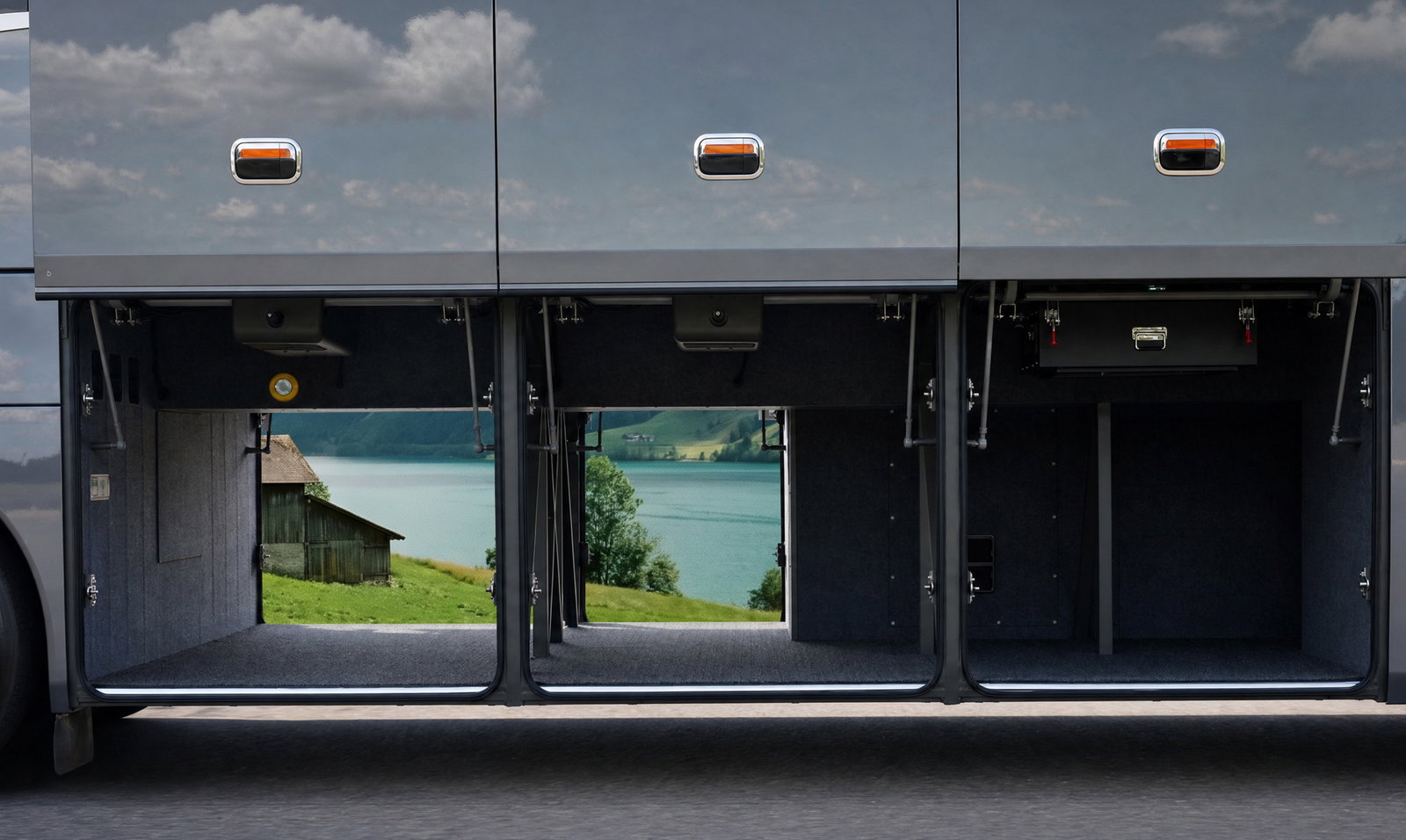
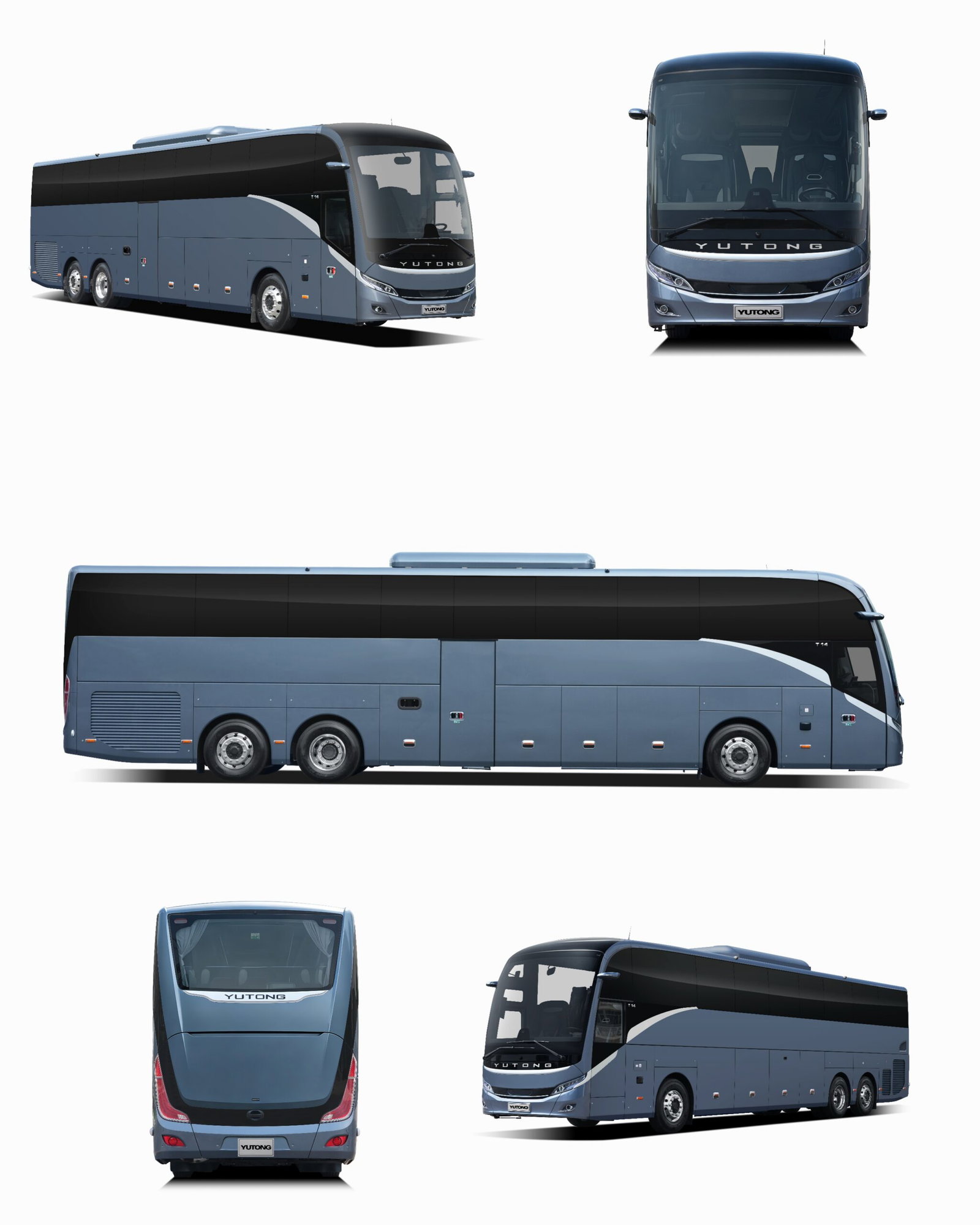
In terms of dimensions, the three-axle T14 already belongs among high-capacity coaches: it is 13,970 mm long, 2,550 mm wide and 3,865 mm high, with a maximum permitted gross vehicle weight of 22 tonnes. Its maximum passenger capacity is 57 people, while up to 11 m³ of luggage space is available beneath the floor. Despite its 6,690 mm wheelbase, the manufacturer quotes a turning circle of less than 20 metres, which can be an important factor when manoeuvring a nearly 14-metre, three-axle vehicle in tighter urban environments and coach parks.
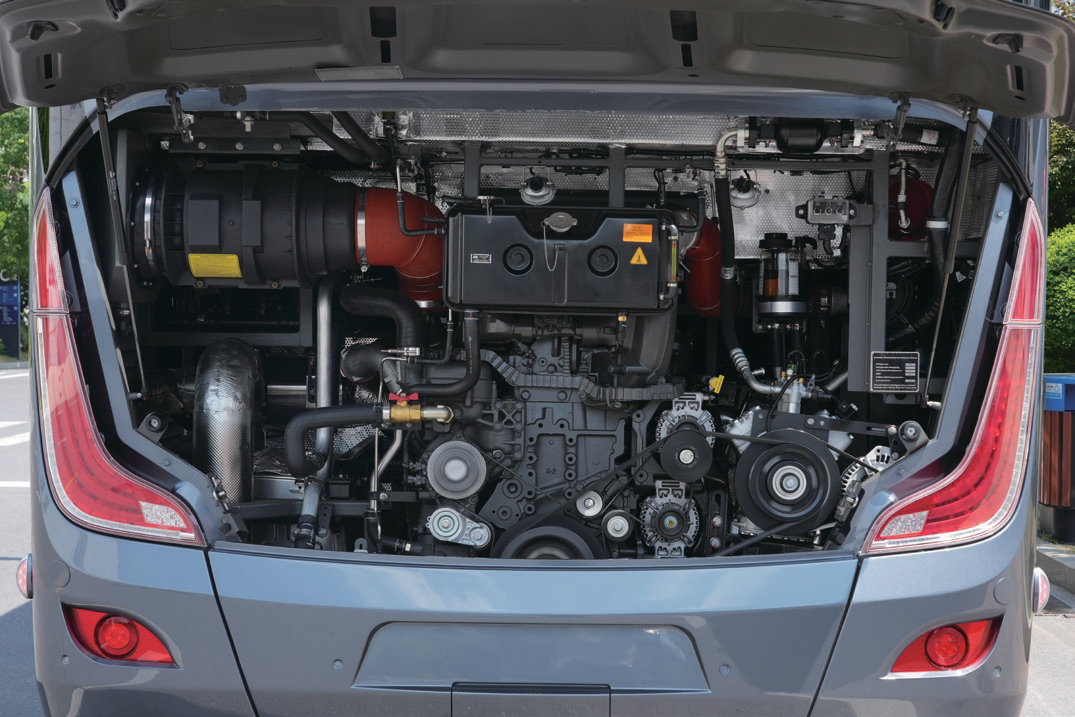
With the driveline, Yutong has once again not experimented with new solutions, instead relying on components well known from European heavy-duty vehicles. The T14 is powered by the 12.9-litre DAF (Paccar) MX-13 diesel engine, which delivers 476 hp (350 kW) and a maximum torque of 2,500 Nm, paired with a ZF 6AP 2520C automatic transmission. The axles also come from ZF, while the steering system is supplied by Bosch, meaning that while the T14 is a self-developed integral Yutong design, several of its key technical units are supplied by components widely used in Europe. From the point of view of European operators, this may also be an advantage in terms of parts supply and serviceability.
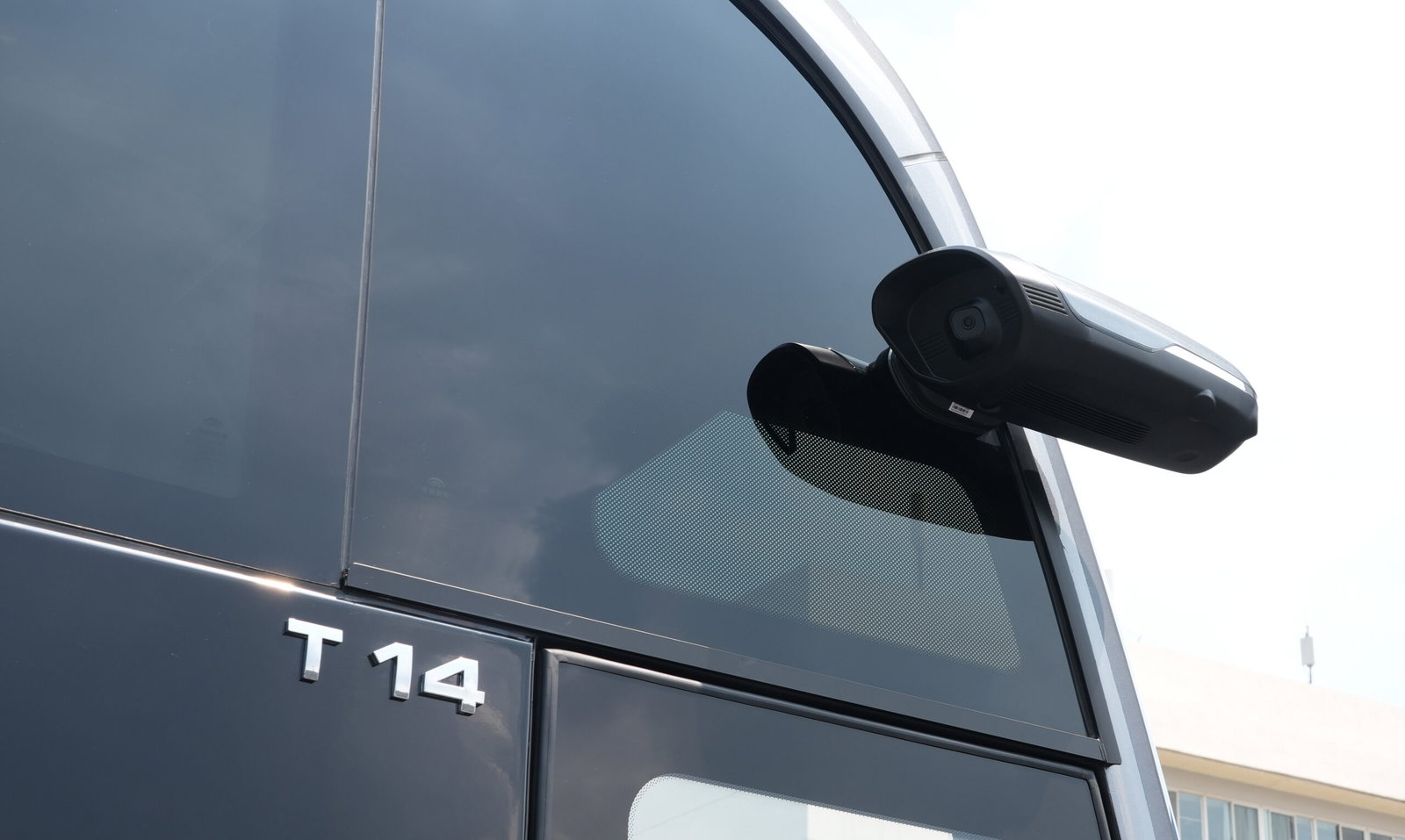
Alongside appropriate road performance, emphasis has also been placed on economical operation. According to the manufacturer, Yutong’s BlueCore intelligent fuel-saving system and electric cooling fans can reduce consumption by 2–3%. These are accompanied by aerodynamic improvements, for example through the ECAS system — electronically controlled air suspension — which adjusts the body height according to speed, while with the use of a camera system replacing conventional exterior rear-view mirrors and a more streamlined front end, Yutong claims to have reduced the drag coefficient by 20% overall.
In line with long-distance use, comfort has also been the primary focus in the design of the passenger compartment. The temperatures of the driver’s area and passenger saloon can be controlled independently, with the dual-zone air-conditioning system providing 36,000 kcal/hour of cooling capacity and 38,000 kcal/hour of heating capacity. A fresh-air system takes care of interior air quality, while the passenger seats are offered with an ergonomic design optimised specifically for longer journeys.
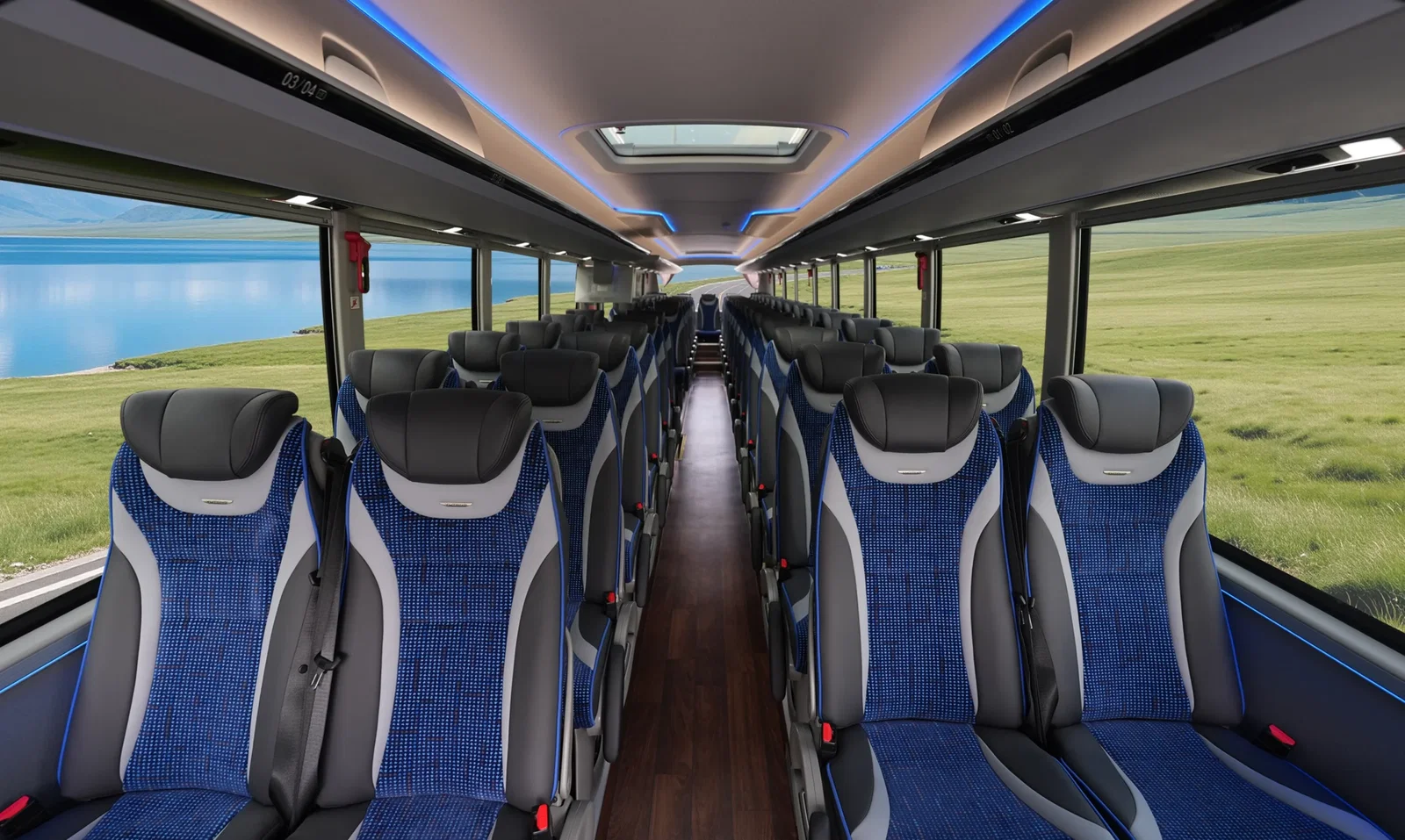
Yutong has not skimped on onboard services either: the T14 can be equipped with an audio system with up to 26 speakers and a central 22-inch HD display, while comfort on longer journeys can be supported by a refrigerator, toilet, water dispenser and several types of electronic device charging options. In keeping with its flagship status, the equipment list also includes two of Yutong’s solutions recognised with innovation awards: the 360° sound system and an NFC card-based digital key. Comfort and ride stability are enhanced by continuously controlled damping (Continuous Damping Control, CDC), which adapts the characteristics of the shock absorbers to road conditions and the current driving situation.
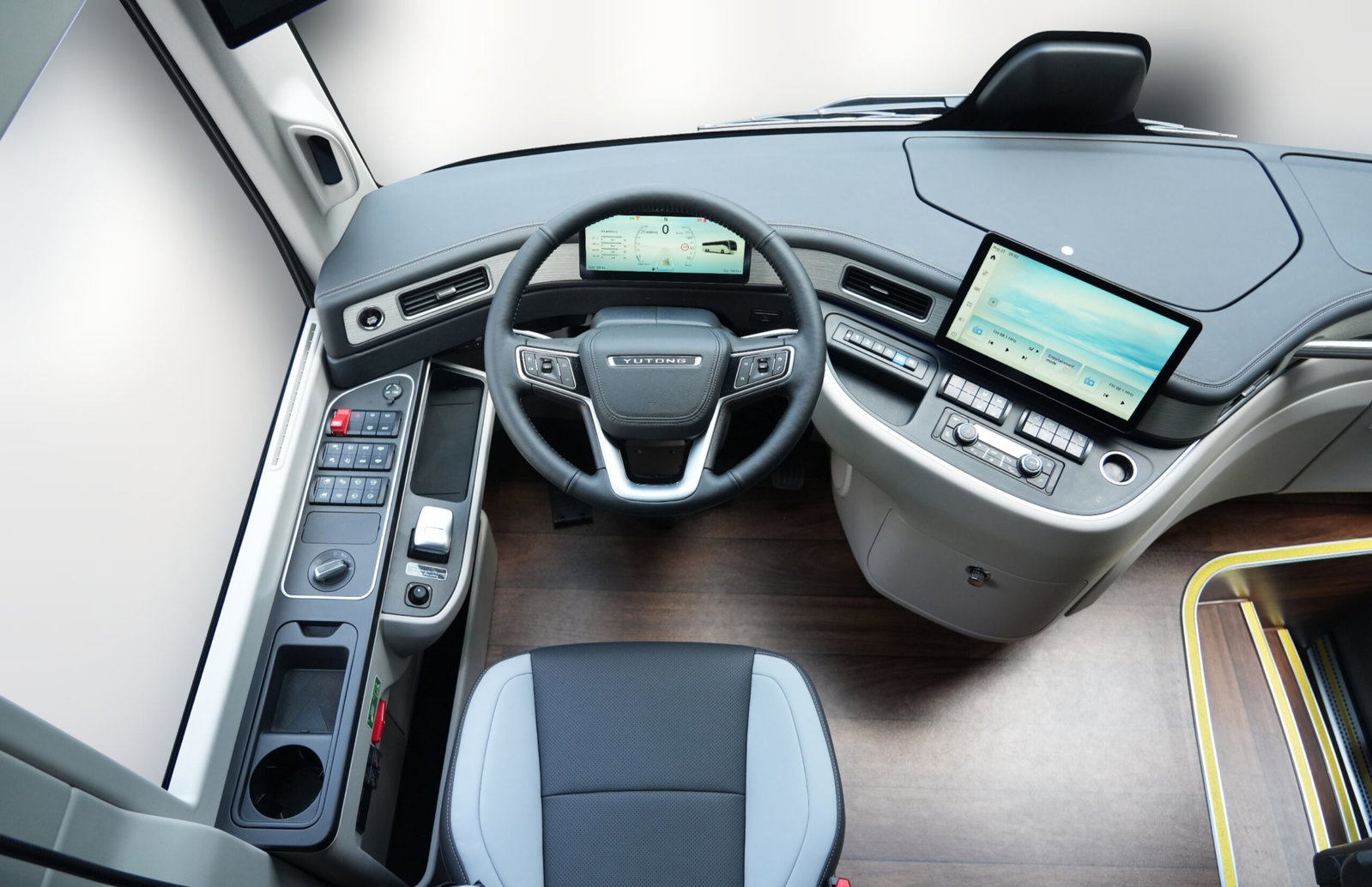
The driver’s workplace is now far more reminiscent of the world of today’s passenger cars: the central element of the dashboard is a digital system consisting of 10.25- and 12.8-inch displays, accompanied, among other things, by a 360° camera view, phone integration and screen mirroring. According to Yutong, the new interface uses 60% fewer physical switches while enabling the control of 20% more functions.
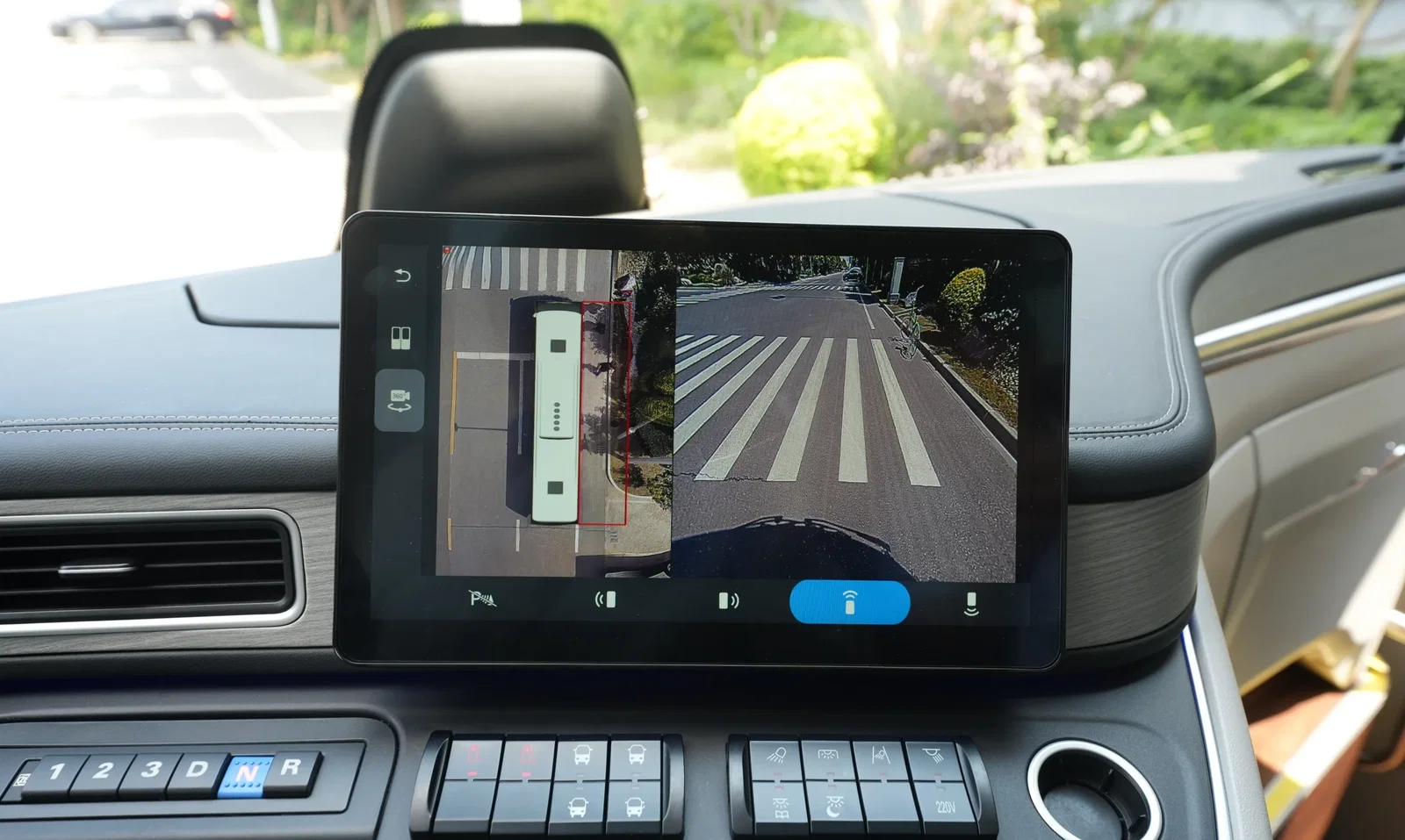
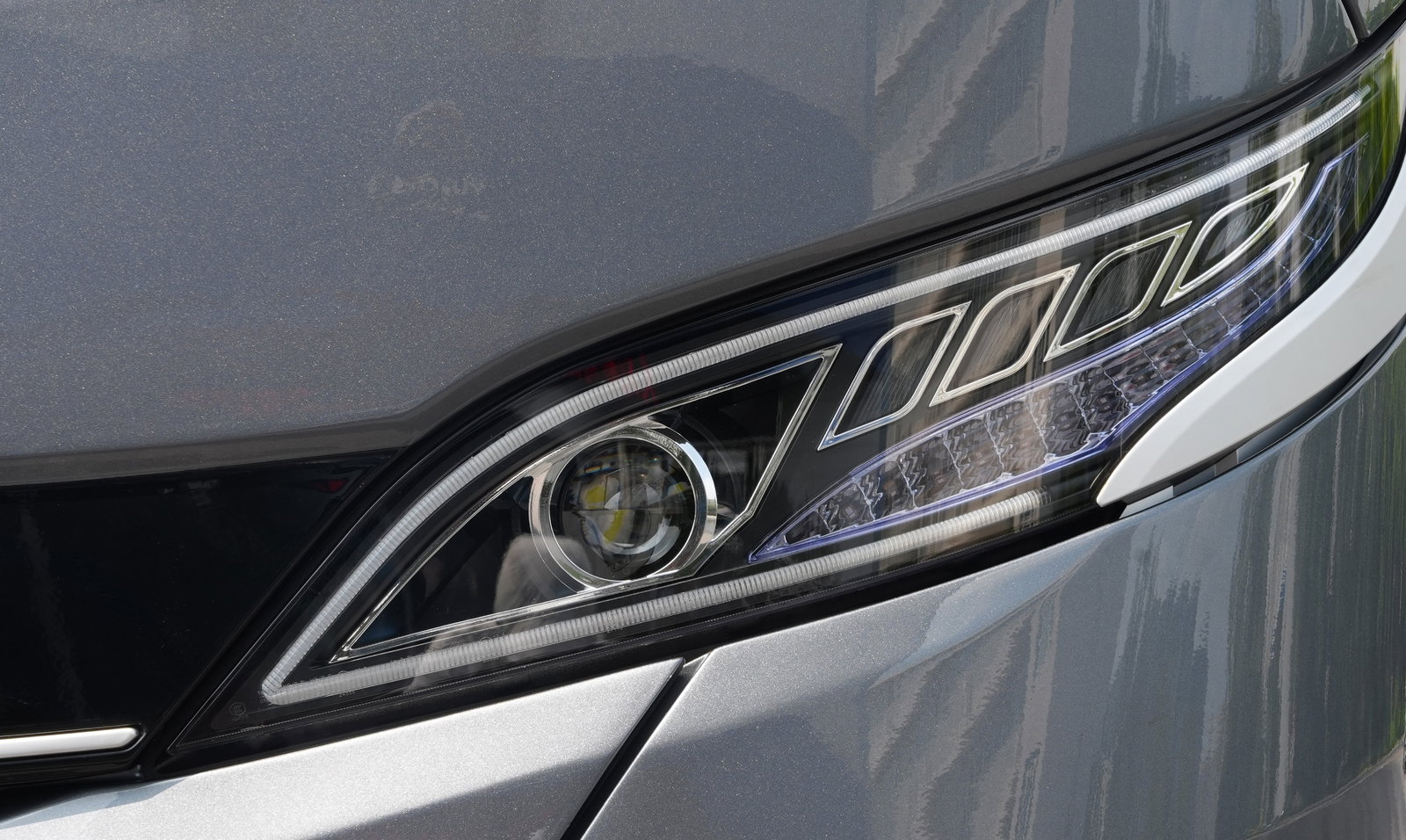
The safety equipment is also aligned with European requirements. The T14 is built with an electronic braking system (EBS), electronic stability control (ESC), advanced emergency braking system (AEBS), lane departure warning system (LDWS), intelligent speed assistance (ISA), blind spot information system (BSIS), a moving-off information system (MOIS) monitoring the area in front of the vehicle when pulling away, and a driver drowsiness and attention warning system (DDAW). Standard equipment also includes an electronic parking brake, preparation for an alcohol interlock, a tyre pressure monitoring system (TPMS), reversing radar, and intelligent headlamp and windscreen wiper control. According to the brochure, however, the previously mentioned 360° camera system and the digital cameras replacing conventional exterior rear-view mirrors are optional equipment.
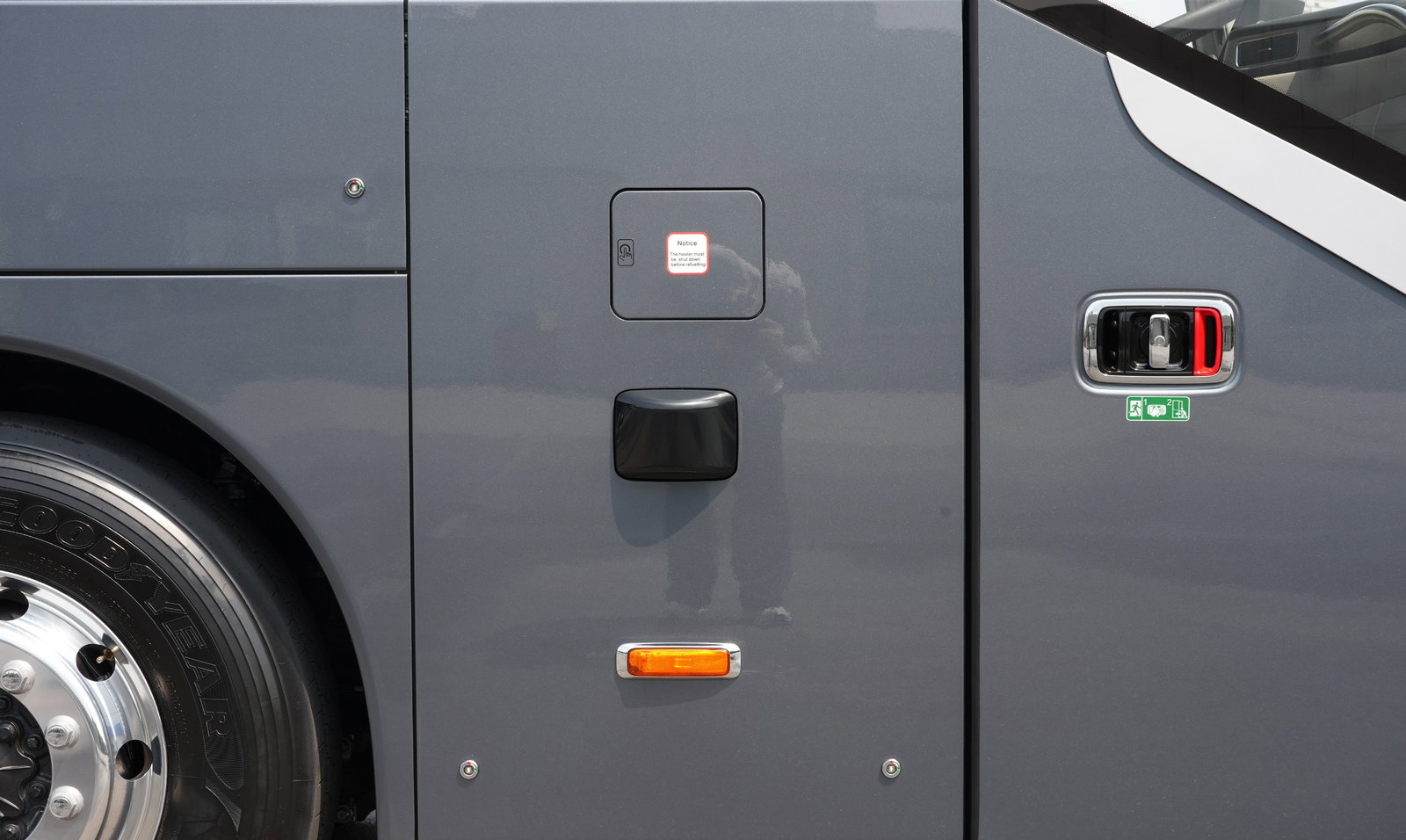
With the left-hand-drive version of the T14, Yutong is primarily targeting Southern European markets, where the significant role of coach transport and the enduring position of diesel propulsion may create favourable conditions for the model. In these markets, price and short delivery times can in many cases carry at least as much weight as the brand name itself, or even more, potentially overriding operators’ traditionally strong brand loyalty. The T14’s market prospects, however, will be determined not only by price and technical content, but also by availability and the after-sales background. In the latter area, Yutong starts from a particularly strong position among Chinese manufacturers; its extensive European presence and the sales, parts and service network built up in recent years may provide an advantage that a significant proportion of Chinese brands newly appearing on the continent do not yet possess.
Photos, renderings: Yutong Bus & Coach