![Magyarbusz [Info]](/mbi/header-logo.png)
An expensive undertaking, but Metz has taken the plunge: the first hydrogen buses enter service
 Ludányi József
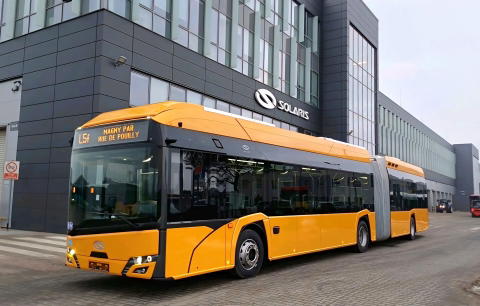
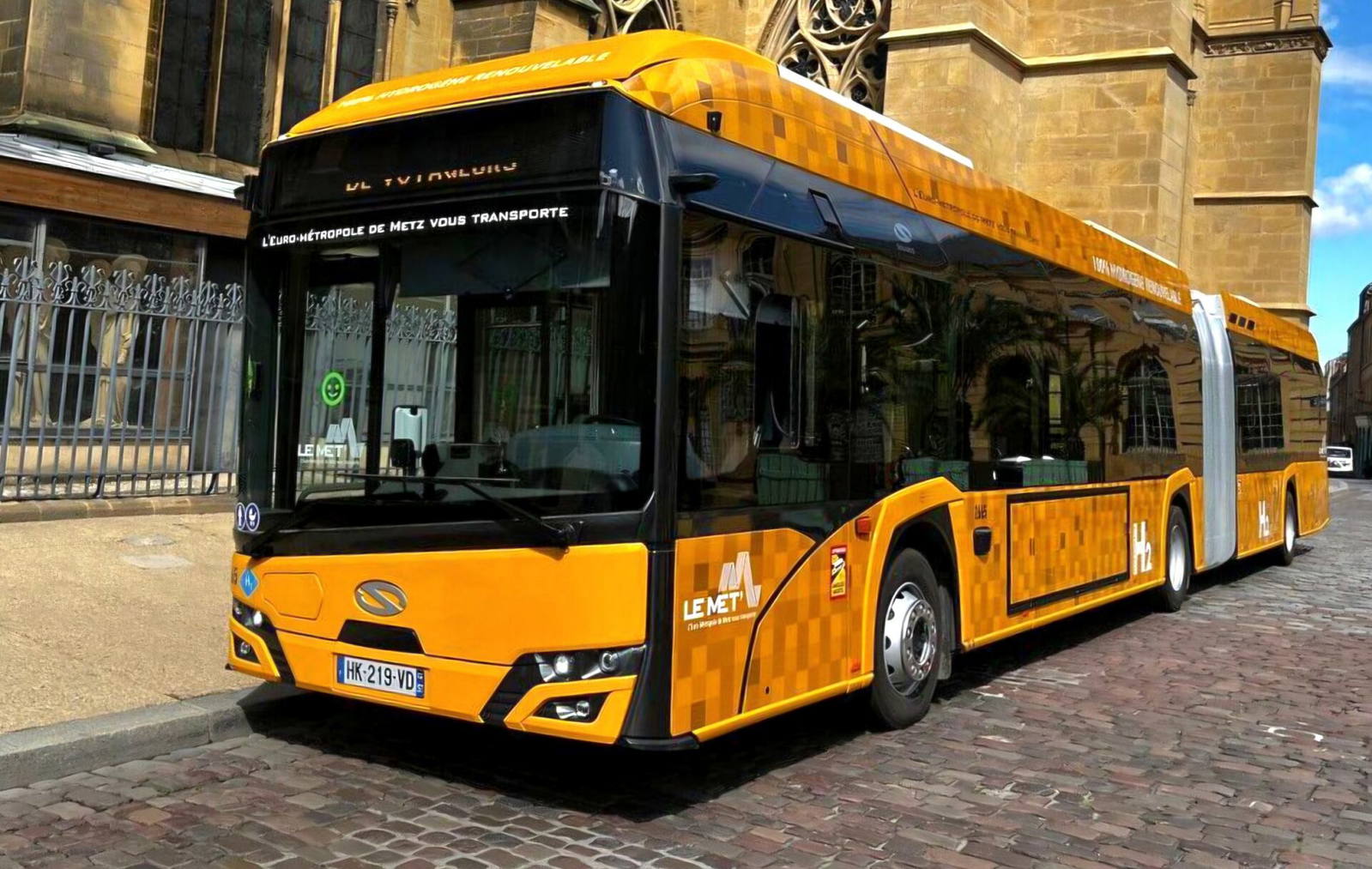
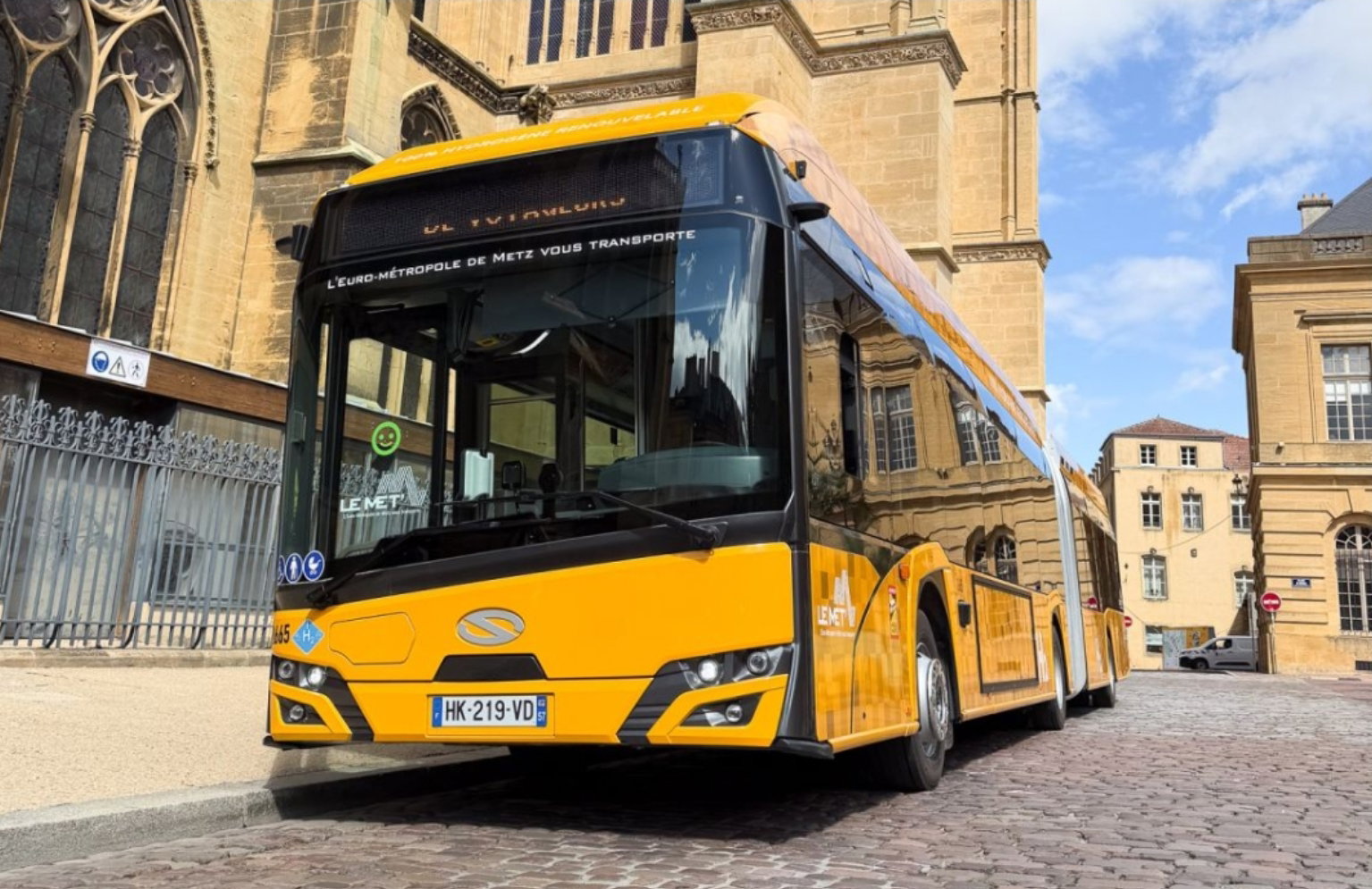
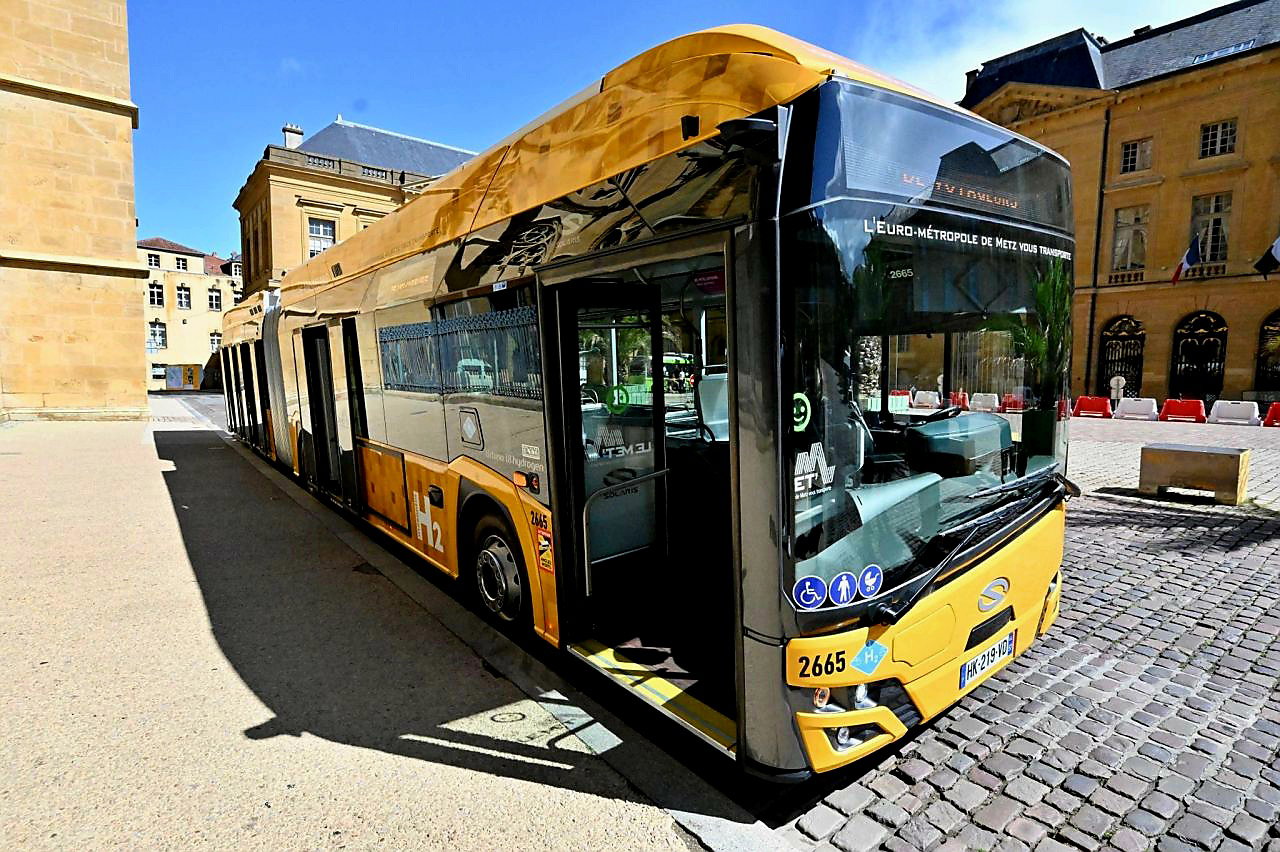
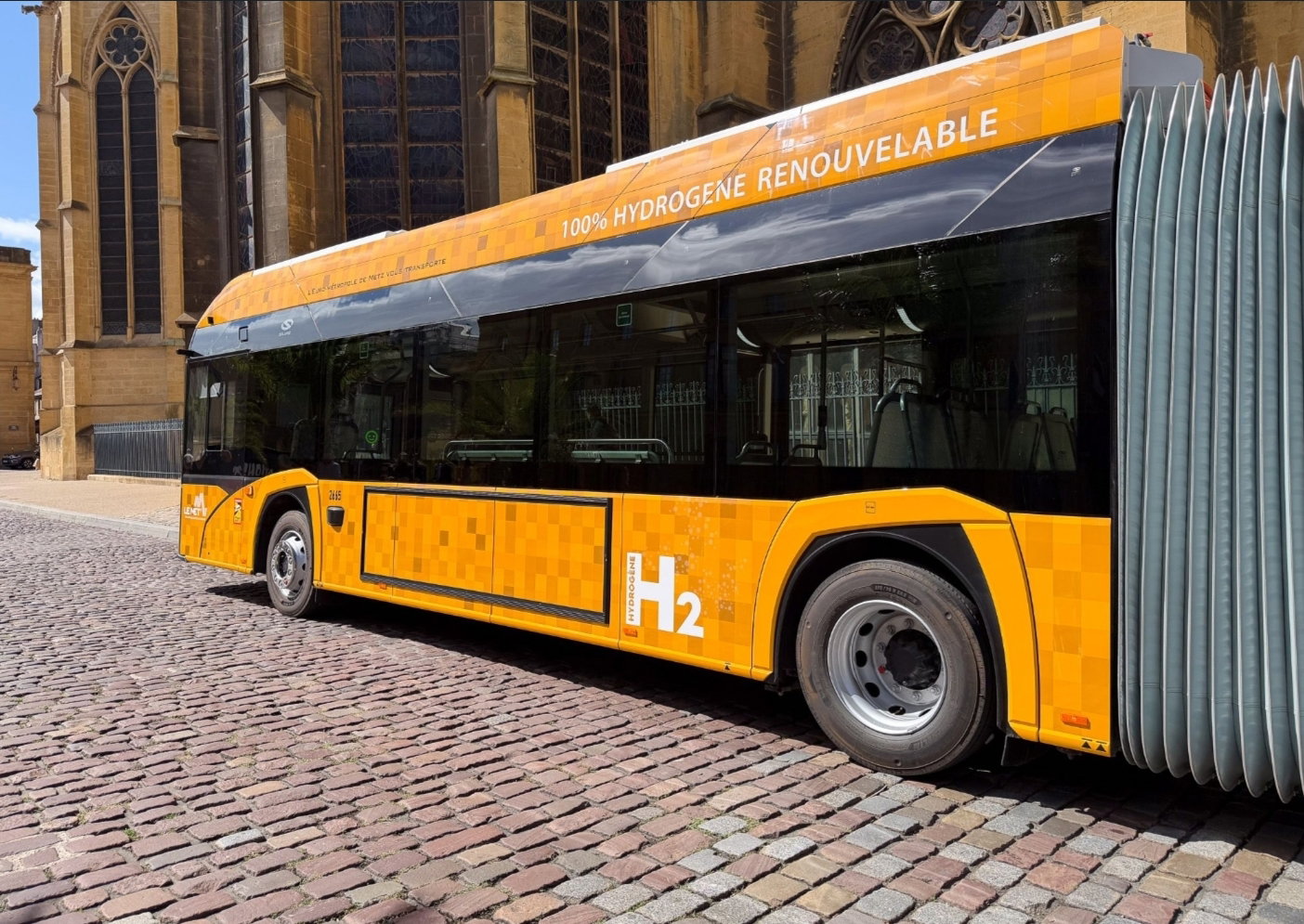
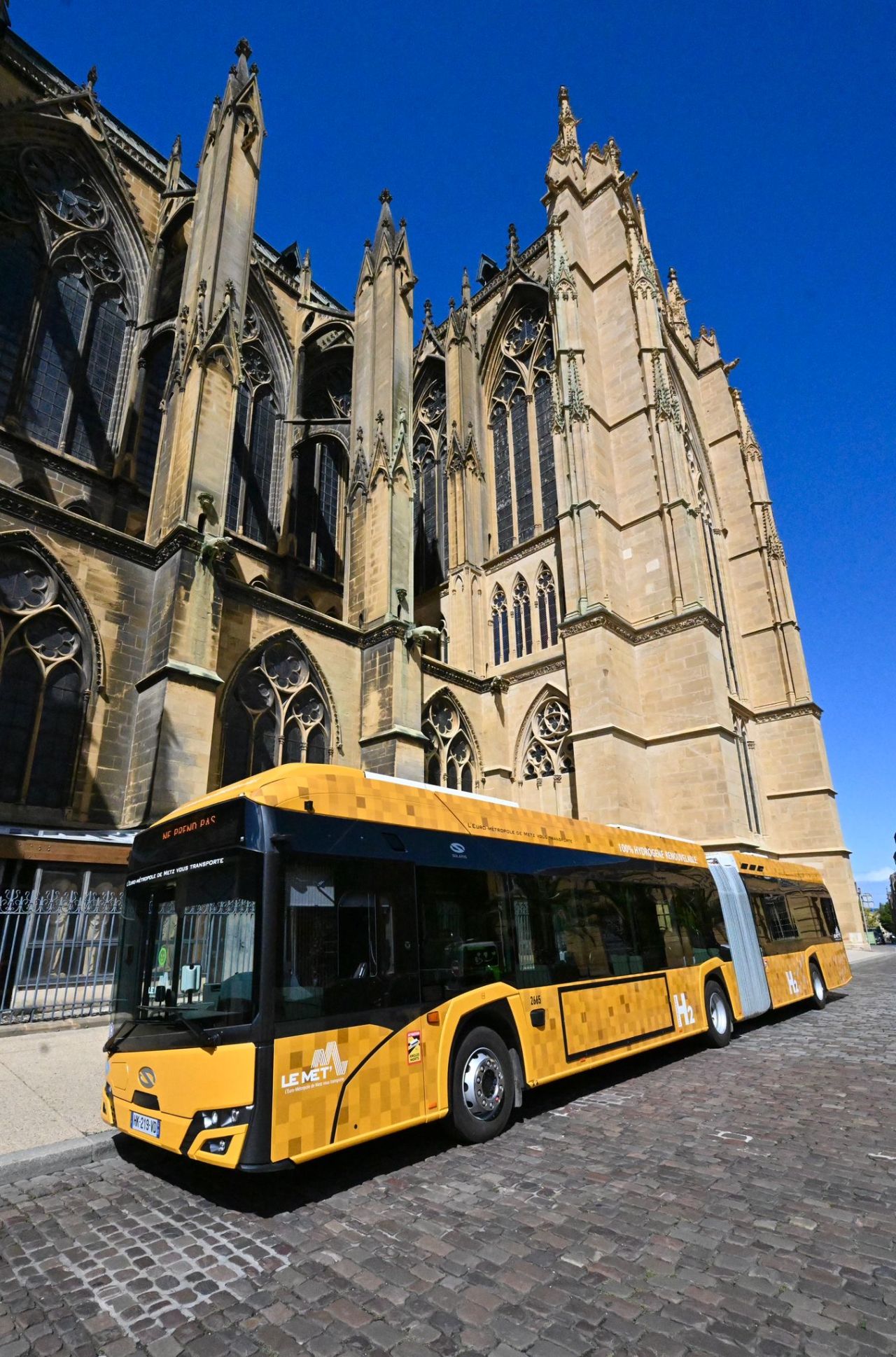
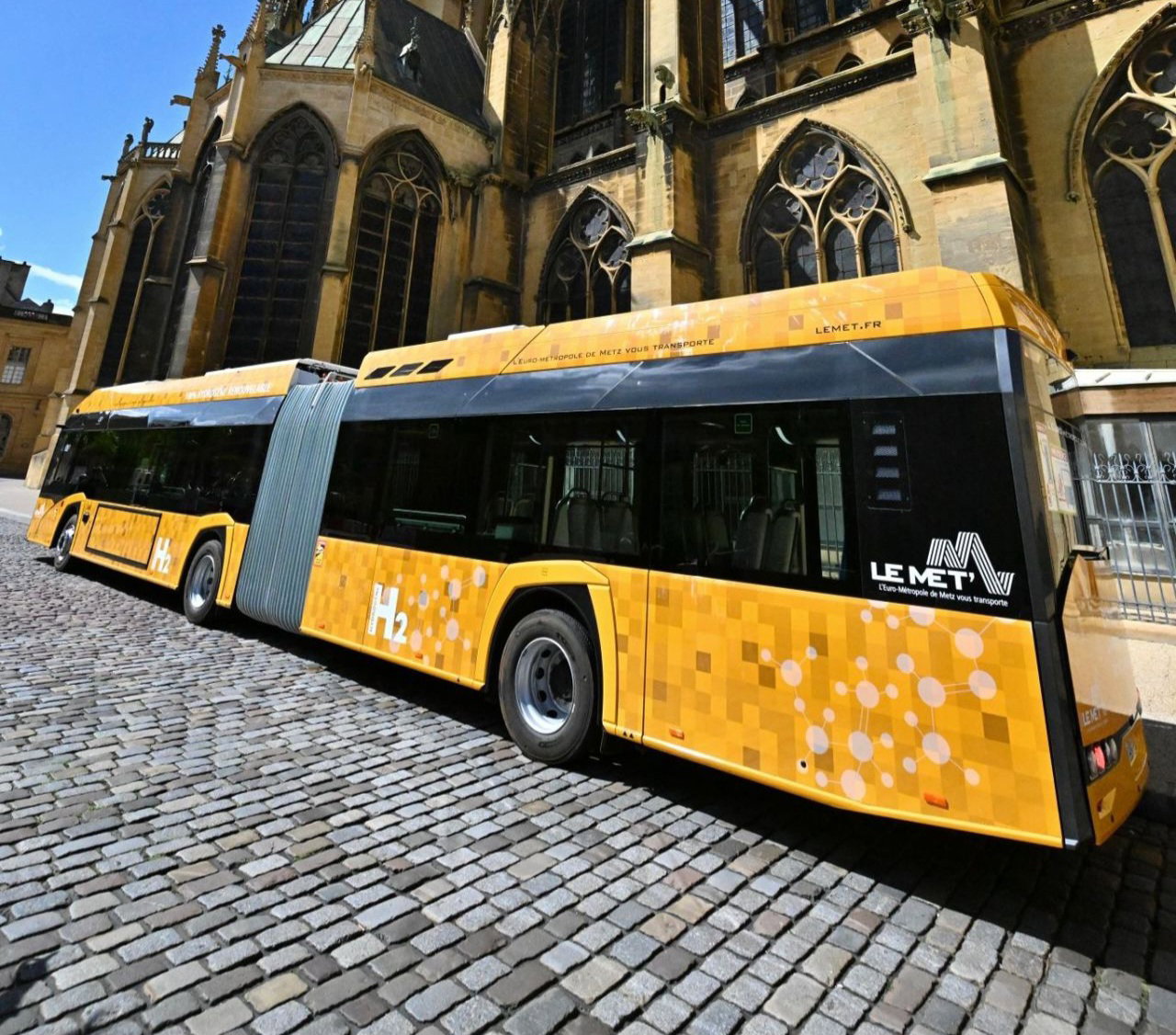
After lengthy preparations and several vehicle procurement projects that fell through along the way, scheduled hydrogen bus operations have begun in Metz. The first fuel cell Solaris buses entered service on the French city’s public transport network at the end of August, forming the first part of a fleet development programme covering a total of 34 vehicles. This year, 20 Solaris hydrogen buses – 14 articulated and six standard-length vehicles – will enter service on the Le Met’ network, while in 2027 a further 14 high-capacity, 18-metre BHNS (Bus à Haut Niveau de Service), or high-level-of-service, BRT-style vehicles will arrive to serve the Mettis C line currently under construction. With the current launch, a programme has reached its first visible milestone whose original plans were substantially rewritten by the bankruptcy of Van Hool and by another hydrogen bus procurement that ultimately failed to materialise.
The first three hydrogen buses began carrying passengers on 31 August on routes L3 and L5 of the Le Met’ network, which covers public transport in Metz and the surrounding area, with a further two vehicles joining them on 1 September. The fleet is being introduced gradually; according to the plans, all Solaris buses belonging to the first phase will be in service by All Saints’ Day, meaning that by late autumn 14 articulated and six standard-length hydrogen buses will be operating on the Metz network.
In addition to the 20 vehicles now entering service, a further hydrogen bus fleet specifically intended for Mettis C is also on the way. To operate the new high-capacity rapid bus line, due to launch in September 2027, 14 Solaris articulated buses will enter service in a dedicated BHNS specification, also 18 metres long but with a higher level of comfort. Together with these, Metz’s hydrogen bus fleet could comprise a total of 34 fuel cell buses by the end of 2027.
The introduction of hydrogen propulsion in Metz was by no means an overnight affair, nor can the process be described as smooth. The programme’s first conspicuous precursor dates back to March 2021, when a Van Hool A330 Fuel Cell demonstration bus was tested in the city. Later plans became far more ambitious, and at one point three hydrogen bus projects were running in parallel.
The largest of these was linked to Mettis C. For the new rapid bus line, a tender was originally issued for the procurement of 13 hydrogen-powered, 24-metre, bi-articulated BHNS buses, which Van Hool won in 2023 with its Exqui.City FC model. By then, the Belgian manufacturer’s name was far from unfamiliar in Metz: the vehicle fleet on the Mettis A and B lines is still based around around 30 24-metre Van Hool Exqui.City diesel-electric hybrids. Their replacement is also on the agenda, though as part of a separate fleet renewal programme.
The procurement of the new Van Hools intended for Mettis C had already moved well beyond the planning stage; in 2023, the Eurométropole de Metz, the intermunicipal authority for the Metz metropolitan area, paid the Belgian manufacturer an advance of around €1.45 million for the vehicles. Van Hool’s bankruptcy in 2024, however, made it impossible to fulfil the contract, meaning that not only did a new supplier have to be found, but the original vehicle concept also had to be reworked. The 24-metre bi-articulated buses were ultimately abandoned, and by 2025 the plans for Mettis C envisaged the procurement of 14 18-metre hydrogen-powered BHNS vehicles instead.
In parallel, two further hydrogen bus procurements were also under way. Metz ordered 14 articulated Solaris Urbino 18 hydrogen vehicles, while the procurement of six standard-length Safra Hycity 12 buses was also planned. The latter delivery also fell through, however, and the six Safra buses were ultimately replaced by Solaris Urbino 12 hydrogen vehicles. These two procurements together make up the 20-vehicle Solaris fleet whose first members have now entered service on routes L3 and L5.
The vehicle programme for Mettis C, meanwhile, has been handled separately. Following Van Hool’s bankruptcy, a decision was made to procure 14 18-metre hydrogen buses instead of the original 13 bi-articulated vehicles, and Solaris was again selected as the supplier. The roughly 10-kilometre Mettis C will provide a high-capacity link between Metz, Montigny-lès-Metz and Marly, serving around 21 stops in total. The new line will launch in September 2027, when the Solaris Urbino 18 hydrogen buses configured specifically for this role are expected to enter service.
None of this, however, means that Metz is building the future of its entire bus fleet around hydrogen propulsion. The metropolitan area is also planning a significant battery-electric bus programme in parallel, under which it intends to procure a total of 99 all-electric buses. The two technologies are therefore not being treated as mutually exclusive alternatives; instead, the choice between them is being made on the basis of the operational characteristics of individual routes.
In the case of Mettis C, the use of hydrogen was justified specifically by operating conditions. The vehicles on the high-capacity rapid bus line will need to remain available for long periods each day and cover high mileages, while the overnight service break is limited to only roughly the period between midnight and 7 a.m. The option of battery-electric operation was also examined, but in addition to depot charging it would have required opportunity charging during the day. One of the planned locations for this would have been the Place Mazelle area, where the installation of the necessary charging equipment was complicated by urban landscape and heritage protection considerations. For Mettis C, the Eurométropole therefore ultimately opted for hydrogen operation.
For routes L3 and L5, the first to switch to hydrogen operation, no such detailed, route-specific justification has been provided. Both are part of Le Met’s busy LIANE network, so high daily availability and substantial mileage are likely to have played a role here as well, although the operator has not officially confirmed this. In any case, the current entry into service does not mean that the 20 new Solaris buses will operate exclusively on these two routes in the longer term.
In favour of hydrogen operation, Metz primarily cites the longer range and the resulting higher vehicle utilisation. According to the operator’s calculations, an articulated hydrogen bus can cover around 400–500 kilometres between refuelling stops, while the battery-electric buses examined for comparison are assumed to have a range of 250–300 kilometres. On this basis, they calculate that to provide the same level of service, hydrogen propulsion could require up to around 20% fewer vehicles.
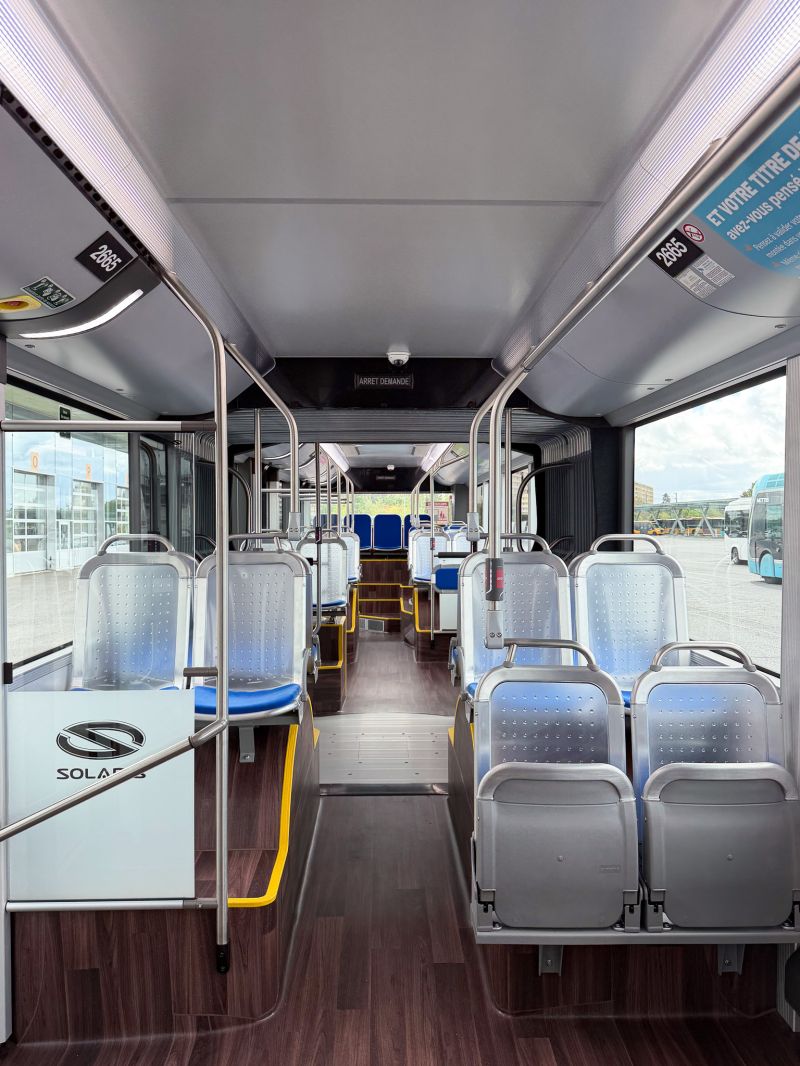
All this, however, comes with significant procurement costs. According to the Metz figures now published, a standard-length hydrogen bus costs around €800,000, while an 18-metre articulated vehicle costs approximately €1 million. The Solaris buses intended for Mettis C, also 18 metres long but in the higher-comfort, higher-specification BHNS version, are even more expensive, at around €1.1 million each. The high vehicle price is only one cost factor, however, as building and then operating the infrastructure needed to produce, compress, store and dispense hydrogen also requires a major investment.
In this respect, Metz does not simply intend to rely on an external supplier: a complete local hydrogen production and refuelling infrastructure is being built in the Frescaty area. H2 Metz, the company established to deliver the project, is 80% owned by the local energy company UEM, with the Eurométropole de Metz and John Cockerill, which also manufactures electrolyser equipment, each holding 10%. The standalone investment value of the hydrogen production and refuelling infrastructure under construction in Frescaty has not been disclosed, although the early plans for the Metz hydrogen programme earmarked around €8 million for production and supply infrastructure.
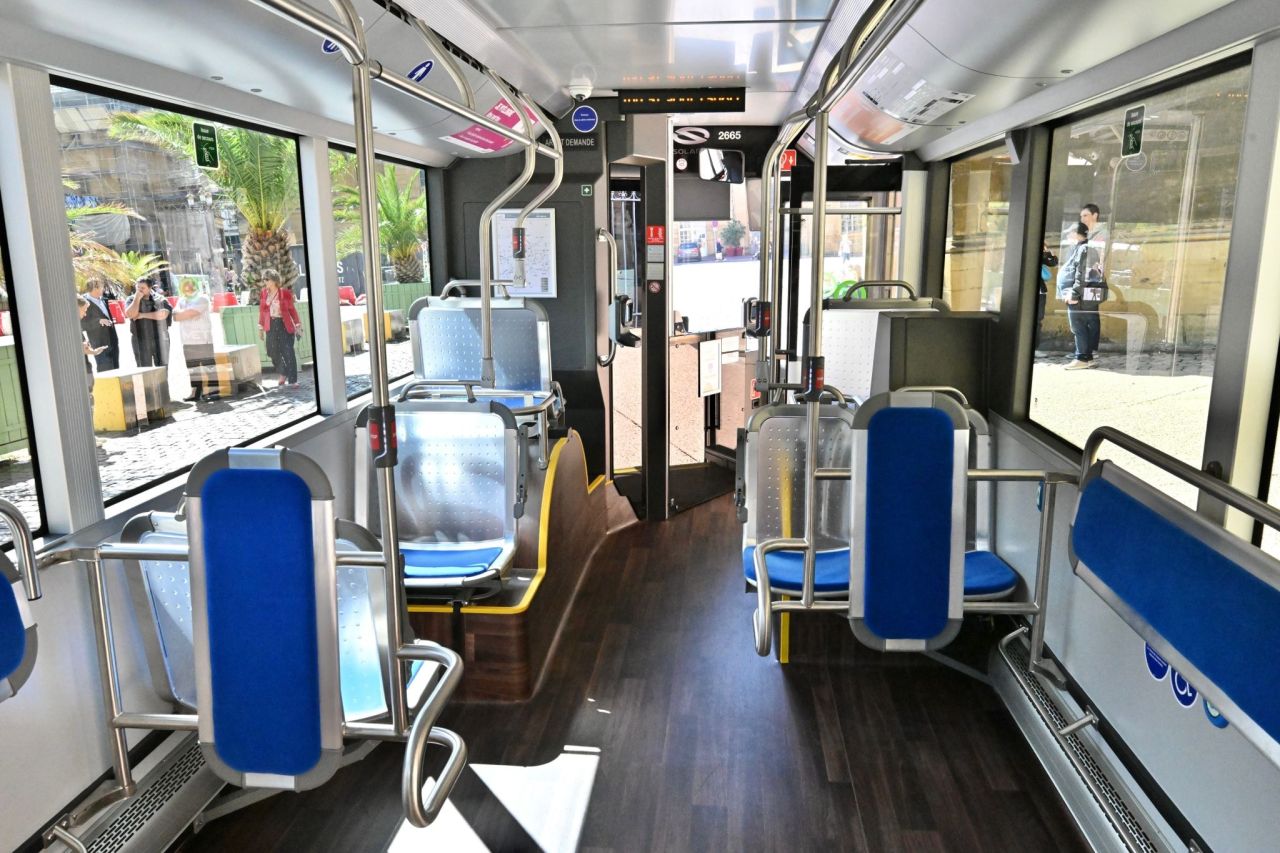
The central element of the system is a 2.5 MW electrolyser, which will produce hydrogen using electricity from renewable sources. The facility has been sized for production of more than 800 kilograms per day, while the latest statements refer to a daily capacity of between 800 and 900 kilograms. This will not serve only the buses: the metropolitan area’s fuel cell refuse collection vehicles will also use the locally produced hydrogen. Local production, however, had not yet begun when the hydrogen buses entered service. Commissioning of the electrolyser is planned for autumn 2026, so during the interim period H2 Metz is purchasing renewable hydrogen from Air Liquide. The cost of local production without subsidies is estimated at around €15 per kilogram.
That figure alone already gives an indication of the technology’s operating costs. A full tank for a standard-length fuel cell bus requires around 40 kilograms of hydrogen, while an articulated bus needs more than 50 kilograms. Based on the Metz production cost of €15/kg, this means roughly €600 worth of hydrogen for a single refuelling of a standard bus, and at least €750–800 for an articulated bus. Metz puts the vehicles’ range at around 300–500 kilometres on a full tank, meaning that the benefits of high daily mileage and rapid refuelling come with a considerable energy cost.
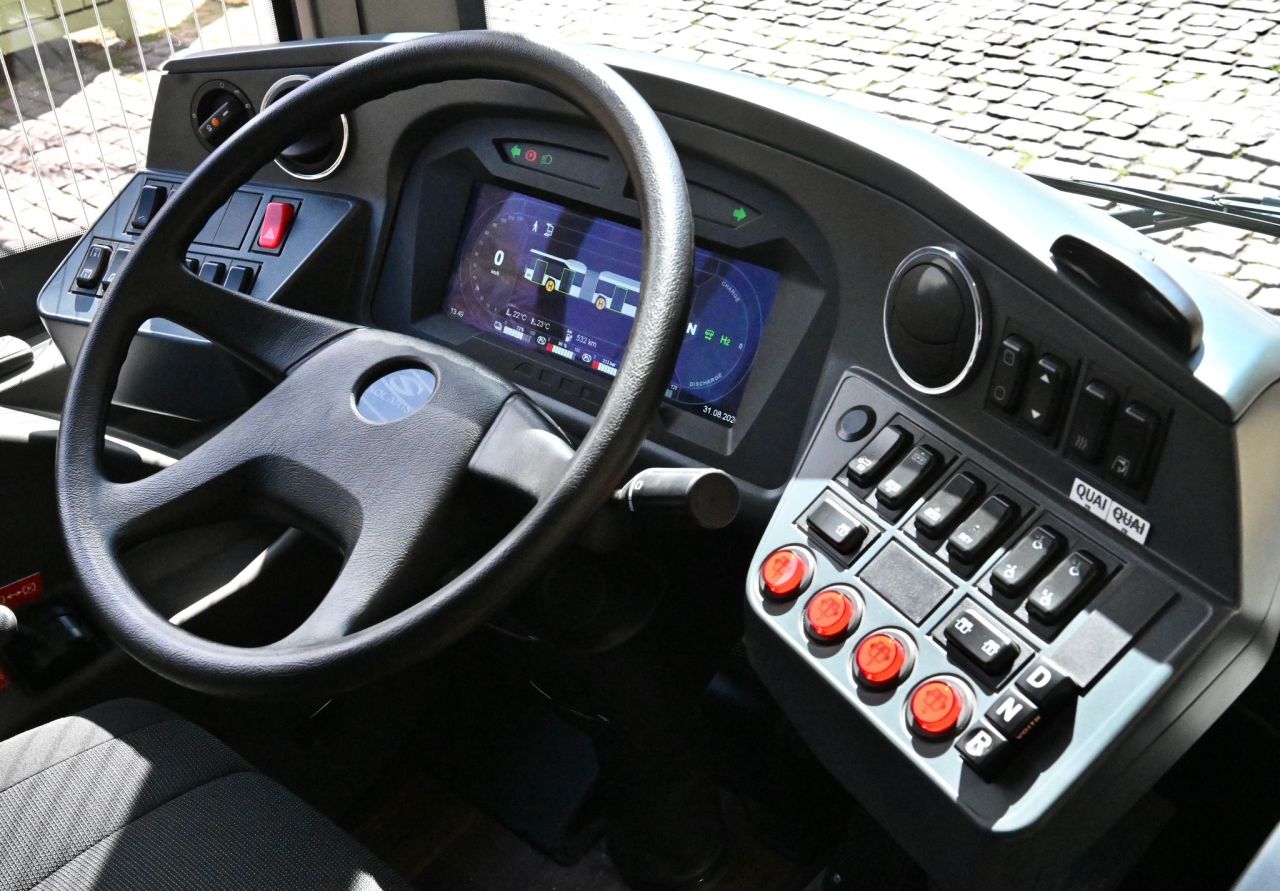
The difference is even more striking when viewed from the energy-use side. In the case of hydrogen produced by electrolysis, producing 40 kilograms may require, depending on the technology used and the efficiency of the system, in the order of 2–2.5 MWh of electricity. And this only covers production of the hydrogen itself: compression may require a further roughly 2 kWh/kg of electricity, which for 40 kilograms of hydrogen alone could mean around 80 kWh of additional consumption, with the energy required for storage and refuelling added on top. By comparison, 2–2.5 MWh of electricity is enough to provide the energy equivalent of the nominal battery capacity of a 400–500 kWh electric bus around five or six times. Assuming a range of roughly 300 kilometres on one charge, the same amount of electricity could in theory be sufficient for around 1,500–1,800 kilometres of operation by a standard-length battery-electric bus. By contrast, 40 kilograms of hydrogen produced by electrolysis from 2.5 MWh of electricity provides a fuel cell bus with a range of only a few hundred kilometres. The actual values for both technologies are of course influenced by energy conversion, charging and drivetrain losses, but the comparison clearly illustrates the significant difference in efficiency between the two energy chains.
Electrolysis also requires water of suitable quality. In theory, producing one kilogram of hydrogen requires at least around 9 litres of water, but actual consumption may be higher once water treatment and process losses are taken into account. Producing a single 40-kilogram bus tank’s worth of hydrogen therefore requires at least 360 litres of demineralised water treated to the quality required for electrolysis and, in practice, stripped of minerals.
The costs of hydrogen operation do not end with the electrolyser, either. In practice, the production plant is a small industrial facility: alongside the electrolyser, compressors, drying and water-treatment equipment, a high-pressure storage system, dispensing equipment, and complex safety and monitoring systems are also required. The investment, operating and maintenance requirements for all of these are added to the already high purchase price of the vehicles. Compared with charging infrastructure for battery-electric buses, hydrogen supply requires a considerably more complex technological chain, individual elements of which will in time need refurbishment or replacement, meaning that significant costs must be expected in the longer term as well as at the initial investment stage. It is no coincidence that public and European Union funding still plays a decisive role in implementing hydrogen bus programmes today: in addition to the high vehicle price, building the infrastructure required to produce, store and dispense the fuel also demands substantial additional investment.