![Magyarbusz [Info]](/mbi/header-logo.png)
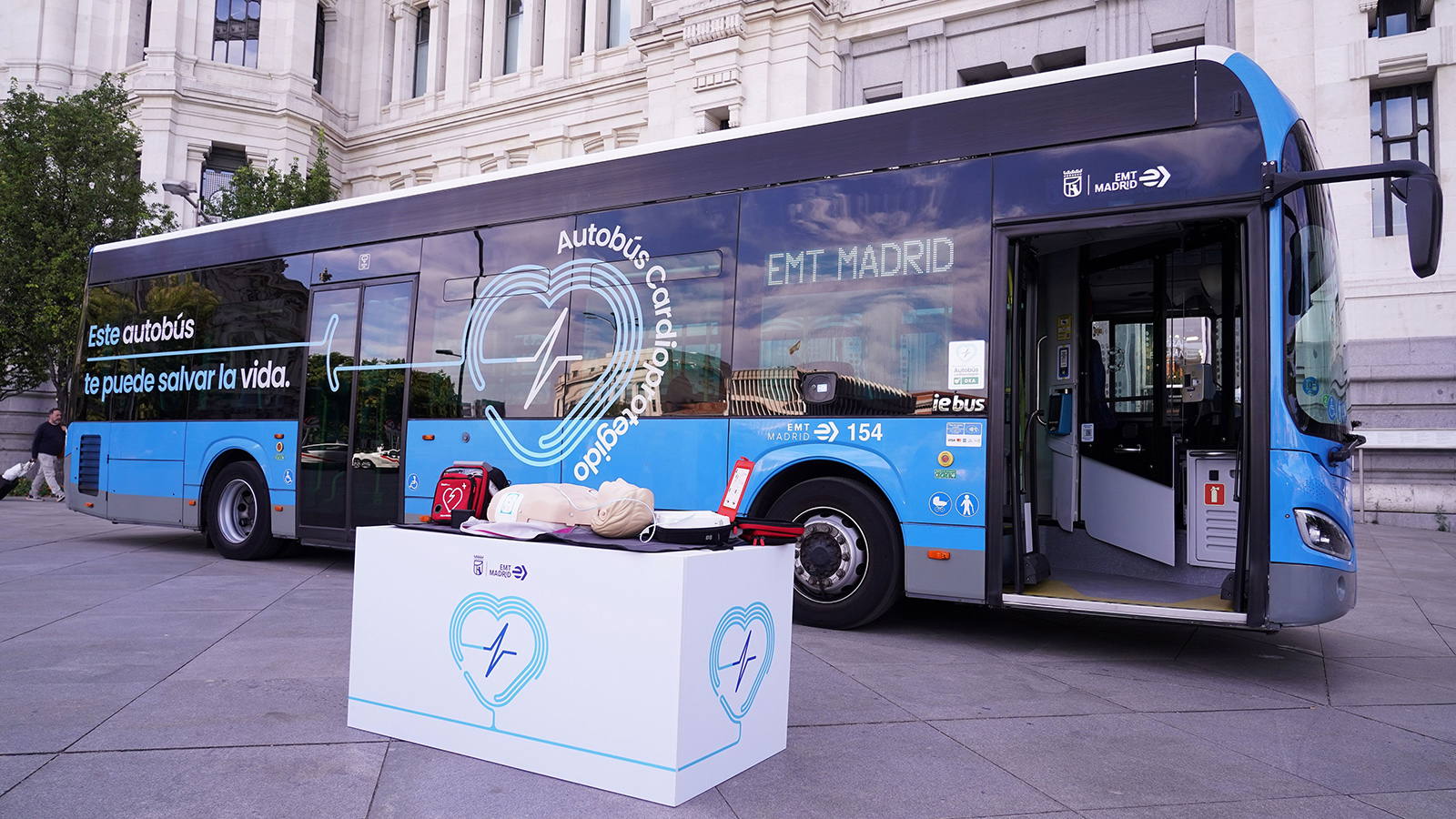
EMT Madrid to equip its buses with defibrillators
 Patthy Gellért
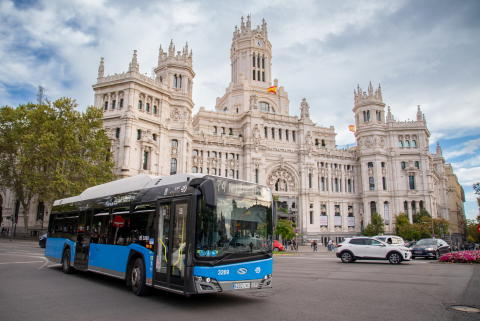
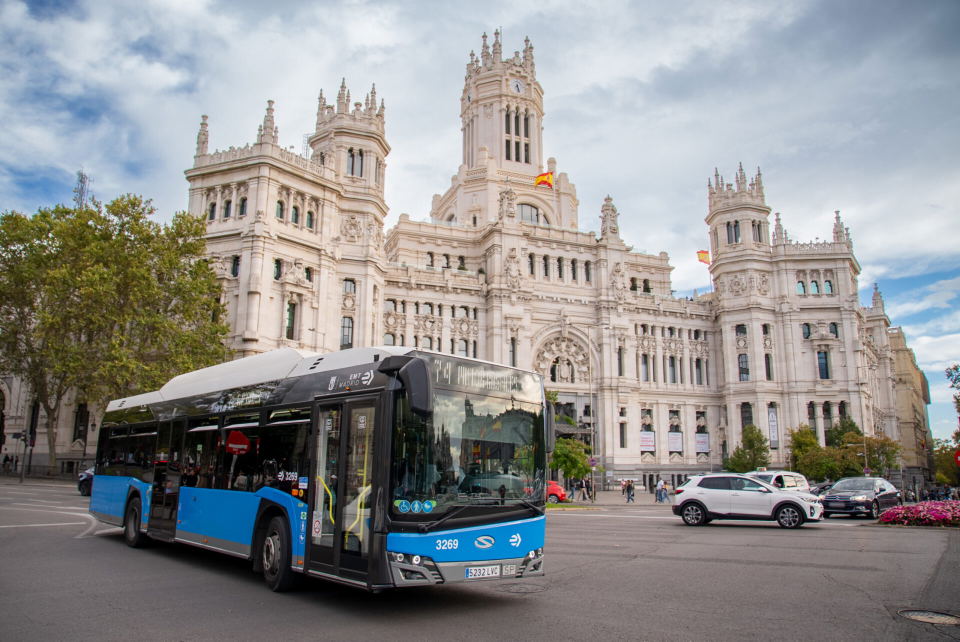
EMT Madrid, the company responsible for public transport in the Spanish capital, will equip its entire bus fleet of nearly 2,200 vehicles with automated external defibrillators (AEDs), Madrid mayor José Luis Martínez-Almeida has announced. The aim of the initiative is to make these life-saving devices available in the event of cardiac arrest not only to passengers, but also to pedestrians, ensuring an effective emergency response and rapid assistance in every district of the Spanish capital. The current investment is essentially a continuation of the CardioMAD project launched back in 2021, under which defibrillators were installed on 176 buses operating on 11 key routes in the Madrid network.
The contract, worth a net €2.9 million, was awarded last March to Bexen Cardio, a company belonging to Corporación Mondragón. The firm is Spain’s only defibrillator manufacturer, while also being an internationally recognised player in its segment, with products present in more than 100 countries worldwide. The project covers the procurement and installation of 2,200 defibrillator units, as well as maintenance and case-management tasks over a five-year period. Installation of the devices will begin in July and is expected to be completed by October. Once fitted, the vehicles will carry the exterior marking „Autobús cardioprotegido”, meaning “cardioprotected bus”, drawing the attention of passengers and passers-by to the availability of an AED.
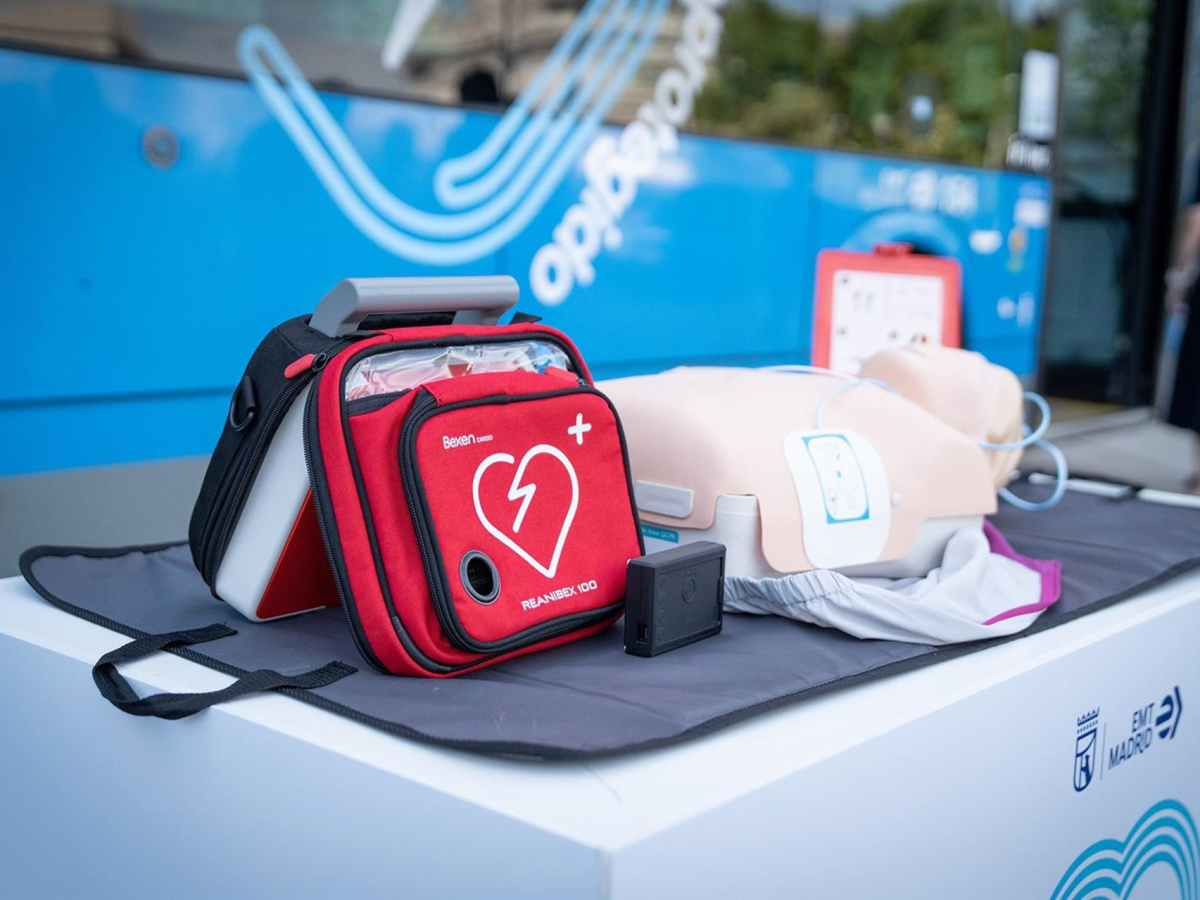
By October, all EMT Madrid buses will be equipped with Bexen Cardio automated external defibrillators (Photo: Bexen Cardio)
The Spanish-made Reanibex 100 defibrillator type to be installed in EMT Madrid buses is suitable for both adult and paediatric patients, and although it is easy for anyone to operate, the company’s drivers will also receive dedicated training in its use. Equipped with a geolocation function and a metronome to assist cardiopulmonary resuscitation (CPR), the device provides real-time information on the rhythm of chest compressions, thereby supporting the efforts of the person performing cardiac massage. The operating status of the device is monitored by a 24-hour remote supervision system, enabling immediate intervention in the event of any incident. If the defibrillator is removed from its place, it automatically sends an alert to the 112 emergency number, indicating the device’s exact location and thus facilitating the coordination of rescue and assistance. When activated, the unit gives the operator clear voice instructions, explaining step by step how to attach the electrodes and when to begin resuscitation. It is important to note that defibrillator use is not part of every resuscitation procedure, and not every heart rhythm is shockable. After the AED is attached, it therefore first performs a rhythm analysis, determines whether the rhythm is shockable or not, and, if necessary, automatically delivers the electric shock (after first warning those around the patient not to touch them temporarily).
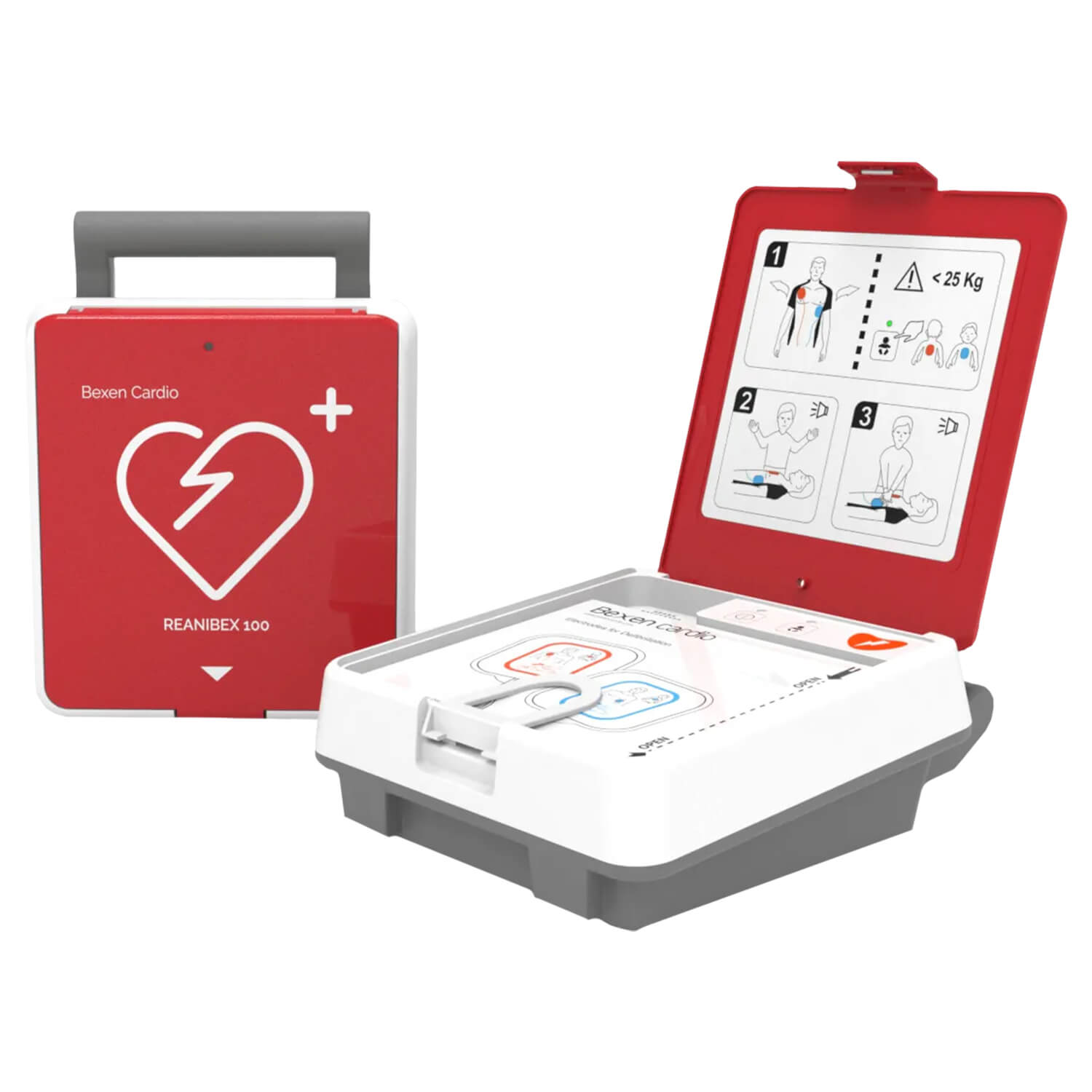
The life-saving device is easy for anyone to operate (Photo: Bexen Cardio)
The Madrid project could serve as an example for transport operators in Hungary as well, all the more so because the number of AED devices available in public spaces in Hungary is extremely low even by comparison with other European countries. Instead of being installed on public transport vehicles, defibrillators in Hungary are mainly found at certain railway and metro stations and terminals, but a similar large-scale initiative would probably save many lives here too, as rapid intervention significantly increases the chances of survival in the event of sudden cardiac arrest.
Cover photo: Ayuntamiento de Madrid