![Magyarbusz [Info]](/mbi/header-logo.png)
A new era in Volvo Buses’ European electric bus production – MCV’s new Cairo plant inaugurated
 Ludányi József
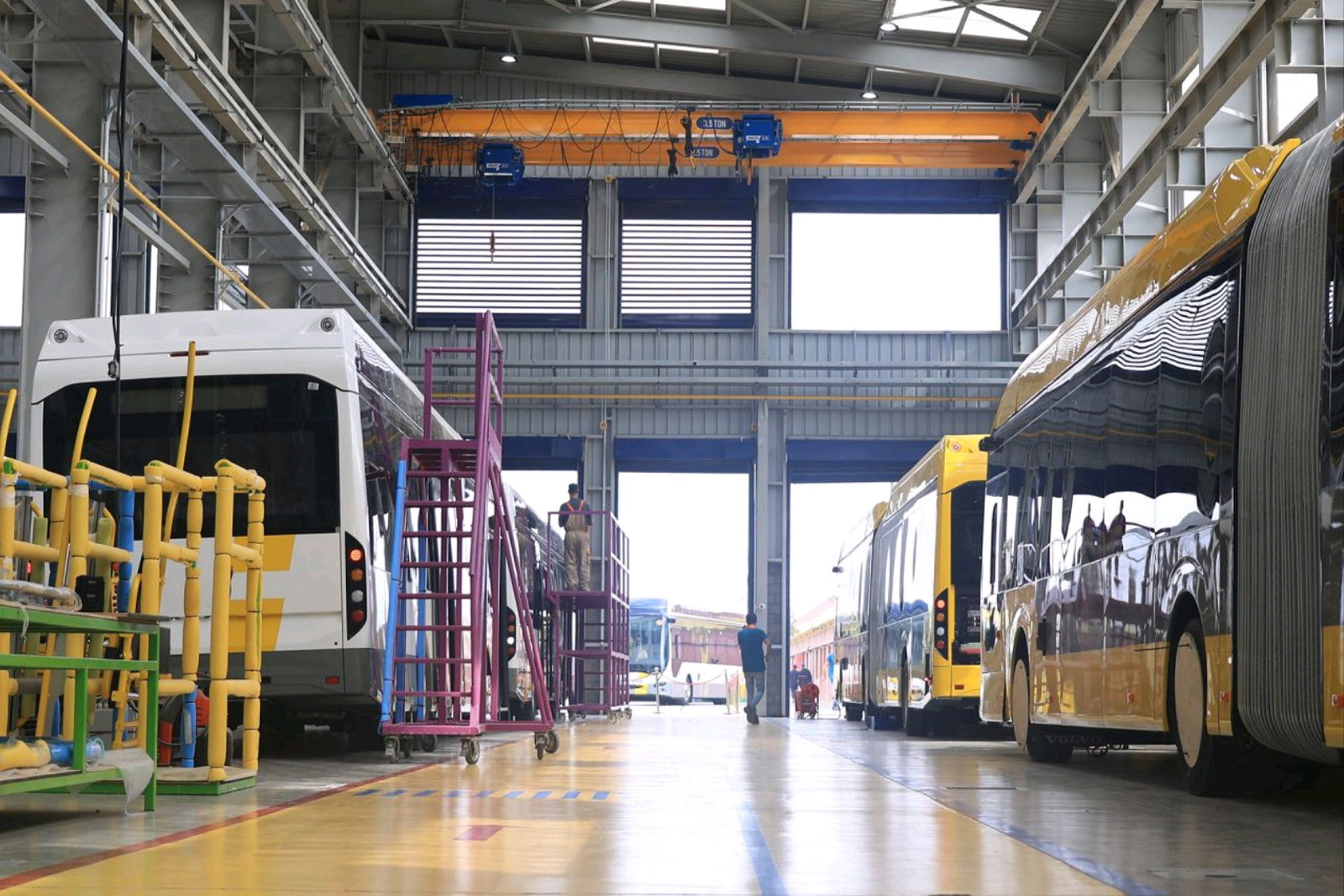
Egypt’s Manufacturing Commercial Vehicles (MCV) officially inaugurated on 16 September a new production hall built specifically for the series production of Volvo Buses’ electric city and suburban buses for the European market. The creation of the new capacity is an integral part of the strategic shift announced by Volvo Buses in spring 2023, under which the company ended standalone complete bus production in Europe and instead relies on contract bodybuilder partners.
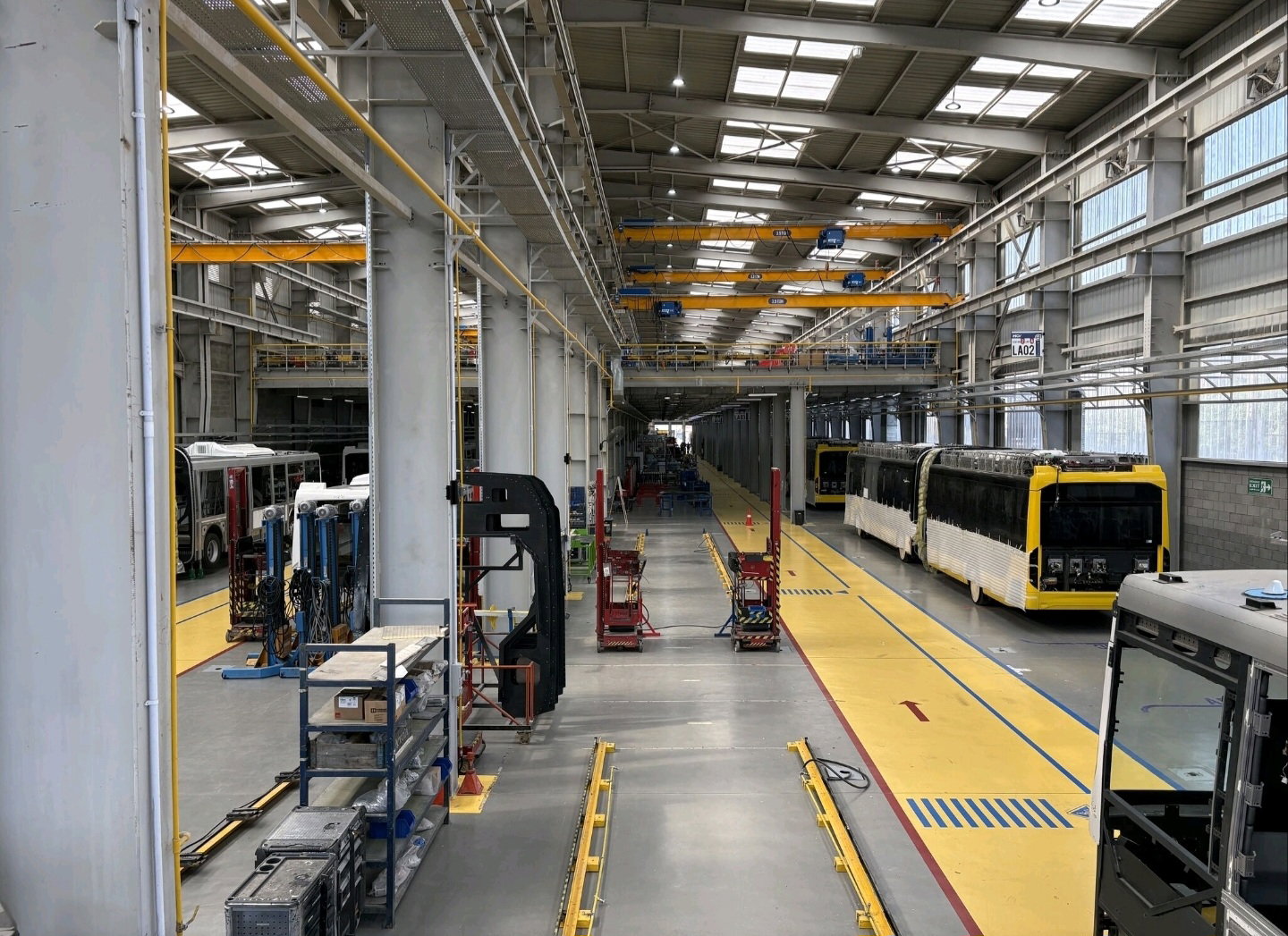
Volvo announced in March 2023 that it would stop complete bus production at its plant in Wrocław, Poland, and transfer bodybuilding activities to partners; production of city and intercity models was assigned to Egypt’s MCV, while Spain’s Sunsundegui was originally designated as the partner for coach models. The latter cooperation ultimately did not materialise; production of the coach range – more precisely, only the Volvo 9700 – will instead be transferred to Volvo Buses’ plant in Mexico. After the last vehicles built in Wrocław were completed, the production equipment was dismantled and shipped to Cairo, where a new 10,000-square-metre production hall was set up for it at MCV’s site in just 12 months. The total value of the investment is around EGP 3 billion, equivalent to approximately HUF 20.5 billion.
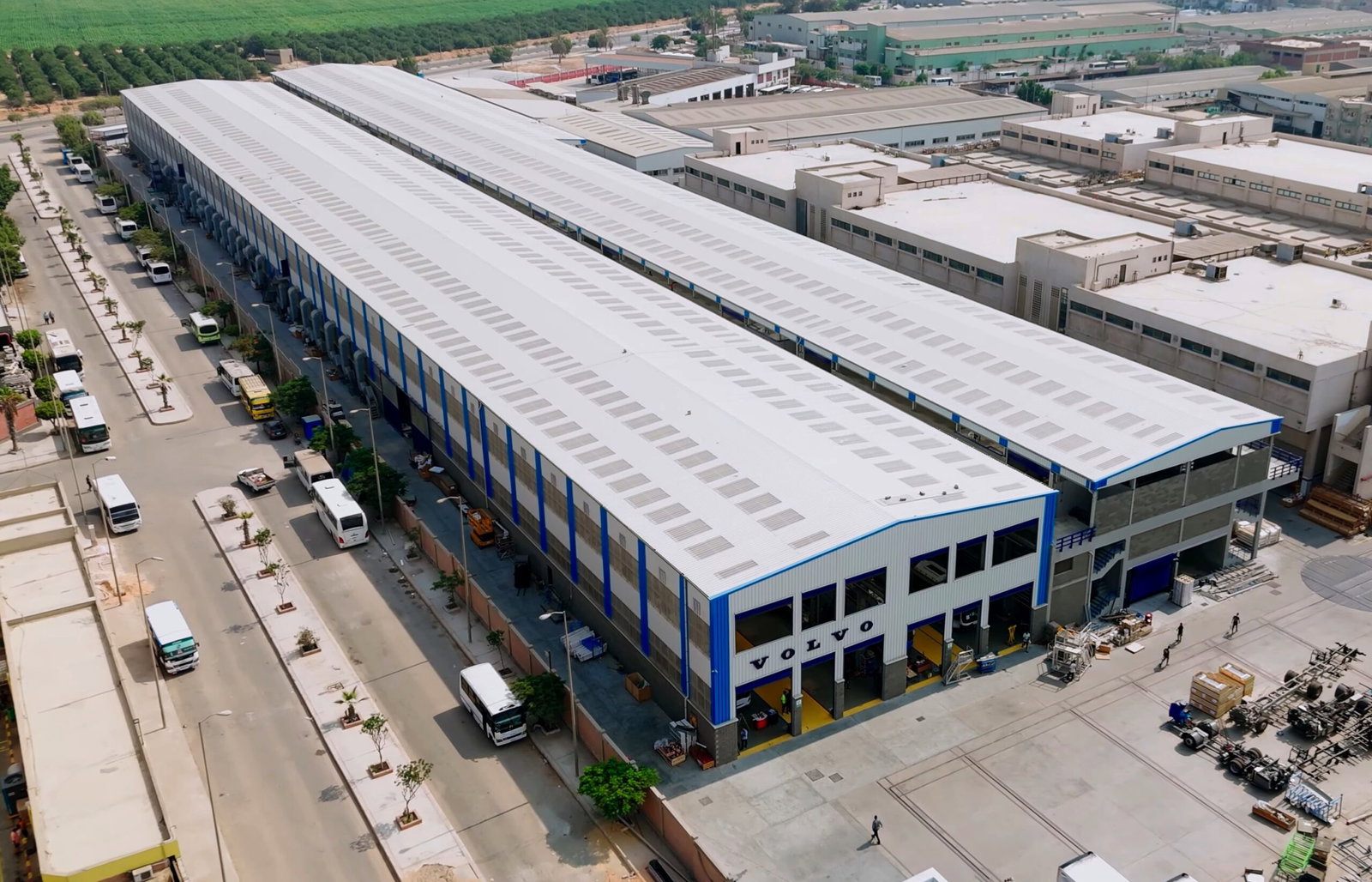
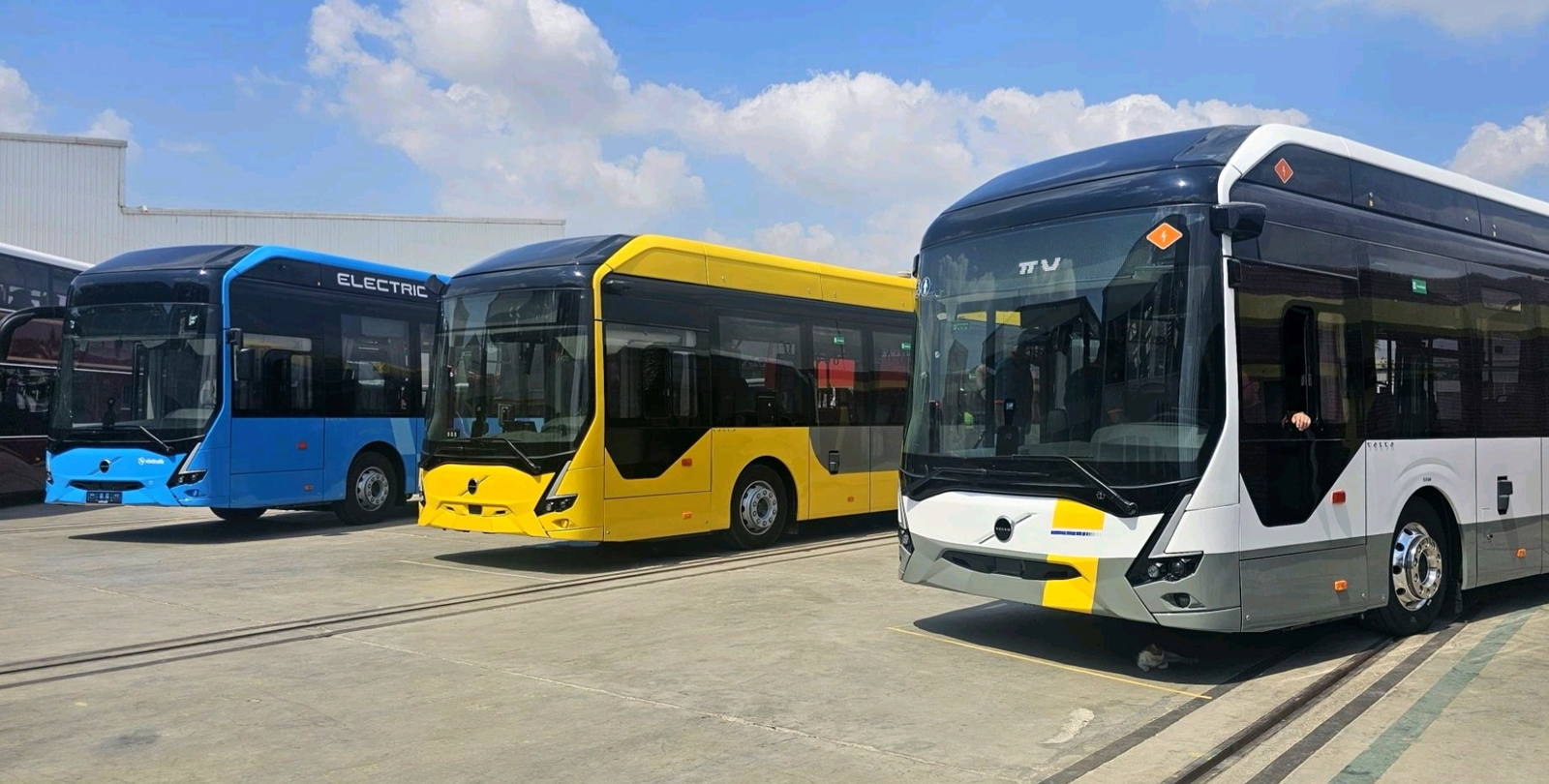
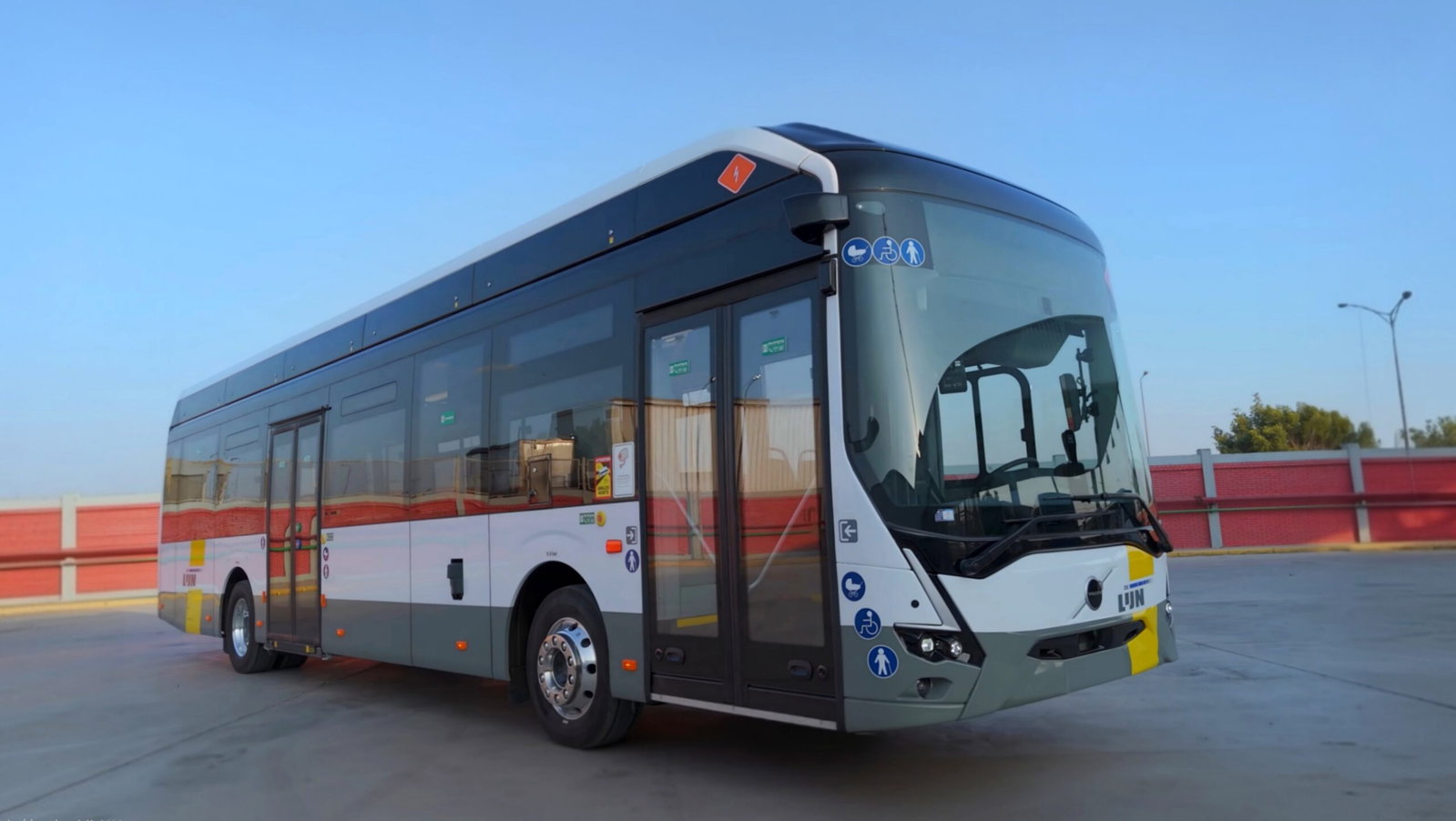
The relocation also created an opportunity for a model update of the Volvo 7900 Electric, the new generation of which is now assembled at the Egyptian plant. As part of the redesign, the front end was reworked, the sensors were integrated into the bumper, and the safety and driver assistance systems required by the European Union were installed. These changes required the introduction of a new electronic architecture, which also includes a digital instrument cluster.
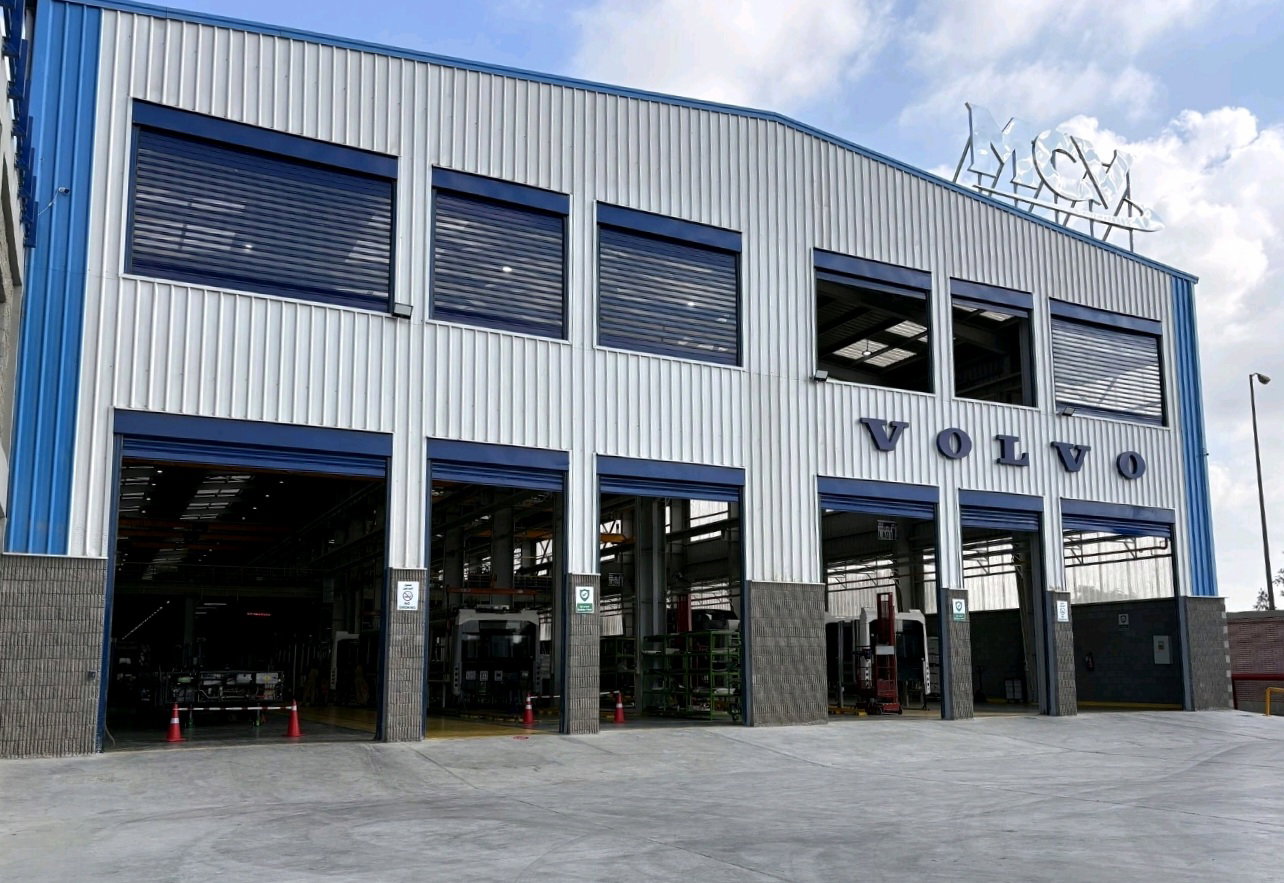
MCV manufactures the buses under Volvo licence, meaning the Egyptian manufacturer’s logo does not appear anywhere on the finished vehicles. The only substantial difference compared with the previous European production setup is that the complete buses are now built in Cairo rather than at Volvo’s own Wrocław plant, which has since been sold. The models continue to be developed by Volvo Buses; the Swedish manufacturer defines the design and components, and is also responsible for sales and aftersales support.
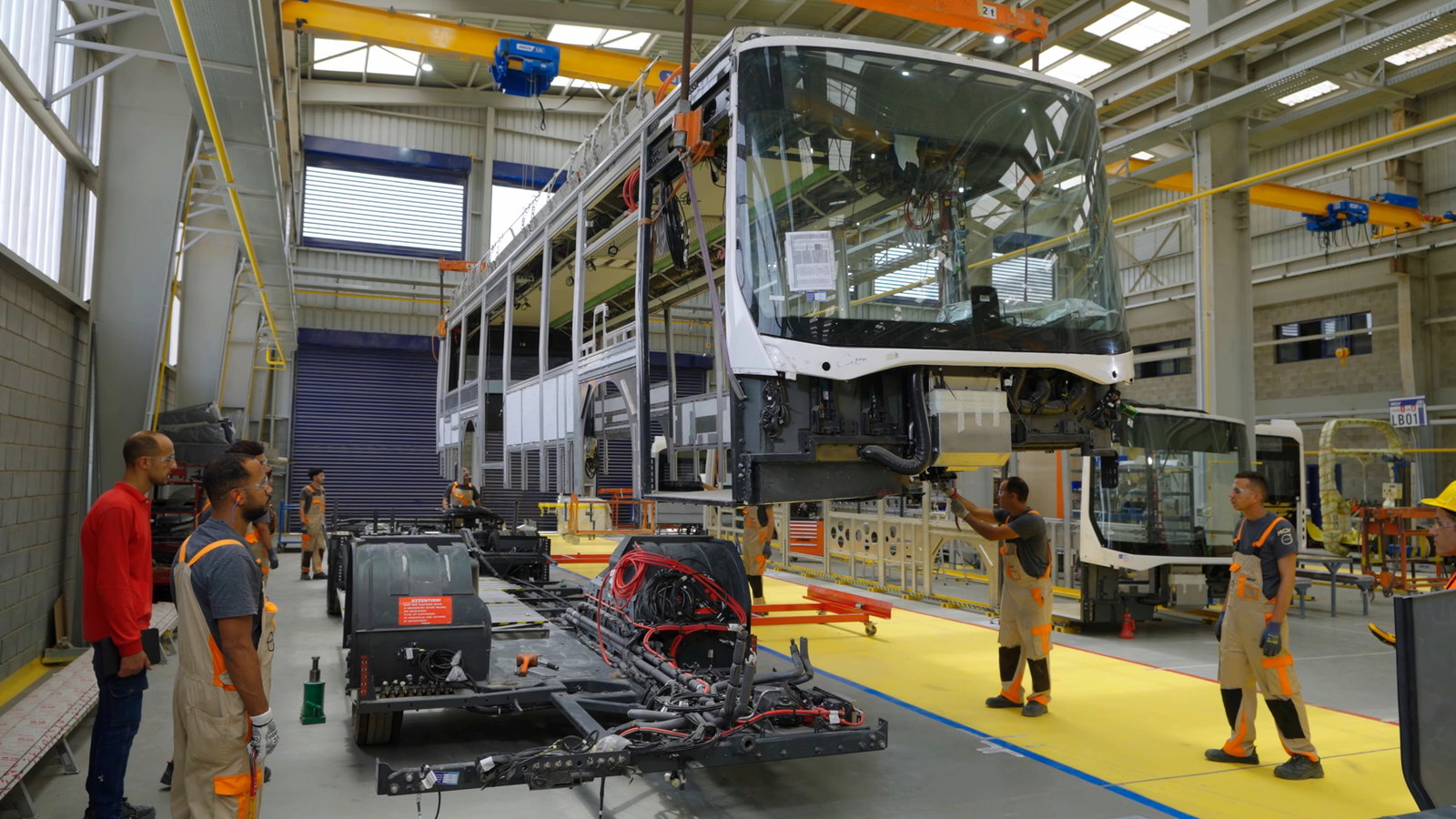
Since the completed vehicles are primarily destined for European markets, the entire production process must comply with EU type-approval requirements. To this end, Volvo engineers provide continuous technical support and training to MCV employees, while production is carried out throughout under the close supervision of the quality assurance framework defined by the Swedish manufacturer.
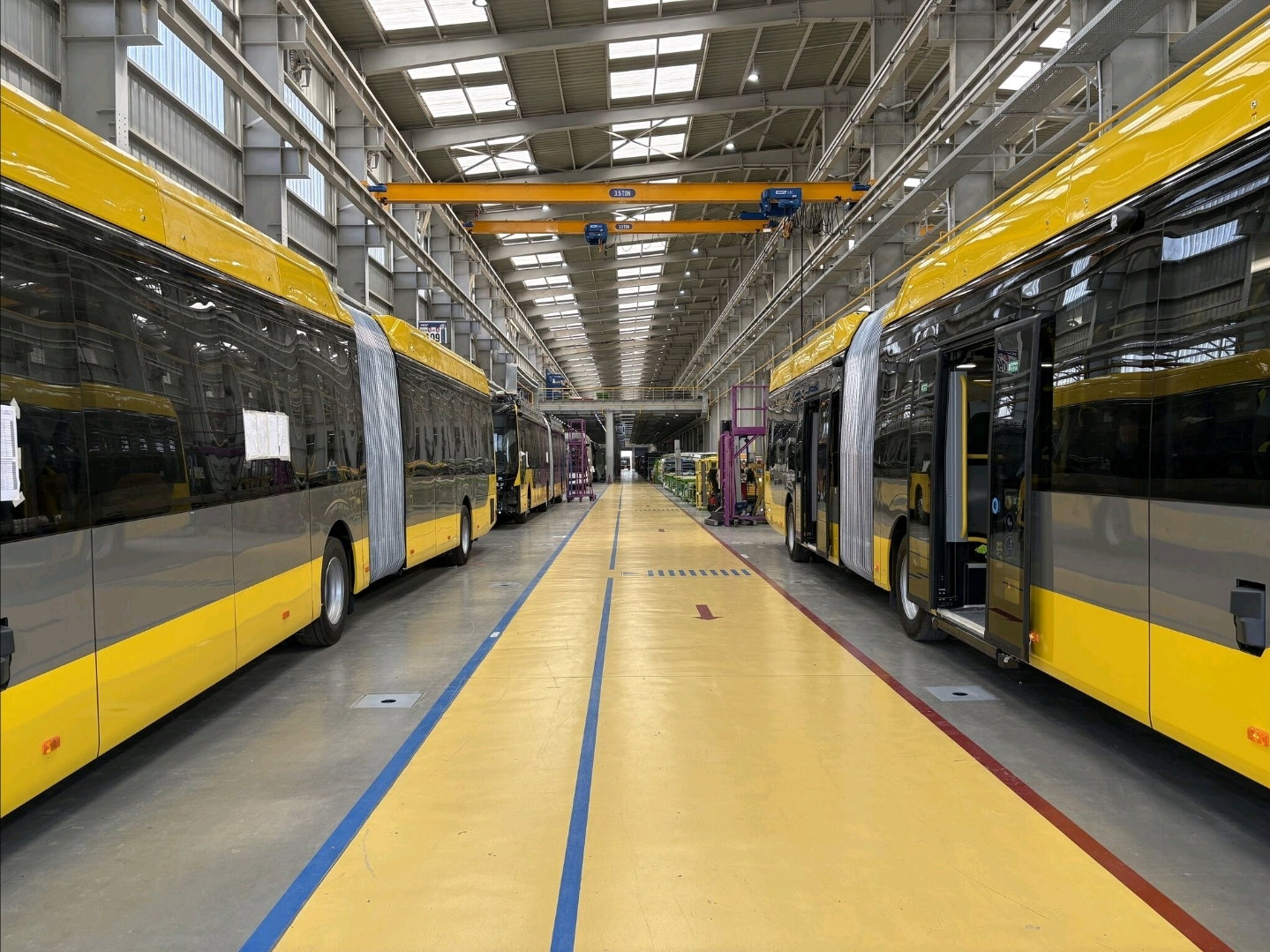
MCV’s new production line consists of two parallel assembly lines with ten workstations, supplemented by a central supply corridor and a gallery level. The chassis, driveline, driver’s area and braking system are produced in Borås, Sweden, after which the completed main assemblies are shipped by sea to Egypt. The first phase of assembly takes place in one of MCV’s preparation facilities, from where the vehicles are transferred to the new hall for the complete vehicle build. The officially announced annual capacity of the assembly line is 1,200 buses, although the company currently expects to build around 700 vehicles per year, mainly comprising the 12-metre Volvo 7900 Electric, the 18-metre articulated 7900 Electric Articulated, and the low-entry 8900 Electric, intended for city and suburban operation and now available only with an electric driveline. Around 300 new employees have been recruited for the programme, working exclusively on the Volvo project, out of a total workforce of about 2,000 at the Cairo industrial hub.
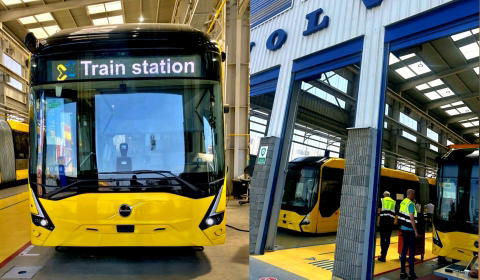
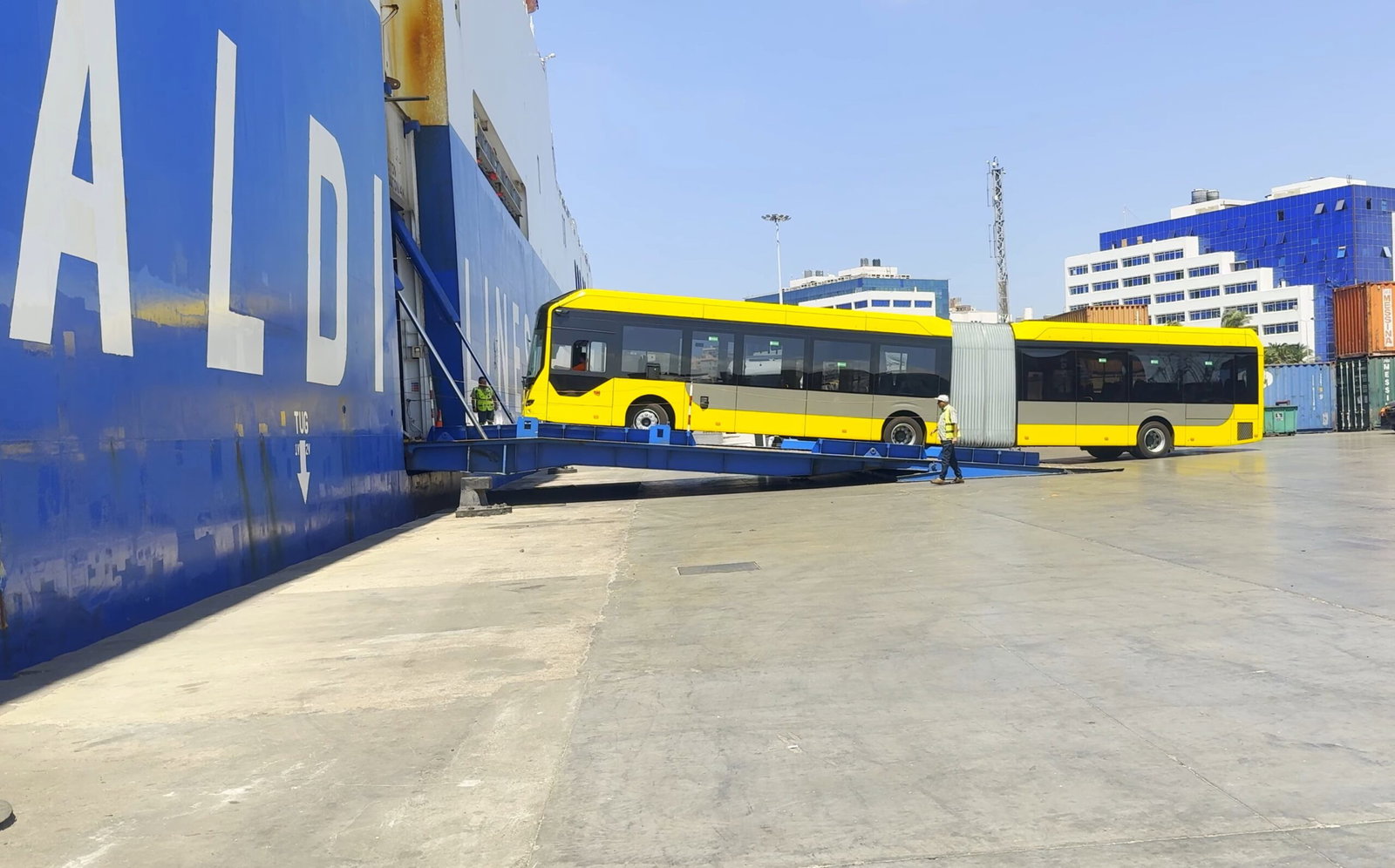
MCV began assembling the first Volvo electric city buses as early as 2024, while the new plant was still under construction, but actual series production started in early 2025. The first almost one hundred – 96 to be exact – Volvo 7900 Electric buses to roll off the production line at MCV’s Cairo plant will go to the Benelux region. The first fifteen vehicles were received by Luxembourg’s Demy Schandeler, to be followed by ten buses built to the specifications of Flemish transport operator De Lijn. Articulated 7900 Electric models are currently being produced for Transdev in the Netherlands, along with a further 25 units for the Hoeksche Waard–Goeree-Overflakkee region.
Anna Westerberg, president of Volvo Buses, highlighted the following in connection with the plant’s inauguration:
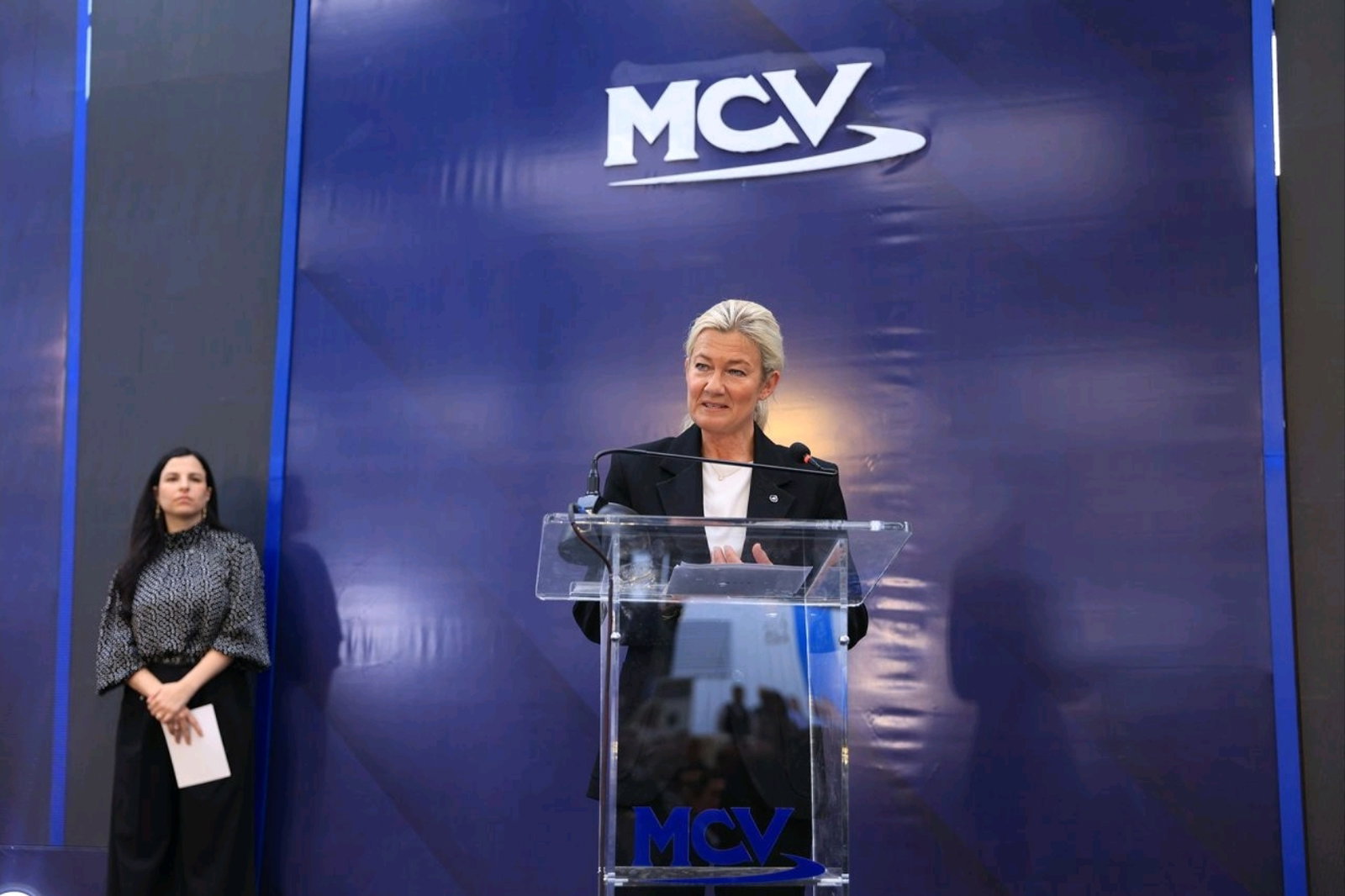
The business model based on involving bodybuilders has long been established practice in several key markets, enabling flexible solutions tailored to customer needs. MCV is a trusted partner of ours and will now play a central role in our European electric bus strategy.
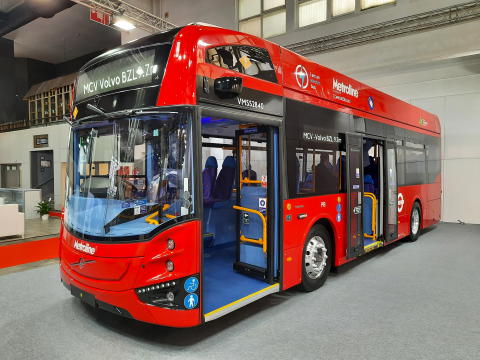
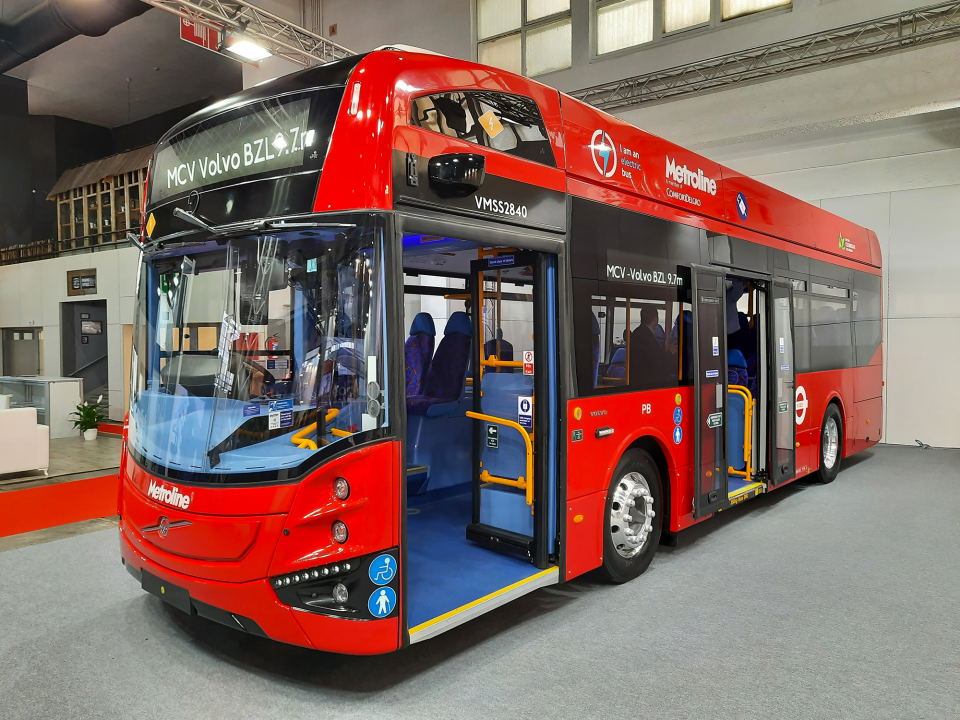
The relationship between Volvo and MCV is not new: the Egyptian company is one of Volvo’s most important partners, and their cooperation now goes back two decades. MCV became known primarily in the United Kingdom for its buses on Volvo chassis, where in recent years it has become a key player in both the city bus and intercity/coach segments. The latest step, however, takes the cooperation to a new level, as MCV has become Volvo’s exclusive European partner for the production of city and suburban electric buses.
MCV was founded in 1995 by engineer Karim Ghabbour. The company is headquartered in Obour City, while its main production base operates in El Salheya El Gedida, both in the Cairo metropolitan area. Over the past three decades, MCV has grown into one of the largest bus bodybuilders in the Middle East, supplying vehicles not only to its domestic market but also to international markets, including Europe and the Asia-Pacific region.
The launch of production in Egypt represents a milestone in several respects. For Volvo, it means on the one hand that it can once again offer complete vehicles under its own brand name, and on the other that it can expand its production capacity and respond more quickly to increasingly strong demand in the European market. For transport operators, the benefit is that Volvo buses are once again available, while delivery times may also be shortened. From Egypt’s perspective, the investment brings technology transfer, development of the automotive industry and the creation of new jobs, while also helping the country position itself as a supplier hub for electric buses to the European Union.
From Poland’s point of view, however, all this has had catastrophic consequences: the permanent closure of Volvo’s Wrocław plant resulted in the loss of nearly 1,500 jobs. This is a serious blow not only to the city, but also to the entire sector and its supplier base.
Cover image: Kyrillos Morcos, photos: Bas Dubois, Gilan Fahmy